The Coliving Playbook with Mayank Pokharna (Everything Coliving)


 RSS Feed
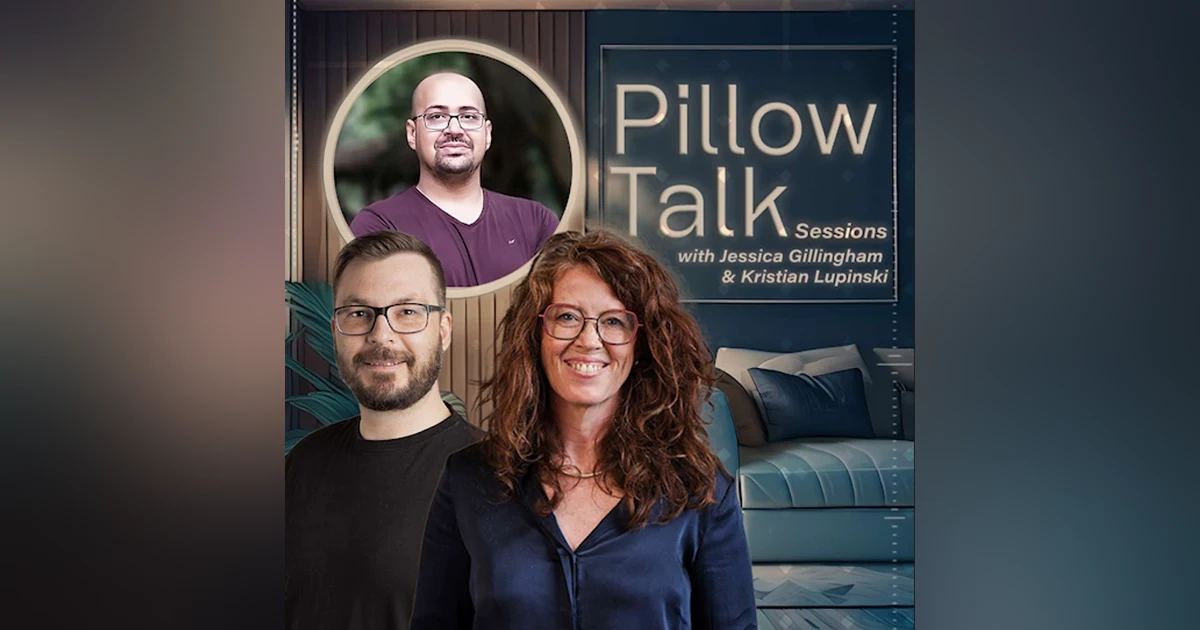
 The coliving industry is booming—but how you scale matters. In this episode of Pillow Talk Sessions, hosts Jessica Gillingham and Kristian Lupinski sit down with Mayank Pokharna, CEO of Fllat.com and Founder of Everything Coliving, to unpack the operational, cultural, and economic realities of coliving on a global scale.
💡 Key topics:
🛠️ Why getting the basics right is still the biggest growth unlock
🌍 Why cultural context makes global expansion uniquely complex
💡 How affordability vs. experience play out differently across regions
📈 Why operators need to balance community-building with scalability
📊 And why "community" isn’t a cost center—it’s a revenue driver when done right
From India to Europe to the US, Mayank offers practical, data-driven insights for anyone in Build-to-Rent, flex living, or residential operations.
Meet the host of Pillow Talk Sessions
Jessica Gillingham is the Founder and CEO of Abode Worldwide, a strategic public relations agency dedicated to elevating the profile of transformative technology solutions in global hospitality, lodging, and rental living. An established industry thought leader, Jessica is a frequent conference speaker and author of Tech-Enabled Hospitality, a new book exploring the innovations shaping the sector.
Welcome back to Pillot Talk Sessions. I'm Christian Lipinski, joined as always by my co-host, Jessica Gillingham.
SPEAKER_00Thank you, Christian. And today on the podcast, we're joined by Maya Kukana, who is the CEO of Flat.com, which operates co-living buildings across the US, and he's also the founder of Everything Co-Living. He's a true pioneer shaping the co-living ecosystem through operations, tech and community building.
SPEAKER_01We'll also dive into his journey from operator to tech innovator, explore the rise of flex living, and unpack what global co-living operators can learn from the shifting rentals and evolving regulations.
SPEAKER_00Plus, we're going to have a conversation about the balance between hospitality and community and also how cultural nuances play a role in building scalable meaning for resident experiences. Mayank, thank you so much for coming on the Pillow Talk Sessions podcast. I'm really looking forward to hearing what you have to say because you have so much experience in co-living and also sort of across so many different geographies as well. So welcome.
SPEAKER_02Thanks a lot, Jessica, for having me here at Pillow Talk. I've been listening to Pillow Talk for quite a while and I think uh it's gonna be an amazing um conversation today.
SPEAKER_00Brilliant, thank you. And and before we sort of kick into the conversation, would you like to give us a little bit of background about yourself and what you're doing as well?
SPEAKER_02Okay, so um I can talk about what I've been doing for an hour, but I'll try to keep it in like three lines. So I've been in the co-living industry for the last 10 years. I've been an operator, a tech service provider, a consultant, um, an advisor, uh, and I've worn different hats across different geographies, helping co-living businesses become more and more sustainable. Um, that is what I've been doing as of today. I am uh I run a company called flat.com uh as a CEO in US, and I run a platform for co-living founders to help them build sustainable uh uh co-living businesses, which is everythingco-living.com. So that's what I've been doing.
SPEAKER_01Oh, that's great. And I think um, you know, this will kind of really influence a lot of what we're talking about today. So I think we should just jump straight in and maybe we can discuss your background a little bit deeper. You know, as you mentioned, you you started in co-living operations with Simply Guessed uh in 2015, moved into property management, you know, uh tech and development. And now you're leading, uh, as you mentioned, everythingco-living.com, you know, as a central platform for the industry. Uh I think to start, maybe you can tell us some key lessons you learned from that journey, you know, across operations, technology, and development, you know, and how those are shaping the way you're curating and guiding the co-living conversation today.
SPEAKER_02All right, so so let's break that down uh into kind of three parts. Uh when I started in co-living, I didn't know anything. Like I was not from a real estate background, I was fresh out of college, I was doing my first job, and I was looking for a place to stay. And I couldn't find a community where I could uh kind of feel myself. And that was the start of something where I like I stumbled upon two brothers who were doing shared living. It was co-living was not a known word, uh word, very well known word back in 2015. And then they gave me a place to stay, and I ended up uh joining them as a co-founder uh later. But uh that's how my journey into the co-living ecosystem started. It was out of my own experience and trying to find something that had a right balance of affordability as well as community. Now, uh through my journey uh wearing different hats since 2015. Uh like the first six years were about operating SimplyGas, scaling it to about 500 units, uh, 17 different locations in a single city of Bangalore. And we we were covering about uh about five, six pin codes and 17 locations. One of the biggest learning that I've had while uh being on like building and operating these co-living spaces was that you need to fix the basics first. Co-living is all about community, and like you need you can create a brand, you can talk about multiple things. But if you don't fix the basics first, and if you don't give the end user the basics that they want, everything will fall out of place eventually. And that's the reason for a lot of downfalls of co-living companies like Quarters and Common, and they they didn't stick to their basics. And that's what I tell everybody that you have to stick to your basics, you have to make sure that you are doing things right. Uh, so that was one of the biggest learning throughout that. I also did that mistake during the first couple of years where I focused more on the community and branding rather than fixing the basic operations, making sure that people are getting what they are promised. And uh that that I I tell this about about this to everybody that this has been one of my biggest, biggest learning. Other learning is uh is a little bit technical, but overspending on marketing. That's something that I've seen a lot of call living spaces doing. Uh again, I did the same. I burnt my hands in the first couple of years, 2015 to 17, burned a few thousand dollars uh because we were bootstrapped, so it hurt a bit a lot more. And uh that is something that I ask people not to do. There are always a lot of ways in order to connect with the right target segment, join the existing communities, go to form B2B partnerships. There are a lot of non-monetary ways to get your first hundred customers, and you should not spend even a single rupee to get your first hundred customers because if you are, then either you're not hustling hard enough or you are not using the existing resources to their full potential. So that was another big learning through my uh journey uh of Simpli Guest. The third thing that I would tell, and the last thing that I would tell is know your unit economics, right? Like that's the biggest thing that uh can be a reason for success or failure. Because if you know your unit economics and numbers well, you will make good business decisions. We took certain bad calls and had to burn our hands and lose a lot of money, but then that made us realize that if we don't know our numbers at the back of our hand, then we probably should not be doing this business, right? So those are the three big learnings from my journey at SimpliGuest. Then when I when COVID happened and I moved on to developing the software, so we took all those learnings along with our operational learnings and started something called Jumbo Tiger. So Jumbo Tiger was a property management software specifically built for co-living. We worked on it for 20 months. Here I got to explore the world, I got to explore the overall uh like 15 different regions. So we had a live launch, about 126 people from 17 countries joined us, and 50 people signed up for our beta. Now, having access to so much of people was a blessing in disguise because it was COVID. Everybody was at home, everybody was joining these calls, and it became really, really easy to get people on those calls, which was very difficult before COVID time to get people on call, let alone build something in one part of the world and sell it in another part of the world. So that was another very uh big learning for me. Uh, that people were ready to talk to you, and when we showcased our product, people got very excited. Uh now the way uh the what I learned in a in a very interesting way was co-living is divided into like six major regions. So there's North America, there's South America, then there is uh European region, there is Middle East, there is Southeast Asia, and there is South Asia, right? So that's the that's the whole spectrum, and every segment or every region has their own specific understanding of co-living. So there's no standard universal definition of co-living, it's very, very region-specific. I'll just give you one example and then I'll move on so that the listeners can get the context of what I'm trying to say. Is that if you look at it from a perspective of what works in India, India is all about affordability, lowering the cost by sharing the same space with multiple people. They care less about community, like very few people, like top 2% will care about community, but 98% will care about affordability. But when you go to US, it's different, it's a combination of affordability as well as community that people value. So you have to work on both ends. So the product that is called co-living is very different in US versus what works in India, right? So similarly, in European, it's a lot more experience driven, it's a lot more digital nomad focused. If you go to UK, it's more house with multiple occupants, it's an industry which has like what 10 million rooms right now uh across UK under HMOs, right? And it has been a mature industry in in as a shared living in uh ecosystem in UK. So different regions value different things, different regions have different uh kinds of uh approach to co-living, and that is what I learned when I was building the uh the product, uh, which is uh what people should understand, people with global ambitions of starting their co-living and going global, need to understand that it's not one size fits all. There is no standard definition. You have to understand the culture of the local region and then see what works and what they value and then evolve the product accordingly. So a person running a co-living company in Berlin or in Paris or in Lisbon, if they come to India and start their own like the same brand, they probably would not be successful if they don't understand the culture alone, the regional context enough. So that was another big learning. And since then, I've worked with since 2020-21, I've worked with more than 50 different co-living brands across technology, helping them choose right technology, helping them in their marketing, scaling their marketing in an organic way, um, with lower spends, and then uh customer service and community, right? So across those uh kind of work, one of the biggest like biggest learning for me has been that uh when to use the right technology, when to spend, right? The if you spend too early, you lose, if you spend too late, you again lose, right? So finding the right time to invest in technology, understanding what's the need of technology, and technology is an enabler and not a solution. What people in the co-living world eventually ended up thinking since 2017 to 21, there was a funding frenzy across the world happening in co-living. It was all happening on tech valuations around the perception and the story of oh, it's it's a tech that will solve this for real estate. But ultimately, real estate is a space business, it's a it's a people business, it's a it's not a technology business, and people need to understand that technology is an enabler, it's not a solution. So that was another one of my biggest learnings. So, yeah, that spanning last 10 years, I can go on and on, but I think these are the few things that uh I value a lot more, and I keep talking about them on different forums and keep talking to people to not reinvent the wheel and make the same mistakes again, learn from what mistakes we did, others did, and then build on them.
SPEAKER_00Brilliant. You you basically gave us a lesson for any business. So the things to kind of watch out for is you've got to know the money, you know, you've got to really understand your finances, you've got to really understand your customers and what their needs are and what what what what they you know, what their problems are, you know, really understand your customers. You've got to get the basics right before the bells and whistles, and then marketing, you know, not to go crazy on marketing, but making sure that you're using it as a as an amplifier rather than as a sort of the initial routine. And so, you know, any business can do with looking at those things, you know, it's really important to look at those things. And I just want to um reflect on something else you said, which is in the co-living community, you know, co-living brands were were kind of positioning themselves as prop tech brands and and and it kind of and getting all that valuation because they were sort of going forwards as prop tech brands. We've seen that in other sectors as well. So in short-term rentals, we had a lot of that. Operators calling themselves tech brands when actually their hospitality and real estate brands. Um, and so you know, that's that's a sort of reflection on that as well. That that's so be wary of what is actually a space business, isn't a technology business. Um, so that's really interesting. But what I'd love to talk to you about, Mike, is that you have worked with 50 different brands across all these geographic geographies and all these different parts in the world. And you, you know, you talked about the cultural nuances, the um, well, not even nuances, like huge cultural differences. And I guess co-living in a way probably really emphasizes those because it is where we live as well. Like it's a it's a sort of a core fundamental need of humanity is to have a have a place to live as well. So those those kind of differences kind of go on all kinds of levels, not just you know, um uh for money, but also psychology, so social as well. So you're you know, all of those aspects of of of how it kind of impacts. But how do you in how do you sort of how do you work across all those different regions with those big differences? And and how do you help operators balance those? So if any of the brands and operators that you work with, are they in quite different localities? Because even you know, Portugal compared to UK is very different, Germany compared to France, might be very different. So, how do you sort of balance all of that?
SPEAKER_02Let's say it all again, uh first of all, thanks for asking that question. I think that's one thing that it's nobody has asked me this, so I think it got me thinking while you were you were talking about it, but uh it all started like my approach to helping people in different parts of the world. Like I never looked at it as different parts of the world. Like when I started, I didn't know that these cultural um uh kind of differences had so much impact on the business, and uh you had to change the way you would look at product or build a product, given you are in different regions. So I had some failures in my kitty, I had some failed projects where where I couldn't help co-living founders, and I had my share of learnings, right? So in 2020, 21, when I worked with the first few projects, I was trying to replicate what I did at Simply Guest, and it worked really well. And we grew from uh like we in about one year, uh see, just to give you a context, in India, the average rent is about $150 per month, US dollars. And uh with that, you uh we reached our million dollars in revenue over a year in about two and a half years time. So a lot of things worked well for us, and what I was trying to do once we closed SimpliGuest was to take those learnings and go run with those learnings and help other brands kind of fast track that. But when I started using the exact same things, what we what I realized was uh very few things were working. So it was a lot of experimentation that had to go in for me to understand uh why it was happening. So when I tell you this right now, it may look a very trivial thing, it may look a very commonsensical thing that hey yes, uh cultural differences are there, and so it should be a different product. But back then I didn't know that. So when I had few first few failures, I went on the drawing board and then I started talking to people. That's when. So um, before even starting my own podcast, Everything Co-Living, I had done more than 400 conversations. So this is not me working with people, this is me just talking to different stakeholders in the co-living ecosystem around the world. So I I literally have records of those 400 conversations. I have a book where I've recorded my learnings from all those 400 conversations, and when I and then I kind of bifurcated them uh based on uh geography, based on type of businesses, based on the target market. So I kind of filtered down that into a booklet for myself, which became a manual for me to work. And those conversations, and I I had conversations with service providers, I had conversations with existing student housing operators, co-living operators, uh digital nomad co-living operators, destination co-living operators, uh within different regions, uh, software providers, different service providers, which are like like let's say a laundro, uh like uh a Wi-Fi providing company, a laundry solutions providing company, uh, the property management software companies, co-living softwares, tenant management softwares. And when I spoke to these different stakeholders of people, that gave me an understanding that the way they were speaking had a lot of different approach to where they were coming from and who they were solving it from. And that's how over the period of last four or five years, having those 400 conversations, and while I was having this conversation, one of the person said, Hey, you're anyway having this conversation that they're so useful. Why don't you start recording them and putting them out on YouTube? You even if you put them raw, people will find them so useful. And that's how my journey of podcasting started. But that was the process which gave me enough depth in different regions to understand and work with the brands to help them build uh kind of sustainable uh co-living products which could work for them. So that is the kind of so there's no shortcut to it. If you are a co-living company in a specific region and you want to start there, my suggestion to you would be in that region, identify top 30 people and just reach out to them on LinkedIn. People are really helpful. We just are scared to reach out to people thinking that they will say no. All you have to do, all I did was just went ahead and I just messaged them, hey, I'm looking forward to a conversation, 30 minutes. Um, I can even uh if if you want me to pay for a uh pay for that conversation, I'm happy to uh give you a hundred dollar vouchers. Nobody took the voucher. I offered a $100 voucher to all the 400 conversations that I had over the period of last five years. Not even one person took that. But I just wanted to be respectful of people's time, and that's what I did, and that's what helped me understand this better. And that's how I started um kind of figuring out that what works in which region, and and um that is uh how I started working with these different brands. Hopefully that answers the question. But if you have anything specific, I'd love to answer that.
SPEAKER_01Yeah, I I I think I do want to touch a little bit further on that kind of cultural and demographic differences. You know, you mentioned like in India, people are looking for more of an affordable uh area versus European is more of community or experience. Um I guess you know, for these brands that are international, you know, how can they manage consistency in the brand and service standards, but also, you know, while they're you know localizing, you know, for these vastly different markets.
SPEAKER_02So uh interestingly, when you say this, you look at what habit has done. Habit has expanded across the globe. But if you go and stay in a habit in a Singapore, and if you go in a have uh sit in a habit in Berlin or or let's say Lisbon, you'll have a totally different experience. I was in a I was staying in a habit earlier this year. For a month I was in Singapore, I was staying in a habit, and uh it was a very different experience than other co-living spaces that within habit that I've stayed in. So there is again no one size fits all. You need to understand the cultural context, the societal context, and the end user requirement, like having drilled down your target persona very well to develop a product. You can still have a brand, right? Like habit is still a one single consistent brand, and they solve for one thing, they provide you uh flexible uh housing at different parts of the world. You can call it co-living, you can call it shared living, you can call it flex living. Different people like to name it differently, but ultimately they're they are helping you find the right place for you along with the right community of people to live with. So that core proposition. So any brand who wants to glow go with needs to have their core proposition sorted out. So your core proposition doesn't change differently, like uh it doesn't change at all across any geographies. What change is your service delivery, what changes how you deliver that service and how you structure that service, that changes. For an example, if habit comes to India today, it is not in India yet because India is a volume game. India, it's not a it's not a uh because rents are much lower, you need to have much higher numbers and much complex operations in order to succeed. But just for the sake of hypothetically, if habit was in India, they can go two ways. Either they can go and attract top 1% of the market, which is easier for them to have a very premium co-living. In India, top 1% market is around of organized sector. So only 4% of sector is organized, and out of that 4%, 1% is premium segment, but the population is used, so that number also becomes very huge. So either they can come and solve it for premium customers and grape, pick up the their experience, a book from Europe, and bring it here in India and solid. For only top 1%, or if they want to have a larger footprint, they can come here, understand the market, and adapt their product to then reflect the rents locally, reflect the you can still bring some elements of your learnings from other regions, which can be a differentiator in this region, which may not necessarily be a differentiator in other region. But if you bring that with the having that differentiator, the way people will adopt you will be a lot better and the way you will grow will be much faster. But you still need to understand the local context, and that's why if you see companies like Habit, they do have local partners in every new region that they go in. So they go with those local partners, have a conversation, they do joint ventures so that they don't fall behind on the local context. So it's very important to have that. So for global brands, that becomes absolutely important. If you look at what Cove is doing, Cove has now expanded. They were a Singaporean co-loving operator, then they expanded in Indonesia, now they've expanded in Japan and South Korea, which and then they have all done all of that with joint ventures. So it's very important to have that local context and understanding of the market for you to be successful in this space.
SPEAKER_00That's interesting because I think that goes across quite a few markets, doesn't it? In hospitality, it's having, you know, whether it's maybe franchise partners that are on the ground that understand the nuances and the differences in local markets or other types of living sectors where you, you know, you can't just go in and say, I'm going to take over Singapore or I'm going to take over Thailand or I'm going to take over Berlin. You have to really understand those markets or having those local partners. I just want to say something, and I don't know if it if you will see any similarities in it at all, but I'd quite like to get your thoughts actually on a brand that is in the hospitality space out of India, Oyo, which has done very well within India, coming in and sort of taking over, you know, a sector within India and then going outside as well. And even though this is a slightly change of subject here, I'd just love to get your thoughts on Oyo if you have any.
SPEAKER_02Oh, yes. Umyo uh was one of our competitors back then. They also did venture into co-living for some time and then they realized that long-term stays probably is not something that they uh enjoy too much. So they went back to what they do best, which is hospitality and short-term stays, hotel stays, uh, and midterm stays now. Um, I love Riteshadharwala. I love what the brand that has built, I love the uh operational rigor with which he has worked. I know his initial story where he started, how he started with that one building. I've listened to it many times as an inspiration for myself when I was starting my own operations. So I think uh 100% credit goes to operational rigor, right? And at some point they also did position themselves as a technology company, but then they rolled back later and then they realized that they're not a technology company, they're still a real estate company, and then they changed their approach to the market, which and then they they the way they selected right markets to expand, whether it was vacation rental in Europe with some acquisition, with with Motel 6 acquisition in US. So they did again those strategic acquisitions within the different regions were their key to success because they got a lot of local context and understanding of the market from there, and then they used what rigor that uh that they developed and learned in the Indian market. Because see, Indian markets are the most uh chaotic market in the world. If you consider any sector, they are the most chaotic market, you will find the most amount of edge cases within the Indian market. And with if you come from that market, if you become successful in that market, that's a testament that there is always less chaos in other markets. So it's easier to get successful in other markets. But having said that, if you ride on the success in the Indian market and try to replicate that in US or Europe, you probably wouldn't have been successful. And then having those inorganic strategic acquisitions that Oyo did in Europe in terms of vacation rentals and in US, I think are the key to their growth and key to the sustainable growth that they've now showed over the last few quarters. So, but I definitely respect the brand and I definitely respect like they have their own shortcomings. It's not that they are perfect, they had their own uh uh learning curves. They you you will always find uh 5% people complaining about every other brand in the world, whether it's Gucci or Chanel or even Noyo or uh Marriott, but but that's the that's how the user is, right? Like you will always find somebody who is not happy with somebody. I just we want to give you one again insight into uh this is something again I just realized is that in hospitality the number of failure points are always very high. Things that can go wrong are always very high, then things that go right. So it's always uh um what can I do to make sure that I minimize my failures? And if it's not about you maximizing your success points, but it's about minimizing your failure points. That's how I see hospitality, whether it's co-living, whether it's short-term rentals, whether it's Airbnb, it's all about minimizing those uh uh those failure points. And the more systematic, the more technology enabled you become, the more process-driven you become, the more operational rigor you have, you minimize those failure points, and more successful you'll be. It's irrespective of co-living or hospitality, this stands true. So while we were talking about it, I think Oyo has done it significantly well uh in order to grow to the level it has grown.
SPEAKER_00That's it's so interesting. And I guess it's like you said in the beginning, it's get the basics right, get the foundations right, and then then all will follow. Um, thank you for sharing your thoughts on that. It is you know really interesting to get your views on Oyo as well. And I I was very lucky to see him um speaking at Skift India in Delhi last year, and he is an incredibly impressive young man, yep. Um, as well.
SPEAKER_02I I love his energy, um, and I think there's a lot to learn from him, um, which which all of the hospitality and the co-living entrepreneurs should definitely take few of those things that he always speaks about.
SPEAKER_01You know, we have a few more topics that we need to cover today, so I want to move on to the next one, uh, which you mentioned briefly about flex living. Um, so I thought we'd talk a bit about that, uh, especially during our discovery call. You mentioned how it's on the rise. You know, from your viewpoint, you know, what's driving the shift away from these long-term rentals and you know, how do you see it influencing uh the future of co-living and you know, hospitality on top of that?
SPEAKER_02Okay, so we need to look at a little bit of like take a step back and look at the larger trends that are happening around the world, right? Since COVID, the percentage of remote workers have drastically increased. When I when I say remote, it's not that it's hybrid workers, like people who have access to working a few months remotely. Now, the number, they may even have to go to office like five days a month, but then they can gather those, like go to one month and then have a conversation with the manager and say that hey, next three months I'm traveling, so I'll work from there. And most of the companies would agree with that. Uh, with that shift in the fundamental way how people look at work, the pool of people who are now open to traveling for longer periods have increased. When I say longer, longer than earlier, if you would go and visit you will have a seven-day or a 10-day trip at the most, but now you would want to have, let's say, a one-month trip, and you won't mind having that one-month trip. Now, that's one behavior change and demography change that's happening around the world. Second is people value experiences a lot more than they were valuing it at 10 years back. In combination of this, the the kids, right, in most of the parts of the world, people are having kids a bit later, a couple of years later than they would earlier have them. If they were earlier having them at 27, 28, now they're having them at 30. Average, I'm talking about in general. Delaying of having kids gives you more freedom for those couple of years to travel. Work giving you freedom to now having extended travels, period of travels, and then disposable income increasing because for the two years people didn't had anywhere to spend, so they saved a lot more, so they had a lot more corpus to spend. Now, all of this points to people going out more, exploring a lot diverse geographies, trying to see as much as they can before they start planning their family, right? And that's that's driving a 18 to 34 year age bracket into a lot more longer-term stays. Now, if I have to go and stay for one month, hotels are expensive. I would not want to stay in a hotel. Now, I would what I would look for, ideally, co-living is becoming a default choice for that, where I would want to stay for a month and then move on. And that's why flex living is online. So there's a call, so flex living and co-living are it's they are two separate concepts. People think that they're competitors to each other. Co-living is an asset class, it's evolving as an asset class. Uh, flex living is a concept. A co-living can have flex living or cannot have flex living, depending on how they are developing their product. But these are the few mega trends which are happening around the world on a broader level, which is fueling the flex living market because people are now traveling for a few weeks to few months a lot more than they were doing pre-2020. And that is what is fueling the whole flex living ecosystem.
SPEAKER_00It's really interesting looking at it in that that the co-living is the asset class, but the flex living, in a way, is the service, you know, is is you know, you could you said the concept, but I guess we could also say the service provision is that the the resident, the guest, whoever can come and stay for a short period, a month, you know, three days a month or longer, looking at it like that. And I hadn't really looked at it like that before. I have a question, and there's clearly been a growth in demand for Flex because we, you know, many of us remote work or have the ability to remote work. Yesterday, I I live in the UK. Yesterday I was in France and I was co-working in a co-working place in France yesterday for the day, you know, amazing. And within the vicinity of where I was, I was in Bordeaux, I looked on my Google to look for a co-working place within a five-minute walk. There were three co-working places that I could just trip up for the day, get a desk, you know, all of those. So there's obviously demand for it because of the way, you know, work has changed since COVID, expectations have changed, our um there's a more transient kind of population. There's been a lot of brands coming into the space to offer flexible living. Are we at a point and do you or do you see a point coming out where there might be a saturation between the supply of flex living accommodation to the demand? Like, is there a point where there is a saturation?
SPEAKER_02Okay, let me ask you a counter question. Do you think we have enough hotels in the world?
SPEAKER_00That's a really good question because when you book one, they're all bloody expensive, you know. When when you you know, and I often, if I'm going to London, I think, God, how many hotel rooms that must there be in London? Why are they still all over £200 a night or whatever? Um, so I mean, they're much more than that as well. But yeah, that's a really good point.
SPEAKER_02So so it's the same thing, right? Like with ever increasing demand, what I've seen happening from my vantage point uh from working in a co-living sector is that a lot more people are now, a lot more hotels are now changing their infrastructures. The new hotels that are coming up are changing their infrastructure to have community at the core, are changing their infrastructure to have longer-term stays, to support longer-term stays. A lot more people are having, a lot more hotels are having kitchenettes in their rooms rather than just having the room, a smaller room to just stay, right? So those I see those changes happening because a lot of brands are trying to diversify their risks. Post 2020, what if uh if if there was a business hotel and I had to stay for like let's say in a business hotel for three weeks? It's very difficult to stay in a small room for three weeks. You you always run out and you feel uh different, right? You don't feel right, you don't feel happy staying in a business hotel. But now imagine if that same hotel hotel have a little bit larger space, a kitchenette, like in an open balcony, the way you would love to stay in there for three uh three weeks, right? So that approach, Airbnb had a big role to play in it because while all of this was happening, the short-term renters and the Airbnb market was opening up different products to the world, which were way better in terms of experience than in hotel. So now hotels had to adapt. So I don't think there's a saturation in foreseeable future, at least in my lifetime, which I see. Um, this is gonna continue to grow. We are becoming like a lot of things that are happening in the world right now says that okay, we are moving towards deglobalization, we are moving towards more nationalistic things, but the way I see it, we are moving towards a one-world uh equation in like let's say 50 years or a hundred year timeline, because the we will have world without borders. Like, I truly believe that in about 100 years' time, because there'll be no other way to survive. And when that happens, again, this is for foreseeable future, at least in my lifetime. I don't see any demand saturation coming in because there's always the demand, there's always the need. And even now, if you look at average occupancies of co-living, average occup, every average occupancies of co-living, uh, according to my latest report that I published and the latest survey that I did where 250 operators took part was uh about 91%. So if all the co-livings are still at 91%, there's always a demand. If it was 70%, I would be worried that okay, no, there's a saturation in the market, but they're not, right? So that's that's how I look at it.
SPEAKER_00It's interesting. You you talked about Airbnb because Airbnb is sort of moving away from its core of offering real estate, a space to stay to all sorts of different services and experiences now. So, in a way, they're kind of they're not they're not pivoting away, but they're certainly encompassing a lot more, adding a lot more than just that real estate piece.
SPEAKER_02So you have to I I would just like to add one thing on that Airbnb piece, right? Airbnb has not been able to lobby in most big cities of the world in order to uh kind of convince local governments that what it is doing helps eat the like the pressure on the existing infrastructure. Sooner or people, sooner or later, co-living is gonna be in the same place uh because it's in a little bit of an evolved version of what Airbnb was, and it's gonna have to go through the same struggle that Airbnb is going through. Uh, but I think we'll be better placed because the time will be right in terms of getting the co-living the approvals it needs from the from the government and the uh and the organizations from around the world. And the reason co-living has to right now, sorry, Airbnb has to right now go towards experiences is to expand its offering because they at some point are are seeing saturation in terms of hosts. So now they have to go to experiences in order to expand the basket and justify uh their their valuations of what they are, right? So so but that doesn't reflect or that doesn't in no way say that um the the co-living market or the flex living market at some point is starting to saturate. We we extremely need more housing. There's a housing crisis in UK, there's a housing crisis in US, you can see that, you can read the news daily, right? So uh there's a report by Pew Trust in US uh on how uh like if we open up our existing stock, so it's not a housing crisis problem, it's more of the type of products we are developing and pushing in the market. If you're pushing single family homes in the market, rather if you put push co-livings in market, you will be able to house, like you will be able to fix the houselessness and housing crisis in probably 10 years. But the kind of product we're pushing in market is still in single family and multi-family houses, which is where the problem is. The problem is not the uh availability of the housing stock, it's the type of availability of housing stock that is available.
SPEAKER_00And is that because of the affordability?
SPEAKER_02No, affordability is one segment of it, right? But we as humans are also evolving. Uh, if you take the US example, for the longest time, for the last century, there have been a very individualistic society. Look at what American dream was having your own home, having a car, and that was an American dream for the longest time. Like it was not community, it was not living with people. And if you look at the 2023 study of loneliness crisis, like loneliness epidemic, which was done in Europe, you see how as a humankind we are becoming so my grandfather had 11 siblings, my father had five, I have two, I probably will have a single kid. So, see how the families are growing smaller? In most of the cases, they are going smaller. Uh, now, with when small families are growing smaller, you don't have enough interactions with your existing families, you have to go out and talk to other people, you have to make friends. That's another demographic shift that's happening, which is fueling the community living as whole. It can take different products, it can take co-housing, co-living, it can be different it can take different shapes and size, but at the core of it, it's the communal living that is coming back uh into the equation and people are craving for it.
SPEAKER_00I'm gonna let Chris Christian, I just have to say something here because um it it's you know how families are getting smaller and and moving away. And I was gonna say, except for Elon Musk's, who you know, if it's like 12, 15 children, having them all on a compound, it's like co-living, you know, luxe.
SPEAKER_01I don't think we're gonna have a lot of Elon Musk around. I think he just he's taken the only Elon Musk spot that there is. But I do want to, you know, our final topic of today kind of leads into what you were just talking about as, you know, this idea of community. Um, and I want to talk about the balance of hospitality and community, you know, as co-living is is often described as a blend between hospitality and residential living. You know, from your perspective, you know, what's the right balance between cost-efficient operations and creating meaningful community-driven experiences for residents?
SPEAKER_02See, that's a very big misconception that community comes with a cost. It doesn't. It comes with a shared vision, it comes with an approach, uh, it comes with your uh with your thought um with a common goal. Uh I'll give you a few examples. So I invested in a co-living company for digital nomads in India. It's called Nomad Gao. Um, I visited Casa Mia Co-Living recently in Singapore. Both these co-living, so one is for digital nomad, one is for young professionals. So Kasamiya co-living is for young professionals in Singapore. Now they probably spend like 0.5% of their overall revenue on the community initiatives. But they have built the best community there is from a co-living perspective within Singapore. They created rituals, they created shared vision, they created platforms or uh kind of rituals which could help people meet and connect. They have morning walks, they have evening walks, they have food, uh hawker center, food walks, they have a first Friday, they have a uh a first Monday. Now, these are the rituals which were created. Only a few of them are paid by the co-living company in order to initially push people, but rest of it, people take care of it themselves, right? So it's you need to understand that you need to give a right structure, and that's where most of the brands lose, right? They think doing events is a it's a uh it's a community building exercise, and that's all community building is, right? For most of the brands, doing events is a community building, but that's not. You need to initially figure out what your brand is, you need to understand make your brand ethos, have a shared vision that hey, this is what we're developing, this is who it is for, and this is what we are trying to develop. Now, that you can always argue that Mayank, if we go too much into community, we start curating people very hard and it starts affecting our unit economics. You will have always occupancies if we don't find right people. So I always tell that it's an iterative process. Initially, you make your business work, get try and get people as close to your shared vision. Target persona as possible, but even if you're not getting you, welcome other people, show them what you are trying to build. Most of the people will have a positive response to it, right? And then slowly there will be culling that will be happening. People will keep leaving when they are coming, and then you can have more and more curation as you go ahead, right? So that is how every brand needs to look at it. You don't have to start from day one, you don't have to start having uh uh kind of how do I say this, like like a perfect community from day one. It's an iterative process that you have to go through and it's not a cost center. I can like I have the data from like uh I spoke to the founders of everything Co-Living and Eugenio, sorry, I spoke to the founders of Casamiya Co-Living, and Eugenio, the founder of Casamiya Co-Living, gave me a very specific insight that uh since they started and rammed up their community building initiatives, their costs have probably gone up, like gone up by 0.5%. Uh but the average length of stay increased from about nine months to 13 months. Now, in that period, they didn't do anything else. Like they just kept doing better, they kept bettering themselves in terms of community building initiatives, and they keep kept curating people slowly in a much better way to have a better community, and that had an impact. So, if done right, community is an enabler for you to have higher lifetime customer value, lower customer acquisition cost, because likes attract likes, and if you create a like-minded uh group of people, it will attract a like-minded group of people, and even if it attracts a person who is not like-minded and they feel welcome, they will adapt to that group, right? So that's how community grows, and that's how you have to develop it. You have to use technology as an enabler as you grow to continuously build technology in the right way. So it's not a cost, it's uh it's uh it's the way you build it. It for me, co-co-living community in co-living is a revenue center, it's not a cost center, it requires some investment, but so does building a co-living business. You have to look at it that way. So the mindset and the approach to community building uh needs to change with co-living as an industry on the whole.
SPEAKER_00So a very clear ROI. But I have a question: is there any conflict between building community and scale? Yes, like what are the challenges then?
SPEAKER_02The moment you start scaling, uh, if you okay, if you start with too small a community like vision, if you start with say that hey, I will have this kind of people, initially, when you are small, you can attract those kind of people. For example, let's take fitness co-living. Like, let's say a co-living only attracts fitness enthusiasts, and that their whole day is planned accordingly, the whole infrastructure of the co-living is planned around fitness, everything is around fitness, whether it's food, whether it's workouts. Now, when you are small, you have 10, 20, 30, 40, 50 units, you can still attract. But imagine a fitness co-living going to 500 units. You will not find at the same time 500 different fitness enthusiasts wanting to stay in a co-living. So if you start with too small a target market in order to build community, you start having issues at scale. So for smaller brands, it is okay to be niche, focus on a specific theme, and then build community around that. But as you start growing, you need to become broader. And that's where for most of the brands are not able to take that uh dilution and handle that properly. You need to have a very strategic approach to changing your community characteristics from one to another. But if you don't handle that correctly, the brand dilution happens. People start feeling disconnected with the brand that hey, it's not the same, it was it what it was, and then uh it starts affecting your numbers, right? So if you are to know that next year I will grow from 50 units to 300 units, you need to slowly start changing the up the characteristics of your community a year before and have a slow transition so that as you start growing, your community feels welcome into that rather than they feeling, oh no, something wrong has happened.
SPEAKER_01No, that's brilliant. And I think that's uh that's a good place to end today's conversation. Mayanka, uh, really interesting. I think we can keep talking and talking because there's so much different topics that we can we can probably get out of you. Um, but if people are interested in finding out more about what you're doing, maybe you can tell us a little bit about Everything Co-Living uh and where people can go.
SPEAKER_02Right. So Everything Co-Living is a platform uh for advisory training. Uh we run a small agency within Everything Co-Living, helping co-living brands in their marketing, media, PR. Uh we also have a co-living course, uh, which is now right now about 26 people are part of it, where which will help you build a sustainable co-living business. So that's all we do at Everything Co-Living. And the learnings that I gain from Flat, running Flat, which is a which is in nine cities in US, it has about 1300 units that we are managing. So I'm implementing whatever, so it's like practice what you preach. So while I keep working with different co-living founders at Everything Co-Living, I'm also implementing the things that I'm preaching at Flat and gaining experience from there, gaining practical challenges that we generate in real business time environment and bringing those learnings in and implementing them at everything co-living to help people prepare better, understand the domain better, have more sustainable businesses. So that's what we're doing. So if you you can find me on LinkedIn, you can uh find me um on everythingco-living.com. You can always schedule a call directly from there. Uh, would be happy to have a conversation.
SPEAKER_00Brilliant. I have absolutely loved this conversation. I've learned so much. You are a fountain of knowledge about co-living and also hospitality as well. You know, uh, you know, a vast amount of information you have and and insights. So thank you so much for joining us.
SPEAKER_02Thanks, Jessica. Thanks for having me here. And I I also loved the conversation. This conversation was probably a very different one than I that I generally have because we touched upon so many different tangents. So uh thanks a lot for inviting me.
SPEAKER_01And that wraps it up for us today. So thank you guys so much for joining us on this episode of Pillow Talk Sessions. To stay connected and catch every new episode, do us a favor and head over to Pillotalksessions.com to subscribe. And be sure to follow us on LinkedIn for more insights and interviews with leaders who are shaping the future of hospitality, multifamily living, and community-driven spaces. Thanks again for tuning in, and we'll see you next time on Pillow Talk Sessions.


