Privacy, Safety & the Future of Rentals with Nils Mattisson (Minut)


 RSS Feed
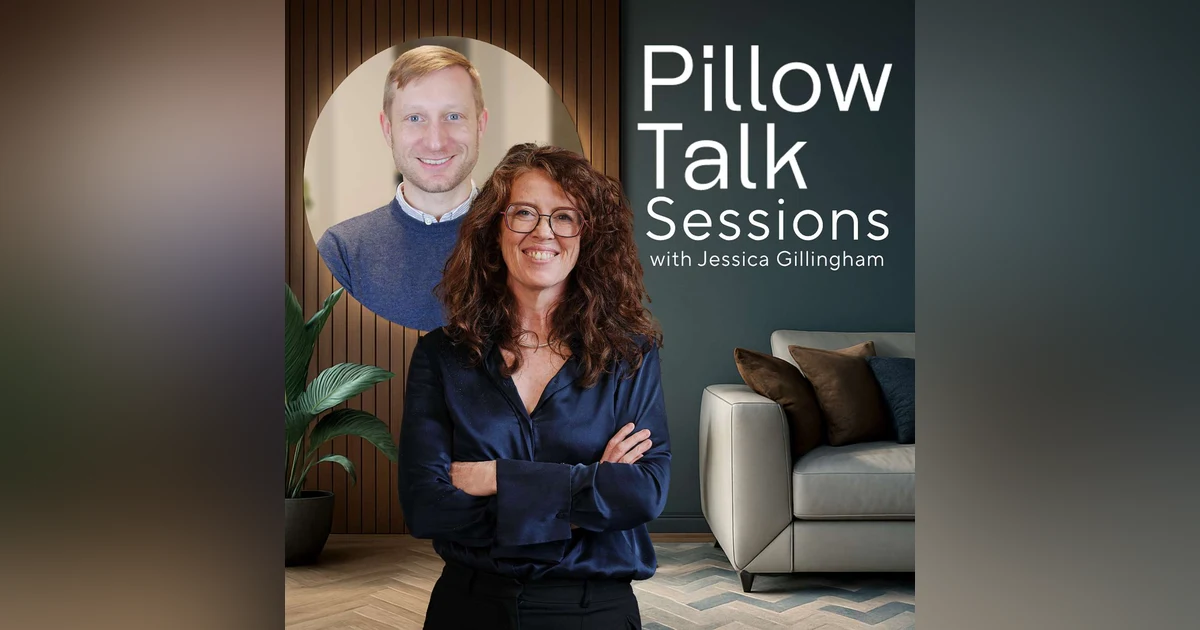
 In this episode of Pillow Talk Sessions, Nils Mattisson, CEO & Co-Founder of Minut, explains how privacy-first technology is solving one of hospitality’s most complex challenges. Balancing guest privacy with host security.
Minut developed a system that detects events such as noise, overcrowding, and smoking without recording or storing audio. This approach builds trust while enabling operators to maintain control over their assets.
The conversation expands into broader industry shifts, including the convergence of short-term rentals, student housing, and senior living, all of which are adopting similar technologies and service expectations.
At the same time, upcoming EU and UK regulations are expected to reshape supply, pricing, and operational strategies across the market.
Key themes explored:
How privacy-first monitoring builds trust between hosts and guests
Why asset classes are converging across hospitality and living sectors
The impact of new EU and UK short-term rental regulations
How AI and automation are transforming guest experience and operations
Why guest safety remains an underdeveloped area in hospitality
The future of building-level monitoring and operational intelligence
For hospitality and real estate leaders, this episode highlights a critical shift. The next generation of operations will be defined by how well technology balances privacy, safety, and efficiency.
#HospitalityTech #PropTech #ShortStay #DigitalTransformation #GuestSafety #PillowTalkSessions
Meet the host of Pillow Talk Sessions
Jessica Gillingham is the Founder and CEO of Abode Worldwide, a strategic public relations agency dedicated to elevating the profile of transformative technology solutions in global hospitality, lodging, and rental living. An established industry thought leader, Jessica is a frequent conference speaker and author of Tech-Enabled Hospitality, a new book exploring the innovations shaping the sector.
Welcome back to Bill Talk Sessions with your host, Jessica Gillingham. Today Jessica is joined by Bill Madison, CEO and co-founder at Minute, to explore how privacy-first technologies is reshaping trust, safety, and operations across short-term rentals and beyond. They'll discuss how sound-based monitoring is balancing guest privacy with host security, how expectations are converging across the living sectors, and why regulation, safety, and building level technology will define the next phase of the industry.
SPEAKER_02Nils, thank you so much for joining me on the Pillow Talk Sessions podcast. I always enjoy speaking with you, and I have done a number of times. So it's really good to have you on the podcast here. But before we sort of get into our discussion, what I'd love for you to tell us is how come an engineer from Apple has come into the short stay sector and now also the living sector. What was it that brought you into short-term rentals?
SPEAKER_01Thank you so much for having me, Jessica. It's always uh always a pleasure speaking to you as well. Yeah, so I I must admit, like I stumbled into this industry, and I don't think I'm the only one actually. For me, entrepreneurship came first. I was very lucky to get to work at Apple at the time when a lot of things were changing, and particularly the iPhone came to be, and it bred this ecosystem around it very, very quickly. And it just happened, I think, that a lot of us who were um around this of that sort of platform formation. I had a lot of friends who were early on then building apps and and new startups that were suddenly possible. Um, and I wanted to do a startup. After a while, I wanted to do a startup. I was at Apple almost for for 10 years, and then like I really got that that itch. And so I was looking for a place to apply an idea I had had. And the the idea was was like, can you monitor a space with preserved privacy? And it had come from a conversation I had a few years earlier with one of the very first employees at Airbnb. We were both in San Francisco, met in a bar by chance, slight chance. He was uh brought by uh uh uh a friend of mine. Um and they were on a date, sort of, and she she sort of forewarned me, you know, like I can bring in this tech guy, maybe you can they crash their date, did you? Yeah, well no, it wasn't it was it was it wasn't like I was crashing it, but it was like there were a group of us, and and and she was like, you know, I'm bringing this tech guy. You're really into tech, maybe you can like have a bit of a conversation, and I could. And we and we ended up having uh a very interesting conversation about lore things, but one of the things that that stuck with me was that Airbnb really at even at that early stage had an issue with people putting up cameras when they were renting out their flats or homes, which you could understand. This I think is even predating reviews, right? Like you bring in a real stranger into your home and there wasn't a lot of trust and accountability. And so unfortunately this this this happened, but you could see the the guest point of view that of course like um renting a place where there is a camera, it's like a complete violation. And so I thought that was actually an interesting problem. Like, how do you how do you respond to that quite um clear need from the host of of um protecting their protecting their property and um protecting their home um while providing the privacy that the guest rightly expects? And so I put these two things together and I realized, you know, hey, maybe there is a this is a good place to apply this idea that I had had. And that's what we did. That it's a it's it's been a long, it's been a long journey with some some ups and downs, but that's really how we got going, and that's how I got into the short stay world.
SPEAKER_02So that sort of building the I guess the environment for there to be trust between the guests and the owners is is what you've done here, haven't you? So for one and reassurance as well, through looking at it differently, looking at it, not looking at it as or seeing something that was happening that wasn't really quite right, and finding another way of solving that issue, but at the same time then providing that trust and security as well. It's it's interesting to kind of look at problems in a different way, like yeah.
SPEAKER_01I felt like what we were doing was enabling a different kind of balance, right? Like before there was a very binary choice. Did you have some level of monitoring? And if you did, it was mostly most likely a camera, and that was a complete invasion of privacy, or you had nothing and you had to completely blindly trust that the the guest would take care of your your home. And I felt like there was this opportunity to create a better balance, and you could draw that sort of slider, if you will, between these two extremes and find the right one, find the place that was right for the different stakeholders in the uh in the industry, like what feels right as a guest, what feels right as a host, and and maybe what's good for the wider community as well.
SPEAKER_02So instead of cameras, what did you put in? So what is the solution that you guys developed?
SPEAKER_01So what we did that was unique was we took machine learning that could recognize events from sound, but we put it directly on the sensors, which meant that no audio had to be recorded or sent across the network. But they could still classify events like someone throwing a party or there being way too many people, or even just it being um and so that was the combination of like new technology on the sort of IoT side, connectivity, and then machine learning becoming um a lot more accessible and possible to run on very, very small computers. Um when we when we started Mini, that was actually like a a uh sticking point for a lot of our investors because the these the the sort of wisdom was that machine learning required these like huge data centers, and of course, a certain type of machine learning do, and even bigger today with large language models. But it's actually quite possible to run neural networks on very, very small devices as well. And that's what we that's the insight that we had.
SPEAKER_02Today you're not just in Airbnbs, you have grown beyond the traditional Airbnb to short-term rental, you know, the wider short-term rental space, and then also looking at some of the service living sectors, I believe. So is the is the issue the same across those different asset classes?
SPEAKER_01Yeah, um, and I'm gonna say this was actually a little bit deliberate. Like we when you start a startup, you want something relatively narrow to start, something you can focus on, and where there isn't a whole lot of uh lot of competition. But you also want to build something that can grow quite big. And so what I liked about this area of privacy conscious monitoring is that it eventually will be everywhere where there is a need to balance different stakeholders. So I can see, for example, in a student housing uh situation where you have a similar type of uh dynamic, or um we have some customers in in senior living where again, like you want the degree of monitoring actually for the best for the tenant, but the tenant again wants to have a degree of privacy, maybe not exactly the same as as in a hospitality environment. And so it was at least semi-deliberately that we picked a problem area that could be applied to many, many asset classes, but then it's really been sped up by the fact that the asset classes are coming together. We have customers who do short-term rental in the summer, and then they do student housing in the term times. There is a mix of build-to-rent or multifamily if you're in America, with short-term. Maybe you are a developer, you're bringing a new building onto the market, you don't want to saturate the market, so you're portioning it out, and in the meanwhile, you do your short-term rentals. So we've been definitely like pulled on that journey, but it won it was one that we were maybe intending to do eventually anyway.
SPEAKER_00Just a quick pause in today's conversation. This episode of Pillow Talk Sessions is brought to you by Abode Worldwide, the strategic communications and public relations agency partnering with ambitious hospitality tech brands to build brand authority and create category leaders. From thought leadership to global media relations, Abode helps the companies transforming how we stay, operate, and experience hospitality to tell their story with impact. If you're a tech company shaping the next era of hospitality, learn more at abodeworldwide.com. All right, let's get back to the conversation.
SPEAKER_02And I want us to talk about that convergence of asset classes because that's one of the core themes that we talk about on pillow talk sessions. But I want to ask you actually about the different customers, and I don't mean the property operators, I mean the tenants that are in student and senior. Because often we think sometimes we can kind of be guilty of plonking everybody in the same bucket, you know, they're all tenants or they're all guests, whereas actually they're very different, aren't they? Like they're a completely different demographic and customer group. And the needs of why you'd want to monitor a space that has students in it compared to the needs of monitoring a space that has senior residents in it, will be very different. So, you know, the seniors I'm going to assume is not having parties. You know, it might be other reasons. But then the students, it's it could be obvious to say it's parties, but actually there's different reasons for monitoring, isn't it, in the student sector. So can you tell me a little bit more about the nuances of the different residents and why you might want to monitor the space?
SPEAKER_01Yeah, and and you're right, they are completely different because, like, of course, everyone should be able to throw a birthday party, right? Like, this is not the technology can, of course, be used to prevent parties, which is very important in the short term, like short-term rental environment where otherwise you end up terrorizing your neighbors essentially because there's going to be a party every other every other week. And so when you move to like a longer-term tenant, that's no longer that's no longer the issue. You still have noise and nuisance, right? Like so, especially with uh with students, there um are instances of people maybe not being very considerate with their neighbors and and playing music at 2 a.m. every day. But that's a different kind of thing to detect when it's like every day. Is this a pattern? Is this something that actually goes beyond the threshold for what we would call antisocial behavior? And so you need to dial in a little bit for what is right for your particular glue acid class. Um, and then there are some things which are just human, right? Like smoking, for example, you have a group of people who are very sensitive to it. Um, if your neighbor does it and you share ventilation, which you do in a bigger building, one person's smoking is another person's real allergy issues, right? And so that is gonna be the same almost regardless of what the asset or what the tenant who the tenant is. Um and then on seniors, there is really like a broad range there already. And I should I should be clear, the seniors is not like a huge business area for us, but we nevertheless have a few customers who are using the product, I think, in really interesting ways. And it's everything from relatively young seniors, okay, we're talking 55 plus, but often um widows or widowers might be living alone. And the what you're looking for there is really is there a risk of fall or some kind of incident that um you are that that would lead you to want to check in on that residence. So, for example, our biggest customer had this in London with um um five or six hundred of these uh these types of apartments. What they used to have was a system where a nurse would come and check on a senior every day. And if you're 57 and healthy, that seems completely excessive. But you are maybe also living alone. You might you might um you might actually need that. And so then they replaced that system with one that identified what we called what we called IMOK signals. Like are is there like normal signs of of light? Well, in that case, the nerve maybe doesn't need to come. That also means that there can be much faster response time if there isn't that signal that something actually might might need to be checked up on. So that's on the one end of the spectrum. And then like on the other, the other end, like uh seniors who are quite unhealthy, etc., they have a very low expectation of privacy. And that's not that's not our business. But of course, like these these kind of things exist where you have a camera at the bed and someone actually um viewing it. And that might be the right, that might be the right choice for for that tenant. So you have a very broad um broader spectrum, and I think um the technology, like everything is possible. The question is like what is right for the tenant and how can we how can we bring that about?
SPEAKER_02It would be such a learning journey that you guys are going on, coming from a hospitality perspective on things to a totally sort of different way of looking at things. And I actually think with you guys, with Minute, you're one of the rare few that are doing that journey from hospitality to service living. You know, it's it's like there's such an opportunity there because it's a vast, you know, it's a huge, vast growing market, build to rent, student, senior, but not many companies are actually yet doing the journey that you're doing. What else is it that kind of I guess I guess what other learnings have you had around that convergence of asset classes? And how do you what are your sort of views about how realistic it is to to see more of that convergence, whether that's from an operator perspective who might be operating in different asset classes, or as a tech vendor servicing these different, these different markets, subsectors of residential and hospitality?
SPEAKER_01Yeah, the the the way I see it, I think there are a couple of forces that are pushing this. One is just, and this is maybe the optimist in me speaking, but things get better all the time, right? Like the student housing that I stayed in when I was a student in Sweden decades ago is not gonna fly today, right? Like that that's not the the standard that people are expecting. So if we if we look at things at a pretty zoomed out timescale, we see that there is this like expectations from customers almost regardless of the market, they're going up. And the gold standard of like service in a living environment is a hotel, right? Like, so you probably are moving on that axis. Like, so even if there's a there's a long way to go, you're seeing more of it. And it's like the kind of you see, you know, um more common areas, you might see gyms, you see um common roof terraces, and these kind of things, amenities in a in a community. Um, and that I think is a response to um the the demand from from from tenants. Like you're expecting more, you might be paying more than we we did in the past, but you're also expecting more. And because you have those expectations going up almost regardless of what type of accommodation it is, they are becoming more similar, right? Because it wasn't that there wasn't hotels with beautiful gyms, it was that the student housing um accommodations never had it. And now some of them do, and suddenly like they're sort of moving in in that direction. So I think there's this like macro movement just to higher quality living, and that means a bit more compacted. Um, on the other side, I think short-term rentals actually has spurred on a lot of innovation and tech by necessity, because it's much harder to run a hundred distributed apartments across the city than it is to run uh a building with a hundred rooms, almost regardless of what type of rooms. Um and so because that was hard, there was a there was a lot of demand for tools. And that's where you got this wonderful industry that we have with a thousand different PMSs and operations management systems and all sorts of utilities that that makes your life easier. Everything from smart locks to to to booking systems. And the the thing about those tools then was that they enabled something like a guest booking online, getting a digital key, checking in, getting access to all of the amenities, having a great experience and leaving without taking a lot of time from the manager who might not have to send someone to get the keys or and they were able to optimize the the cleaning because they looked at the the data from their different apartments, etc. All of those tools made life a lot easier for someone running short-term rentals, but the same tools could then be reused in the multifamily. You know, you might not give a key as often, you might not have the same tight turnovers, etc. But it was the same type of problems. And you could now apply these tools for higher efficiency. And the way markets work, like if there is efficiency gains to be had, you're going to apply them. So I think the the necessity of tech innovation from the short-term rental space eventually then trickle down to other asset classes. And that's a one-way street. There will be more and more of it, I'm sure.
SPEAKER_02There is so much to unpack in what you said, Niels, there. There's like four different threads that I want us to sort of go a bit deeper on. Firstly, that I'm going to say I remember reading an article that said in Sweden they had the best prisons, that the prisons were almost like some, you know, cheap hotels in the UK. Whether that's true or not, I don't know. But I imagine your student accommodation was probably a bit nicer than mine was. But that's an aside. I mean, you said so much there. So the hotelisation of real estate, and I always sometimes think it's like the whole hotelisation of all our lives, right? The expectation to have a sort of service and an experience, no matter kind of what we're doing, whether it is in an Uber ride, you know, we're expecting a sort of slightly different than maybe in the in the days when, you know, we get to choose whether we want comfort or not, whether we want the driver to put the temperature here or talk to us, is sort of infiltrating so much of our lives. And of course, it would be in the place where we're living, you know, whether we're um students or seniors or somewhere in between, that expectation to have our, you know, needs met maybe in a in a in a sort of more experiential way that we might traditionally have got from a hotel is most definitely infiltrating not just the other, you know, real estate asset classes and living, but actually all sorts of areas in our lives. And I think it's a really interesting cultural shift that we're seeing, as well as the kind of conversation that we're having here where it's very specific. The other thing is I've been in the short-term rental tech world for quite some time, probably about the same as you, actually, maybe a little bit more, but aroundabout. And I often and I'm also a little bit in the living sectors and then also the hotel sector. And I always say that the innovation that we've seen over the last few years, because of need and necessity, as you talk about, in short-term rentals to solve the operational challenges, which are huge in in that sector, has created so much great innovation in tech that can be deployed elsewhere. I just think that sometimes in some of the living sectors, they're just not yet aware of it. You know, it's very siloed, so they're not aware yet that there's all these other ways of um not just kind of operating, if you like, with tech, but also providing that resident experience as well that we see. And with things like, you know, locks and smart locks, you know, of course it's in some multifamily. But if you think about, yeah, it's not like a guest needing door code every other night when it's a new guest, but you have delivery. You know, imagine if you can you can have your deliveries taken up to your room or someone's coming to change clean um fix the pipes, all those things you can have, you can use security by having different door codes and using technology on on that. I think it's just a really interesting way of looking at things a little bit differently from different lenses that we're seeing in the space.
SPEAKER_01Yeah, I think also in the short-term rental world, it's so easy to get started. You can, you know, take your photos in the morning and have your first guest in the afternoon, maybe. Maybe you shouldn't, but I think you can do that. And that has led to an explosion of supply. There is a lot of housing and apartments coming from the long-term rentals that that become short-term rentals. So you have this supply explosion, especially like in COVID, and then afterwards, as as demand veined a little bit, you had oversupply actually. You had more maybe than what the market actually really needed. And in that type of market where you have competition on the inventory side, you want to start adding these things because you need to really attract the guest, right? Like if you are not doing it, then your neighbor, um, your neighbor will. And so I think also that competitive dynamic, it spurred people on to differentiate and increase the the improve the guest experience. Whereas on the longer term rentals or build to rent multifamily, the dynamic is unfortunately the other way around, right? Like it's it's really hard to find a place to rent because we're not we're not building enough. And so So you don't have that competition between different vendors the same way as you do on the short term rental side. So I think that could also perhaps perhaps change. But maybe that will um maybe will force maybe eventually it will force the um property managers to to do a bit more than just offer two beds and a bath for the lowest price.
SPEAKER_02Yeah. Do more. With can we talk about regulations a bit, Niels, and legislation and the impact that that may have on short-term rentals, but also with the dynamic with the long terms, especially here in well everywhere we're seeing short-term rentals with you know quite sometimes heavy-handed legislation to deal with the oversupply, you know, the problem, if you like, of short-term rentals at some some see or something. But then on the other hand, on the in the long-term sector in the UK, we've got the rentals reform bill, which is making like private rentals a little less attractive to do because all the sort of the power dynamic goes into the tenant rather than the owner. Where do you see this playing out? Because there's sort of they're kind of forces that uh conflict with each other. Like one might mean, well, actually it's better to do long term, and then another might be, well, actually, I can I'll have much more flexibility if I do short term. Where do you sort of see that playing out?
SPEAKER_01I mean, it's really hard. Um, but there are, of course, a couple of places where we can look where similar things have have have happened. Um, I'm not sure if that's what you're referring to, but there is a new EU-wide and UK um legislation coming in May, I believe, which essentially forces central registers for short-term rentals. Um, what that enables what that what that does is that you can't have the same rental on booking for 90 days and on Airbnb for 90 days and Expedia for 90 days, because they're all going to report it into the same register, and and that's gonna make it um obvious that you're you're breaking the rules. So I think we have in many cities in Europe, we have quite heavy uh handed uh legislation on the books, um, primary residence requirements, 90-day caps. Um, and I think those have come into place as a reaction to higher rents and cost of living. And this has been the politician's response to solving that problem. And unfortunately, I think they're just not the short-term rentals, it's still such a small park in most cities that unfortunately it's not gonna change the rents for long-term rentals significantly. But what we have seen, for example, in New York, where they uh have a similar type of register that came into play last summer, the number of Airbnb listings fell by almost two-thirds in the space of a couple of months. And that's like a real supply shock. And when that happened, the rents didn't move or they even moved up a little bit. I don't think it it influenced it at all. But hotel prices almost doubled. So I I hope that that's a a sort of eye-opening statistic for people who have been putting these this uh regulation on the books that actually there isn't enough short-term rental to solve the housing crisis, we just need to build more, uh just need to build more houses. But what I'm afraid of is that because there hasn't there a working tool to really regulate short-term rentals in a good way, and as an overreaction, these legislations have come into play that are quite heavy-handed. But because they haven't been enforceable, the status quo has been maybe reasonable. But now they're becoming enforceable, and I think that's gonna mean a uh uh a supply shock. I would I would love to be wrong, but I think it's gonna get a lot more expensive to travel in Europe over the next couple of years.
SPEAKER_02That I just someone just showed me on my team, and I'm not quite quite sure where she got it from, but about flight prices and how much flight prices are going up as well. So, you know, add that to the price of rentals, it it's it's becoming a different picture, isn't it, really, in terms of stays and location and travel and yeah, and and while these are different, right?
SPEAKER_01Like they are still grounded in the same very basic economic principles that have been studied for hundreds of years. With oil, now you have a supply shock because it's not leaving the Persian Gulf at it as it used to. So you have less of it. Prices go up. That means that the flight prices are up almost immediately. Um, and the same thing will happen with any good when you reduce the supply. So here you have legislation coming in that will reduce the supply. Of course, the prices are gonna go up. That's just how it works. But it could be a bit of a double whammy for the industry because I have anecdotally heard from a lot of our customers that summer bookings are not what they normally would have been for the end of March. And it's hard to say exactly why, but I think the flight prices make a difference because the behavior is often you start by booking your flight and then you're finding accommodation. And so now you're going and looking at flight prices and they are too high. So you've you you don't book, and now you don't book accommodation either. And so I think it could be a tough summer for the industry.
SPEAKER_02I was just speaking to an operator this morning who said the same thing that it's very, very soft for their summer, but they're actually a UK staycation brand. So it, you know, typically for for a domestic market, but I think there is just so much uncertainty, isn't there? And so much the economic kind of headwinds that are that are heading our way again will certainly have an impact. But I want to move on to another topic, Niels. And you very kindly let me interview you for my book, Tech Enabled Hospitality. And we've been talking about how we're moving towards like a hotelization of real estate and and how a sort of service, like more service, is something that's just coming to other asset classes. But how there's a paradox, isn't there? Because of technology, a lot of hospitality now is using technology to provide its hospitality. I know one of your like I stay quite regularly at like a hybrid hospitality brand in the UK, and I know that they're one of your customers, and it's one of these where there's no people on site at all. Everything is technology, like it's an autonomous property hotel. What are your views? I mean, I've got my own kind of views on this, but what are your views on how we can provide hospitality in the hospitality, the hotel or the short-term rental space, but by using technology, are they sort of mutually exclusive to you?
SPEAKER_01I think technology is a tool that can be applied to almost anything. And I think you have a bifurcation of the industry here almost, where on the one hand you have something where you want it to meet a certain standard, but you want it to be convenient, you want it to be relatively affordable, but you want to trust it, you're not necessarily after like a big uh luxury experience. And that's where I see these like apartment hotel style brands. On the other end of the spectrum, you will see a lot more technology use, I think, in the more traditional hospitality, which has often been quite um people-heavy. Like you provide a great experience by providing a lot of a lot of people, but there are things that technology actually does better than people. Um, small example, but of course, at the minute we do customer service as well. And we have AI that does customer service, and we have people that do customer service, depending on what the what the question is. Um, and we recently hit the point where the customer satisfaction score from the AI is better than for the people. And so that I think is going to happen in more areas. And in the people-heavy luxury hotel world, this hasn't really happened yet. But I think it will, because there are things where it's just a better experience to use the AI. Um, like for example, if you have questions about the, I mean it is in your room, or you can't use the thermostat or or whatever it is. Um, an AI is gonna be able to do that perfectly every time, and they're gonna do it instantly. Whereas a person might be super nice coming to your room and trying to help you with the uh thermostat, but you're not gonna get the temperature you want. And so I think technology can and will be used in many different ways, and it will both enable these autonomous autonomous hotel chains where there is no people or only one person in the in the reception. And I think they will also actually increase or improve the guest experience on the on the luxury side, but that's gonna happen a bit uh a bit slower. But I don't think they're mutually exclusive.
SPEAKER_02Yeah, it's interesting that the thermometer, the thermostat bit is not only do you, you know, somebody may not get the temperature right, but you also have to wait for them to get there. Like you have to wait for them to come upstairs and and do it, you know, when they can. Are there any other areas in like that autonomous hospitality model that you're seeing that that are working really well, like in a different way? So we've got the sort of the fact that actually for the experience of the guest may be improved because AI can't really make mistakes in that way. Like if it's uh, you know, it's it's always gonna be the same every time. Whereas are there other areas that you kind of that you're seeing as being quite exciting that we can see coming up?
SPEAKER_01I mean, operational efficiency might not be very exciting, but I do think that these autonomous hotels, if you will, under the surface, they're still people. And it's just that they are more dynamically, uh dynamically used. So instead of sitting at the reception, they might be like roaming around a building. And we have customers that have everything from a couple people in a building at all times to maybe half a person, and then they have like a central um a central hub. Um, but it comes to a point where it it is relatively efficient and there isn't really that much much more to do. Um, I still think it has a little bit to go, but but we're heading in that direction where the price is more set by the value of the asset and how much the you know how much it costs to finance and how much it costs to to furnish and these kind of things rather than the number of people because it is already quite quite quite efficient. So I think maybe the more interesting area is in the luxury segment where you have a lot more blue ocean, like there's a lot more innovation that hasn't happened yet. So that's one area, and then one area where I feel like there is the industry as a whole is lacking a bit is in guest safety because people often provide a level of safety in a hotel as well. We might be thinking about that, but once you have a um building that is completely void of people, you have different safety concerns, and I'm not sure we have really responded to those as an industry.
SPEAKER_02What would you see as being the solution there?
SPEAKER_01I think we spoke about this sort of uh balance between between privacy and monitoring, and I think there is one expectation of privacy in your room, and I think there is another in the in a in a corridor, and we need to apply different systems, and then there needs to be a a fast response to to to things. We have good regulation on fire and gas alarms, that sort of thing, but that's really it. And I think um I think maybe a bit more is needed.
SPEAKER_02So going further on what is actually expected and asked of property managers or operators.
SPEAKER_01Yeah, um so being able to dispatch people in an emergency very, very quickly, and these things these things go a bit um um a bit hand in hand, right? Like if you are making the whole building a lot more efficient, then you should be able to afford having that sort of fast response when when needed, because maybe they're not stuck in a reception the way they used to be.
SPEAKER_02Excellent, Niels. And to wrap up, Niels, what is exciting to you and Minute over the near future? So, what is it that's really getting you up in the morning around what you're planning with Minute in the future?
SPEAKER_01I just um I'm a builder, like I love I love building things. So what gets me up in the morning is really um you know having a having a plan and having somewhere to go and getting like a couple of steps closer to that. We do have a lot of new products that are meant for the people who run full buildings, so that's that's quite exciting to me. It's a different level of intelligence that when compared to what we have provided in in the past, which I'm which I'm very excited about. But we're also going into new areas and we spoke about guest safety briefly, like that's something that we're going to be investing quite heavily in over the next few um next few months. And that is something that I have come to care very, very deeply about because when I started studying it in the industry, I realized that it's not very good. The unfortunate fact is that as a guest in a short-term rental, you are not as safe as you would be in a hotel. And I think that's wrong. So that's something we're gonna try to fix.
SPEAKER_02Excellent niels. Thank you so much for being a guest.
SPEAKER_01Thank you so much for having me, Jessica.
SPEAKER_00And that wraps it up for today's episode of Pillot Talk Sessions with Jessica Gillingham. Thanks so much for listening. And if you'd like to stay connected and never miss the conversation, head over to Pillotalksessions.com to subscribe. You can also follow us on LinkedIn for more insights and interviews with leaders shaping the future of hotels, short term rentals, and tech enabled hospitality. Thanks again for tuning in, and we'll see you next time on Pillot Talk Sessions.


