The Rise of Flexible Living with Begum Agca Okutgen (Blueground)


 RSS Feed
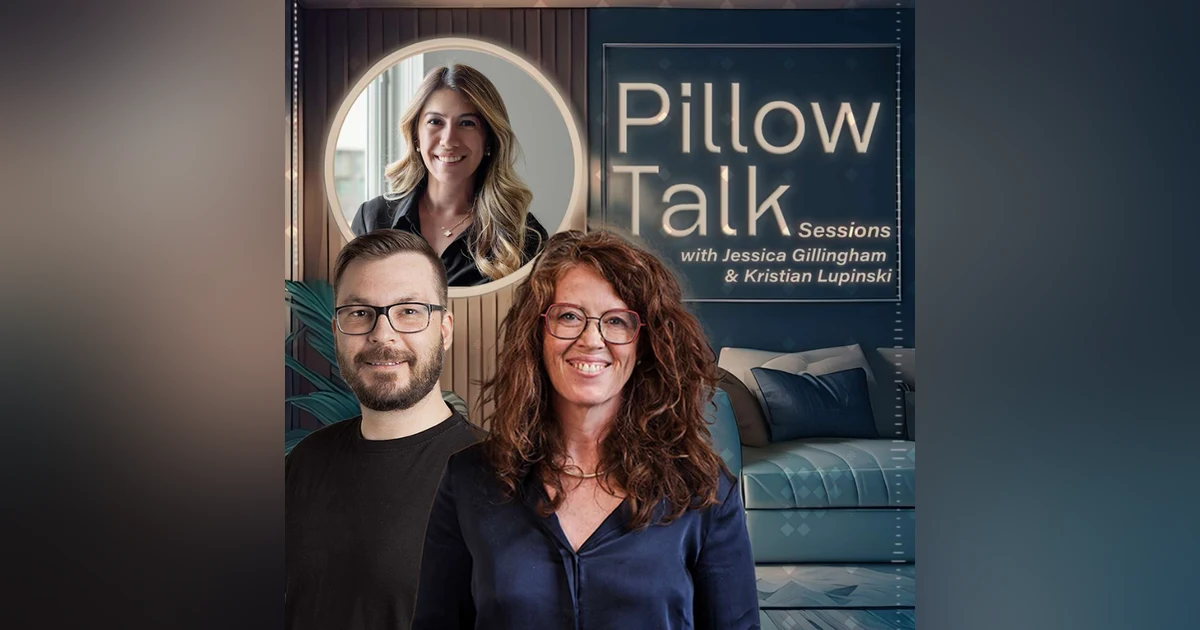
Jessica Gillingham and Kristian Lupinski are joined by Begum Agca Okutgen, Head of Partner Network at Blueground, to explore the ongoing transformation of the rental market driven by remote work, technology, and evolving guests needs.
💡 Tune in to discover:
🏠 How remote work is reshaping demand for flexible, furnished rentals across 35 cities worldwide.
🤖 The role of technology in streamlining operations and enhancing client experience.
🛋️ Why quality standards and curated design are key to maintaining premium rental experiences.
🌍 The shift toward individual renters—digital nomads, expatriates, and remote professionals—and how instant booking is changing the game.
♻️ How sustainability is becoming a core focus for rental operators and their clients.
This episode dives deep into tech-driven efficiencies, market trends, and what’s next for flexible rentals.
Meet the host of Pillow Talk Sessions
Jessica Gillingham is the Founder and CEO of Abode Worldwide, a strategic public relations agency dedicated to elevating the profile of transformative technology solutions in global hospitality, lodging, and rental living. An established industry thought leader, Jessica is a frequent conference speaker and author of Tech-Enabled Hospitality, a new book exploring the innovations shaping the sector.
Welcome back to the Pill Talk sections. I'm Kristen Lefinski and joined as always by my co-host, Jessica Gilliam. Now today we're diving into how remote work is reshaping housing trends and driving demand for flexible rental.
SPEAKER_02I'm looking forward to this, Christian. So today we have Begun Aka Ukuten, who heads up the partner network at Blue Ground. Begum is going to share her expertise in the global flexible living model and how they do it at Blue Ground. She's going to share her insights on the changing needs of digital nomads. We're also going to talk about furniture as a service and how operators can stay ahead. Begume, it's so good to have you on the show. Thank you for joining us. And to start, would you like to introduce yourself?
SPEAKER_01Thank you for having me, Jessica. Sure. My name is Begume Mokutkan. I lead our partner network business for Blueground. Blue Ground is a global operator of flexible furnished units. We have over 15,000 units under management in 35 cities around the world. And as for Partner Network, we list properties of other high-quality professional operators in our platform and give them access to our individual and corporate clientele. Great to be with you today.
SPEAKER_00Absolutely. And it's it's great to have you here as well. So I think we're just going to kick off today's conversation. We got a lot of different topics we're going to cover, but I first first one I think we should cover is, you know, how remote work is kind of shaping these housing trends. You know, with with remote work and hybrid work, you know, becoming normal. That's actually what I do uh fully remote. You know, how is this shift driving demands for these flexible rental options? Do you see any like services or amenities that are more important to today's digital nomads?
SPEAKER_01Yeah, sure. Um that's a great place to start. Um so for a segment of customers, I would say remote work will continue to be very like to continue to be prominent, right? Uh and if they're mobile, given they're mobile, the need for flexible furniture rental will continue on continue to increase. And and I think um we also were also seeing a slight shift, right? Like um there's a bit of a scaling back for these remote workers who they started working remotely post-COVID, but now like a lot of companies you're hearing, like return to office policies. So there's a rise of hybrid approach. Um, but there's still, even for this segment of customers, we think there's still a need for flexible rentals because we see that people move back to cities and before like before they commit to like a long-term lease or buy a place, they still want to use a flexible offering, right? Just kind of try it out for a few months, get get a lay of the land, and then maybe commit or continue, uh, to be honest, within a flexible model. Um, so I think in that sense, um flexible furnished rentals continue to be very, very important. Um, and I think with um with that in mind, the background, I think we see the need for a more diversified supply, right? People now looking for apartments for their whole families, for example. Uh so that requires a certain type of unit, right? Maybe bigger apartments with slightly different set of furnishings. Um and I think also the individuality part, which is slightly different than the family, right? Like you suddenly have uh a group of customers that have very varying needs. So, in terms of amenities, like some people may still need need a work-for-home setup in their apartment, or some of them want a gym or certain certain facilities in the building or or the apartment complex. So I think if anything, for operators like Blueground and others, our partners, it's now like um a group of customers that is ever growing and they have very different needs. So, what do you need, what do you do about that? You try to diversify your portfolio as much as much as possible so that you can tap into this demand. Um, that's one of the reasons actually why we started Partner Network, because that gives us the ability to like list out properties in new markets, new neighborhoods, new unit types, right? Like we typically have uh studios to one to two bedrooms uh for blue ground, whereas now we're able to list like houses, like townhomes, like really luxury apartments. So that gives us the ability to like meet this demand that is ever varying, right? So the more we can offer to the customers, we think the the better we'll be able to capture this this rising demand.
SPEAKER_02Is it your customer? Do you do you call them like guests or tenants or residents or a mix of both? Like what what do you call them? And then I've got another question for you right after that.
SPEAKER_01We tend to call them uh clients um because we think we we really think of this as a like a professional relationship, right? That with the our clients know what they're getting into, uh we know what we need to deliver to them, so they are our clients. Uh, and we're quite like we we we really care about the experience and the promise that we give to our clients, and we're like working really hard to deliver on that. We we gather feedback, right, continuously in every transaction they have with Blue Brown team. We collect feedback to see if we were able to live up to that like promise of experience. Um, so yeah, there are clients.
SPEAKER_02So it's a it's a real service offering, isn't it, that you're providing? And then can they? So, in terms of the flexible rentals, what what are the sort of typical lengths of stays? Like, can they stay for two years if they want to? Or you know, is it is it two months, three months? So, how does it work in terms of the lengths of stay that they might book for?
SPEAKER_01Um, it actually varies quite a lot. I think for uh Blue Ground, um, we are traditionally focused on uh 30 days plus. Uh that's the segment we operate. And our average length of stay is close to four months, I would say, across our portfolio. Um, we made a big push over the last, I would say maybe a couple of years into like increasing the length of stay. Uh, because we we saw that there are like various benefits associated with that. Um, it helps us increase our profitability, really reduce our cost base, um, access to a bigger demand pool, right? Like the more now that we can compete in like 12-month stay segment, then that suddenly opens up. Okay, we can actually go after renters that were traditionally choosing unfurnished apartments, but we can offer our product, right? That's a whole different pool of customers that was out there that our sector wasn't really tapping into. Um, so that has kind of been a bit of a change. We're really skewing and really pushing towards longer stays. Uh, we're now at four months, but we obviously see like um depending on the use case, depending on what the client needs, we see anything from one month to like, yeah, we have clients who live, who live at blue ground for like a year, two years, three years. Um, and yeah, so like we are able to serve like all kinds of use cases.
SPEAKER_02Excellent. And that and the remote work and the the sort of the way remote work has changed, how clients, residents sort of view their longer-term rentals because you know that having those kind of more midterm rentals. But what are the kind of market changes? Like, are there other particular regions and shifts that um that that are more attractive? Like, I know that Portugal has loads of remote workers. Um and and you know, there are certain regions, but are there particular markets and regions where you see the desire for flexible renting to be stronger than others?
SPEAKER_01I think traditionally for blue ground are European markets. And when I say European, I talk I'm talking about um, say like um Athens, um, Istanbul, uh, London, Paris. That's where we saw a lot of like these very long-term clients. Um now we actually see a bit of a global trend, Jessica. Like um anything, I think right definitely over the last year, we're seeing a lot of cut a lot more customers in the US like choosing to um live at Blue Ground, right? Like actually get like 12 months or longer bookings. Because I think there's some couple of things at play there. One is um I think customers are now seeing um that like they're the buying the furniture is one costly, and dealing with that, like after if they're moving again or they want to change locations, it's quite a hassle, right? Uh and if the furnished flexible furnished operators can offer them a competitive enough price point in terms of monthly rent, then they're like, oh, okay, this actually does make economic and economic sense for me. So they go, they go and choose that. And besides the economic sense, they get a whole host of benefits, right? Like um, we service the apartments, if there's a problem, we like solve it for them. Um, we have a couple of additional like add-on benefits. So like it is if all in all, it's a much better offering than kind of the unfurnished, um unfurnished rentals, um, especially for the type of customers that does need a bit of flexibility, right? And again, kind of this goes back to the point I made earlier. This is somewhat of a new customer segment for this sector that we have we weren't necessarily tapping into before. And I think with with uh for with Blue Ground, we really made an effort to okay, how can we like kind of how can we be visible? How can we how can we become uh an actual option for this type of customers that will stay longer but still need some sort of flexibility? Um okay, one is actually being visible to them. So like you need to be in like distribution channels, platforms that uh that these customers go to, right? Like they for someone who's looking for a long stay, they there are certain platforms that you should check, so you need to be listed there. Um and second, the pricing point, right? How can we make sure our pricing is as competitive as possible versus an unfurnished rental? And we built like a quite a like quite we've we've done a lot of work on this, but we now have a quite a sophisticated system frame discount framework, which basically you unlock the more discounts and get better rental rates the longer you stay. Um, and we do that without actually jeopardizing our own profitability, right? We're not necessarily letting go our bottom line, but uh but we are able to drive longer bookings, which in turn like helps us save a lot of cost, the overheads, uh, the vacancy cost. So like this whole discount, duration discount framework, we've we've seen it work very, very well. Uh and once you kind of do both of these things and be able to offer like a variety of uh properties, as I mentioned before, then you become a like a quite prominent option for this type of customers. And that's what we're trying to do with our partners now as well. Now, okay, they're listing on Blue Ground, which is a distribution platform for longer stays. And on the pricing point, we're really working with them on this duration-based discount model. This is a future that no other platform offers. So we're really pushing this uh so that our partners can start getting like longer bookings and tap into this new segment as well.
SPEAKER_00That's really interesting. And then, you know, uh, I wanted to follow up just a bit on that, you know, the meeting demand for longer stays. You know, how have you know resident expectations differed from you know these longer stays compared to maybe a short-term rentals?
SPEAKER_01I think for longer stays, uh, there's definitely an aspect of type of property, right? Because you know that you're gonna be staying there for a long time. So the the fact that prop like uh the unit is like fully furnished, fully equipped, um, and it does work with whatever you need is very important, right? So that aspect of um serving the personal need, whatever that may be, becomes very critical. Uh, whereas for a shorter stay, I think maybe like, yeah, not being fully equipped, not having like uh everything in the kitchen, that those may be uh a bit more trivial. Um, but for a longer stay, if you're gonna stay somewhere for like three months, six months, you wanna make sure you can feel at home, right? You have everything you need. Um, and that's yeah, everything in the unit, but also in the building, also in your neighborhood. So, so I think the the property itself becomes more important for longer stays. And I think that's the point, like Jessica, you made it, you you made that point earlier. Like we call the customers clients, right? It is the service, it is it is the promise we offer to them that they will just show up and start living. Because after all, like if it's a longer stay, you live there, right? Like it becomes more from uh just a stay to actually like living somewhere. So I think overall the experience, the property, the service, everything becomes uh almost more important to make sure you like you meet that consistency, you deliver on the promise.
SPEAKER_02Absolutely, because you don't want to show up and then not be good knives or having to do a big IKEA trip to get you know get things in. Um, and do you so so with all of your units, I guess um you probably do this, but I'd love to hear about it. Is you've got do you have like packs basically that go into a property? So so any apartment, it has all of these things. You'll you'll have checklists of kind of quality, you know, not just one, you know, sometimes you'll go and stay in a short-term rental or whatever, and it's got three forks instead of six forks, or it's got two plates, you know, those kinds of things, or it just doesn't quite have all the things that you would expect if it was your home. So, so do you how do you make sure that you've got, I guess, that standard across all of your properties and units, especially also your partner network, so that if I'm a blue ground customer, I'm used to booking with you guys. This week I'm in Miami, two months' time I'm gonna be in London, then I'm planning to go to Toronto or whatever, but I I know what to expect. So, how do you make sure you've got that, those kind of, I guess it's brand standards, isn't it?
SPEAKER_01It is. I think that's that that's a great way to put it. Uh, we call it internally of quality standards, and we're actually quite quite strict about it. Um so I think in terms of like blue ground units, that's kind of has been some like a very core operating principle from us from our early days. We uh we have our own like in-house like design team that like designs the furniture, we then source this furniture. Everything that goes inside the blue ground unit, um, we source it ourselves, right? Like, so I think everything we we really think hard about like the fork point, like how, okay, this is a one-bedroom apartment, how many forks should there be, right? Um, and then in terms of like sheets, right? Um, okay, we there's one sheet, one set of sheets, okay. If they're gonna wash that sheet, there needs to be another one while that's being washed. So like these little things, but we really do think about as a client, what if we were to live here, what would we need so that exactly they avoid that IKEA trip, right? They just like they just show up and everything is there. Um, so every little touch, like everything that goes inside the unit, that goes through a lot of like scrutiny. Um and we do if after every move out, right? Like we have an exit inspection process, like we send our team that they make sure like everything is in place. If something is missing, we immediately replace it. Um, and so that like we we make sure that like never like that never gets disrupted, basically, right? For every stay, it continues to be the standard. Uh, and as for partner units, um, that's obviously like a little less straightforward, right? Because our partners manage this these units. And the way we go about this right now is we only accept, so it's a select-only um network, right? Uh we only work with partners where we think they have the first right portfolio. So, right, their units look um a certain way, they're in the like the best buildings, they're in the top neighborhoods. So, like the unit look and feel is there based on and is in line with what we look for for a blue ground managed unit. And then second, we actually like really care about customers' experience with them outside of Blue Ground too. Like we read all of their reviews on other booking platforms, on Google, like we really deep dive on that. We we ask for referrals uh about their service levels. So after this kind of the selection process, if for one partner, we even go through all of their properties one by one, like review every single photo, um, the their descriptions, like what's inside the unit, and we try to gather as much information as possible and really vet and select the the properties that we're comfortable with, the properties that meet the brand standards that we have established for Blue Brown. Uh and we're we're quite big and strict on this point. So as a result, like we definitely don't accept every partner. Um and then within even the one partner's portfolio, we really like to select, we really curate what properties we display on our platform. Uh and I think, and then obviously this is this is a review, right? So far, what we've been doing is we continuously ask for feedback for uh for our clients that stay with our partners too, right? We gather this feedback. If something was not up to standards, we immediately relay that feedback to our partners so that we can resolve it quickly. And if not, like we probably would not display that property anymore. Um, so we're also trying to like kind of complete the circle, right? Like we do a lot of review, we make sure everything is vetted before it's displayed on the website, and after it gets booked, we make sure to get the client feedback. Uh, and if there's an issue, we fix it immediately. So far, it has been working well. Uh, and I think with with this year and next year, we're really looking to grow a partner network, but this point becomes ever more important, right? I think we will scale partner network very fast, but without sacrificing from the quality aspect.
SPEAKER_00That's really interesting. And I'd be curious to know um about feedback that you've gotten um in a topic matter that I really enjoy talking about, which is tech. You know, there's there's a there's a lot of buzz around using technology to improve the rental experience, but you know, do you actually think that all this technology really makes a difference to the residents? Or are there any innovations that you think are like, yeah, this is a game changer?
SPEAKER_01Yeah, I think um, I mean, my approach about tech let me take a step back.
SPEAKER_02Blueground is um, I think as tech enabled as it gets uh in terms of I I just want to put a point in this because you are one of my real-world examples in the book that I'm writing, which by the way is about to go to the publisher this week, final manuscript, as tech enabled hospitality. So thank you for being uh an interviewee for that. I've just added.
SPEAKER_01Of course, of course. Uh it was a pleasure. Uh so yeah, Blue Ground is as tech enabled as it gets uh in this space. So everything we do, we try to like really incorporate technology, right? Anything from our internal operations to the way we interact with our clients, we incorporate technology. But our perspective typically is we should incorporate technology in a way that makes sense for both our operation and our, I guess, economics and our productivity, and at the same time in a way that improves clients' experience. So we're not a big fan of introducing technology for the sake of technology. So we try to steer away from like the buzz but buzzy new products, new features, and all of that. We really like think hard about okay, like What is it that we should implement that will help us do things better, more efficiently, and it will in turn improve the client's experience as well. So that's why I think we always my advice would be to be really strategic about any technology investments an operator should make. And I think, yeah, and avoid adopting technology for the sake of technology. One example, good example of this is we built uh an in-house, we built in-house a sales bot. We call Jarvis. We built this in-house to support our sales team to respond to initial inquiries, right? And this really helped us speed up the initial inquiry response time, uh, do it much faster, which is a great thing for clients, right? They immediately get what they're they're looking, the answers they're looking to get. And for our sales team, that helps them like really eliminate the task of dealing with the initial inquiry, and they can focus on the really high value add uh clients and help solve like bigger, more complicated problems. So, again, uh I think this is a good example. It helps us do things much more like efficiently, helps us save a lot of time, cost uh internally, and the clients actually have a much better experience. They get answers much faster and with in a lot of cases with more accuracy. So again, that's kind of the lens that we we we try to follow. Uh, and so far it has has worked very well for Blue Brown.
SPEAKER_02It's interesting because Jarvis is an you know, it's like a it's it's a kind of typical butler name, which is, you know, it's like recreating a butler within the um, you know, I and I know it's at the beginning of the sales process, not actually going to meet Jarvis, but it's an interesting choice of name. It's almost like a butler.
SPEAKER_01Yeah. Uh and we're actually looking to um kind of expand this bot into different areas as well, right? Like, okay, so once a guest um client is in the unit, right? What happens then? Like, do they maybe they can talk to an agent, right? Uh, maybe some of the for certain issues, the agent can actually help them resolve it end to end. So we're now in the process of basically expanding Jarvis scope to other areas and other processes as well.
SPEAKER_02I can't wait to see how that all plays out over the next year or so. You know, the operator agents kind of side of things as well. It's yeah, it's really interesting.
SPEAKER_01We should talk again next year. I'm sure like it's gonna look much different uh by the time. Yeah.
SPEAKER_02Well, Jarvis will be joining us on the on the session next year.
SPEAKER_01Yeah, why not? Why not?
SPEAKER_00No, I look forward to that. Uh, I just had one more question about the the tech side of things. You know, what do you find like are the biggest you know pain points for residents? You know, some people are not into all this tech and you know, uh having a certain app on their phone and you know, Bluetooth their door and all these different things. Do you find some of those issues with residents? And like how can operators kind of avoid those pain points?
SPEAKER_01Yeah, I I agree with you. I think like not everyone is like super into like not everyone's super high tech, right? They just want to have um a seamless experience. I think at the core of it, that's what most clients need, right? They just want to have a seamless booking experience, they know to know what they're getting, and actually once they they can and then have a seamless move-in experience and be don't be surprised with the unit that they're in, right? I think at the end, like as they're staying in the unit, if they have a problem, they just want like okay, easy way to communicate that and fast resolution. I think that's that's the crux of it, right? That's what like any operator should be providing to the client at as the baseline. And baseline actually covers a lot of ground when you think about it. And it's at it's not as easy as it sounds to make sure all of these pieces happen every single time for every single booking because it's an operationally complex business. There are a lot of moving parts. Um, yeah, it's kind of late to that. Um, I think in terms of like how to use technology to make sure this happens, right? Uh, again, every single time for every single booking, it becomes important to think about, okay, yeah, like from the point of booking, right? Like, how can we make sure or searching for an apartment and booking? How can we make sure it's like it's the the client has all the information they may need? Um like I think we we really like have been quite um intentional about what we display on our website, and we continue to like gather feedback from clients, do interviews to see how can we improve, how can we make the information easier to digest, very clear, very transparent, so that that booking, search for a unit and book the unit experience becomes as smooth as possible. Um, so we do spend a lot of time on improving our website. We're big believers of instant booking. So you find a unit based on different criteria you have, you then are able to book that unit, pay for it immediately, and you get a booking confirmation. And and basically that's it. So we are very like, we think that's kind of the future of the space to be able to do these things instantly, again, without avoiding without avoiding uh without any friction in the process. So that's kind of the search, discovery, and the booking part. And as for the moving experience, we've over the years we really did build our own like internal processes and incorporated technology into it in a way that makes sure, okay, the unit is ready for the guests to come in, the the keys are where they're supposed to be, um, the cleaning task was complete, the exit inspection meant and showed that there were a couple of things missing. They're already shipped into the unit. So at any given time, we have a log of what's going on for that unit. And we are able to do that in 35 cities around the world every day, but through technology. We have in-house build an ERP system that we called Blue Brain, uh, like Blue Ground, uh, where all of our teams communicate continuously and make sure we have the uh the most up-to-date information about that unit at any given time so that it is ready for the next guest to come in. And then finally, after the guest moves in, assuming all goes well, uh, they have a problem. Then we have our app, right, where they can quickly, like it's a again, like a chat, um, they quickly mentioned the issue, they may get automated responses around if it's a problem that we can solve just like that. But if it's it's a more complex uh issue, then our team would reach out to them. Uh, and again, they would just use that platform to communicate to us. Um, so that way we can make sure we respond in a timely manner. Uh, and then after it's resolved, we gather feedback. So it again helps us make sure the client doesn't need to call so many people or like chase us. We are able to track, okay, when exactly did we respond? Like, was the resolution satisfactory? What was the feedback? We are able to track all of these things and resolve later real time. So, again, kind of just to sum up, at any kind of the whole booking stay uh journey, you need to make, you need to figure out, okay, what is the problem, what is the challenge, right? Like what am I solving for? And then incorporate technology in a way that solves for that, and not to just add a bunch of different features, but to solve for the crux of the problem so that you make sure you deliver on that experience to deliver on that promise. That's great.
SPEAKER_02And I have an observation, and then I'm gonna ask you something that is the opposite of technology. But firstly, when you describe the kind of the customer journey, it sounds like a hospitality customer journey. You know, instead of leasing and that, you know, it can be very painful to kind of lease a longer-term rental or even a midterm. But you're sort of talking about it as if it's like booking a hotel, instant book. Let's ease it for you and make it easier for you, which is really interesting. It's like it's it is that sort of different way of looking at it rather than maybe more traditional. What a traditional long-term rental, it's it's a pain quite often, renting somewhere. It's it's definitely not instant book, it can be the opposite. But I want to ask you about something else, which is really the opposite of technology, and it's furniture. So we've got technology that's there, kind of easing things for us, it's in the background, and then furniture, the physical pieces that are there. And one of the guests that we had on recently talked about furniture as a service, so that actually it's the furniture and the rental of the furniture, which is the service. Um, and and this guest also talked about how you know, maybe in the future, and this guest was wasn't was talking more about longer-term rent, so build-to-rent, um multi-family is what you you would refer to in the US. But in the, you know, at some point in the future, it could be that a tenant decides, do you know what? This month I like the oh, I don't know, what the the kind of the functional modern look, but next month I want all that furniture taken out and I want the cozy country look or something. So I just would love to hear your thoughts and and whether you think about this. I'm sure you do in Blueground about how furniture as a service, because that's what you're easing. I mean, you're obviously giving the apartments, you're giving the ease of booking, but it's the furniture that we don't want to schlep around with us when we're traveling from you know, spending three months in Nairobi and three months in in Sao Paulo or whatever.
SPEAKER_01Um, that's that's a very interesting point, Jessica. Like I think so far with Blueground, as I mentioned before, right? Like we have been furniture, has definitely been been part of the brand experience, we promise, right? Like furniture in the sense that the design of the furniture, the quality of the furniture, and we try to adopt uh I'm sure like when you go to the Blueground website, you will see it's quite consistent, right? And we we did make adjustments to our design, the aesthetics over the years, but I think the the look and feel has remained consistent, kind of the timeless, uh, more elegant, more pastel colors that could um, yeah, like that that could fit to many like aesthetic preferences, all the while like maintaining a level of like high quality. Um, so that has been kind of part of our brand over the years and will continue to be. Um, we haven't really thought about kind of the furniture in this in the sense that we would change furniture, right, for for the clients, um, like similar to the example you gave, but we have certainly like accommodate furniture, like cost that client needs when it comes to furniture. So, for example, like if it's a family, if they need they need a cot or a like a children's bed, we are able to accommodate those things, right? I think for as we discussed before, for longer stay clients, it is important. These things become ever more important. Um so we we are definitely flexible around that so that we meet the client's needs. Um, and I think in the sense that um furniture is like as a service, we make sure the quality remains high, right, throughout stays. So um because I mean, obviously someone moves out, they guess new a new new client moves in. Uh, we want to make sure the the quality um and the look of the furniture is still there between stays and over time. So we have a quite robust process in our exit inspection. We identify, okay, something has a lot of stains on it, or it doesn't look as um as vibrant in color, or it doesn't look the surface doesn't look as nice. So we've either fixed it on the spot or we replace that item. So we're quite big on making sure the the furniture pieces still like maintain their like newness, the quality, and all of that. And we do that review between every stay, right? Like after a client moves out, before the next one moves in, we make sure the quality is there. Um, so I think that's kind of the angle we've taken so far in terms of like using furniture as a service. But obviously, we are open to like we always explore and try out different things.
SPEAKER_00No, I I think it's really important the furniture that you have, and like you said, you know, it really kind of represents you guys as a brand. So, you know, replacing it if it's damaged and making sure the colors are vibrant and the quality is still there ultimately reflects you guys uh as a brand and the quality of the service that you're putting up for your clients. Um, I wanted to talk, we got one more topic today, and it's talking more about shifting client demands. Um, as we see the shift from corporate clients to more individual renters in the flexible living space, you know, whether it's our lifestyles have changed and we want to have that freedom to go to different places, you know, how do you think the industry should evolve to better cater for this kind of new wave of customers?
SPEAKER_01Yeah, I think the flexible living space is she seeing a shift from like more traditional corporate clients to a growing number of like individual renters, including like the remote workers we discussed uh earlier, expatriates and digital nomads that kind of work and live anywhere. Um, and then I think um what another like a shift we're seeing is um some of our corporate clients may try blue ground, like as part of their work, right? For a work requirement, and then realize it may make sense to have a flexible lifestyle in their everyday life, or they may move to a new market. So I think we do get a lot, like some of these like repeat customers, right? They try it as a within a corporate context, but then come back as an individual uh client. And I think um with that comes a set of like requirements for operators uh to think about. I think one is what I mentioned earlier around instant bookings. Uh so for obviously for corporates, traditionally the process has been much more like offline, like let's submit a request type process, whereas with individuals they want convenience, right? They want to be able to search for something online and book it. Um, so I think that instant book and being able to offer that becomes very important. And that's actually one of the reasons uh big draws our partners have toward Blue Ground because that's the model we offer. So partner network is also instant booking. Um and everything about kind of the photos, right? Like what you have online in terms of your properties, it becomes very important to make sure they represent the reality, they promote your property as best as possible, um, all the while making sure you set the right expectations with the clients to avoid problems after moving. So, kind of your online presence in a way, how you represent your portfolio becomes very important, which is again slightly different than the kind of the traditional corporate booking flow, I would say. Um and I think finally it becomes with more in shift towards individual clients, it becomes important to give as much optionality as possible, right? Because individuals have varying tastes and needs. We discussed a little bit earlier about this, like to give them a whole variety of like supply, like property options, like anything from luxury to larger houses or different specific neighborhoods, buildings, um, with certain set of amenities. The more variety you can provide, I think it will be better. So you'll be able to serve a wider set of clients. Um, and again, to to echo uh the point around partner network, that's uh that's one way we're able to do that with at Blue Ground because we have access to our partners' portfolio as well. Um, so I would say like kind of the instant book, um, making sure your properties are represented online in the best way possible, the photos, the descriptions, they're all tailored and optimized, and finally, yeah, being able to offer as many options as possible. Well, it is important and will continue to be more and more important as we're now seeing a lot of individuals prefer this like furnished flexible rentals.
SPEAKER_02Can I just jump in here with one last question on that? And it is do you see an increasing demand about sustainability or green buildings or that sort of thing with within your customer base? And maybe it does depend where your clients are coming from as well. But but is that something that you guys are seeing is growing?
SPEAKER_01Uh, we are seeing definitely that with our corporate clientele, Jessica. Uh, I think corporate clients are definitely becoming more aware and more demanding in terms of sustainability practices, and that's anywhere from like the buildings we're in to our like operational practices, right? Like how um how much waste we have, what type of furniture suppliers we work with, um, our like entire supply chain operations. I think they we now provide a lot more of this type of information with our corporate clients. We're not yet seeing this um this demand or request from our individual clients. Uh with them, what what we're trying to do is whenever someone is in a unit, we promote green practices, right? Like don't leave the heating on, turn off the lights, make sure you recycle. Here's uh or if you have before they move out, we tell them, okay, if you have some donations to make, here are a couple of places you can donate to. We try to like do a bit of more of a push um in in in terms of like more sustainability initiatives, but we're not yet seeing sustainability become a major criteria for for purchase for the individual clients, but definitely is for corporate ones.
SPEAKER_00Super interesting. And I think this is this is a good place to end today's conversation. But uh one final question for you. Um, if people are interested in finding out more about what you guys do, um any kind of events coming up that we should be looking out, uh, where should our audience go and what should they be checking out?
SPEAKER_01Um, yes, um, so we are really trying to grow uh partner network. So we uh um we accept new partners. So they should go to our website and uh submit a sign-up form um to um to to start the process on joining Partner Network. Um and we will we always communicate events, different types of events, educational webinars um through our social platforms. So I would encourage encourage folks to just follow Blue Ground uh on on LinkedIn and Instagram.
SPEAKER_02And I'd also add, Christian, in the summer, my book, Tech Enabled Hospitality, Begum has got a case study in there. So anyone can read that when it comes out as well.
SPEAKER_00Brilliant. So that's a double whammy. So go check out Blue Ground, check out Jessica's book. Uh and I think uh at that point, uh the one last thing I gotta say, it's been a pleasure to have you on uh the show today. Really interesting topics, and there's you know lots of different ways we can go, and I think this conversation with Jarvis next year sounds exciting, so I'm looking forward to that as well.
SPEAKER_01Great. Thank you, Becca. Thanks so much for coming along. Thank you, Christian, thank you, Jessica. I really enjoyed that conversation as well. Thanks for having me.
SPEAKER_00And that wraps it up for us today. So thank you guys so much for joining us on this episode of Pillow Talk Sessions. To stay connected and catch every new episode, do us a favor and head over to Pillotalksessions.com to subscribe. And be sure to follow us on LinkedIn for more insights and interviews with leaders who are shaping the future of hospitality, multifamily living, and community driven spaces. Thanks again for tuning in, and we'll see you next time on Pillow Talk Sessions.


