Optimizing Mixed-Asset Portfolios with Katherine Rose (VervLife)


 RSS Feed
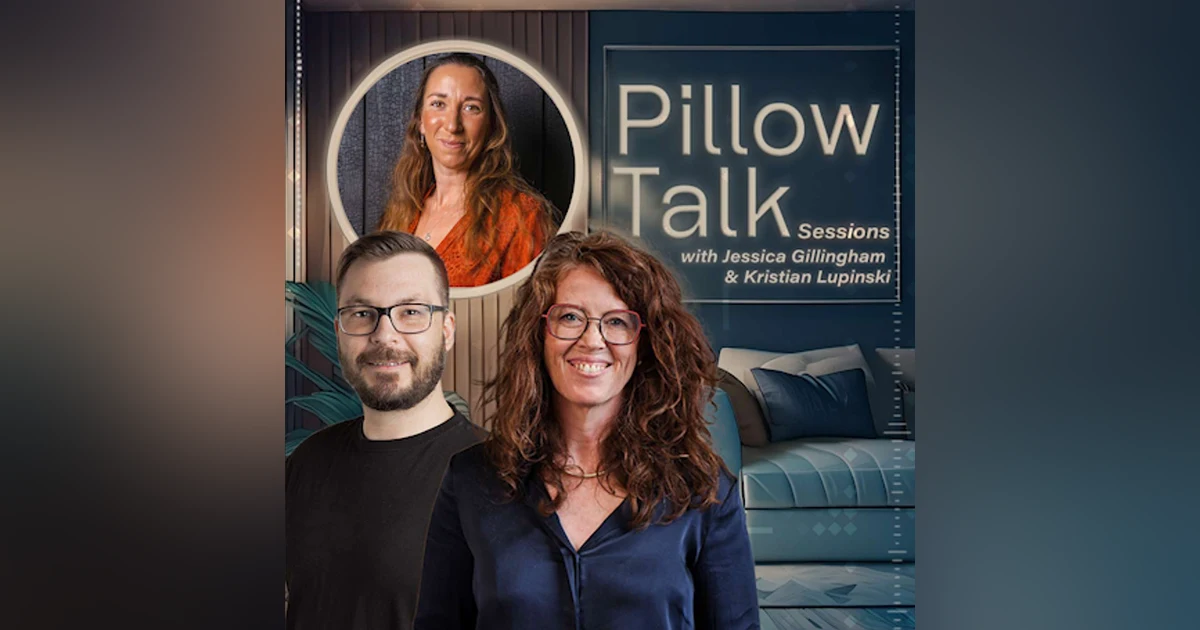
This week on Pillow Talk Sessions, Jessica Gillingham and Kristian Lupinski welcome Katherine Rose, Managing Director of VervLife, for an in-depth conversation about reshaping the future of mixed-asset management.
Key highlights from the episode:
🏘️ Strategic Asset Management – Overcoming the challenges of managing diverse property types.
📊 Flex Rentals – Strategies for meeting the demands of short-term and long-term tenants.
🌍 Building Diverse Teams – Why team diversity is a game-changer in property management.
💡 Customer-Centric Approach – How customer service is redefining success in real estate.
🤝 Co-Living Opportunities – Educating the market on the hidden benefits of co-living spaces.
Meet the host of Pillow Talk Sessions
Jessica Gillingham is the Founder and CEO of Abode Worldwide, a strategic public relations agency dedicated to elevating the profile of transformative technology solutions in global hospitality, lodging, and rental living. An established industry thought leader, Jessica is a frequent conference speaker and author of Tech-Enabled Hospitality, a new book exploring the innovations shaping the sector.
Welcome back to the Pillow Talk Sessions. I'm Jessica Gillingham, and as always, I'm joined by my co-host Christian Lupinski. Today we're going to be joined by Catherine Rose, who is the managing director of Verb Life. We're going to be speaking with Catherine about that dynamic world of mixed asset management, exploring how innovation and strategy are reshaping the way these assets are optimized.
SPEAKER_00That's right, Jessica. We'll discuss balancing short-term and long-term flex rentals, the importance of building diverse teams, and why customer centricity is now a cornerstone of success in the real estate and property management.
SPEAKER_01Plus, we'll take a closer look at co-living, uncovering the often overlooked benefits of this growing sector. And we'll explore with Catherine how to educate both residents and investors on its value. So let's get started. Catherine, so great to have you on Pillow Talk Sessions. Thank you so much for joining us today. I'm really excited to get into our conversation.
SPEAKER_03Excellent. Thank you so much, Jessica. I'm absolutely thrilled and delighted to be here this afternoon. So thank you for the opportunity.
SPEAKER_00Before we get into today's topic, Catherine, maybe you can give our audience just a brief intro, you know, both on you and Verb Life.
SPEAKER_03Excellent, yes. So Verb Life are a third-party operator. So we don't own any of our own assets. We manage under a white label basis for our clients, and we're UK wide, so we're managing across the whole country, and we're managing single-family housing, so housing rentals, built rent multifamily, and with the largest co-living operator in the UK. But we get involved with our clients at really, really early stages. So helping with the design for management, is a scheme even viable? Should they even purchase that piece of land or that site all the way through? Then helping perhaps with planning applications, with management strategies, that design piece, as I said, is really important, the budget piece, and then we do brand placemaking and all the way through the mobilizations, lettings, all the way to the property management. Um, so yeah, we're we're an end-to-end third-party operator.
SPEAKER_01So does that, Catherine, does that mean that you so you're the operator, but the br there will be another brand that's not Verve Life that sits on top of what you're doing? So you're helping, you know, doing all the kind of the behind-the-scenes stuff.
SPEAKER_03Yeah, so quite frequently you wouldn't, well, you wouldn't know ordinarily unless you read the small print that Verve Life are actually the managing agent. So every brand we've got is white labelled and operates under a client brand. And it might be that it's a brand for our clients across multiple sites, so it might be the same brand depending on the location. But yeah, we we wouldn't not we're not we're not front and centre in terms of that brand and placemaking. We might help develop and create that, and we have helped clients name schemes and come up with that brand and placemaking, but it it would never say verve life. Um it would be managed by in small print normally.
SPEAKER_01So, Catherine, and I also know that you operate different types of assets, don't you? So you've got have you got the co-living, the build to rent, and also the single family rentals. So that must be kind of complicated and sort of challenging. And I guess it's challenging for the brands to be able to operate all of those different asset classes, and I guess that's where you come in to provide that expertise that can show them that that actually it's not as complicated as it as it seems because you've got that sort of know-how. But but I imagine there is there is real kind of nuances, there's obviously nuances between those those different asset classes.
SPEAKER_03Yeah, the the it's a real spectrum, and there are certainly nuances. So, single family housing, if you take that as an example, and I'll I'll come on to the others in a second, it's low touch in some respects. Generally, tenancy lengths are longer, our residents families, they're busy, they you know, compare it to built a rent multifamily or even co-live, it's not about pizza nights, we don't have a community hub necessarily, so and we don't have the central pant and the health and safety issues. So single family housing is is low touch. Um, if you compare it to CoLive, which is probably at the other end of the spectrum where we do short stays, so we might have a hotel element of our scheme with two night minimum stays, or tenancies or agreements of three, six, nine, and twelve months, and a younger demographic and a big events programme in these buildings, which are staffed and they're large, generally larger buildings, not necessarily, but generally larger buildings with plant and equipment, your health and safety, your resident engagement, all of your your touch points are so much more intensive than they would be in housing. And BTR probably sits in the middle. Um, and and geographically our sites are all different as well. So it's it's uh it our our centralized team have to put different hats on every time they're touching different, not only uh not only um the assets, but also our clients. Our clients have got different aspirations and ideas about their brand and their product and where it sits within the market in terms of price point or amenity offering. So, yeah, we we flex and work and align ourselves very closely with our clients and their brand strategies and and what their aims and and objectives are.
SPEAKER_01And then how did you get into this then? So, so how did you kind of start Verve Life and sort of move there? What what's your sort of background that brought you brought you to where you are now?
SPEAKER_03So that's a really good question. Um, so I didn't uh I think most people in property didn't think you were ever going to be in property. I thought I was gonna be a curator of an art gallery. I've actually got a photography degree and a master's in photography, um, and thought I was gonna swan around London and and manage some of these amazing art galleries. And that that didn't quite work out 20 years ago, or more than 20 years ago, as I expected. So I did fall into property. Um, I worked for the Royal Ballet School looking after their property. I worked, I actually started at Somerset House working in the events team there and fell in into property really from that role because the events team worked really closely with the facilities department and I really enjoyed the facilities aspect. So from there moved on to the Royal Ballet School. Then I worked for Knight Frank and looked after their central London commercial property, so have a technical commercial surveying background as well. Um, and then I relocated, romance led to relocation, so I relocated back to the South West, which was where I grew up originally after a stint in London, and worked for a large PLC on the residential side and worked for um headed up the residential team there, where we worked for um Barclays Wealth, who had high net worth individuals who were offshore trust companies that had properties based in the UK that we managed from our extra office. And that was a huge portfolio, it was probably knocking on the door of 2000, probably two and a half thousand units, I think, from memory. Um and then I set up their build to rent division um probably nine, ten years ago, and then more recently to answer your question about Verve Life, um, there was an opportunity to set up Verve Life. I was approached by Homes for Students, who are the largest student operator in the UK. Their management team didn't have the bandwidth or the expertise to move into the residential sector. PBSA is everything they do, and there are similarities but differences. So partnering with HFS while we were scaling and growing made perfect sense, and um yeah, just gone from strength to strength over that time.
SPEAKER_01It's quite a journey, isn't it? From from art galleries, ballet schools to kind of where you are now, PBSA and Built to Rent. But I always love hearing that background, the background stories there.
SPEAKER_03I've been really fortunate. I worked with some fantastic people over my career who have mentored me and allowed me to become the the leader in Built to Rent and Co-Live that I am today. And I think I'm really fortunate that um I've been involved in Build to Rent and Co-Live pretty much from its inception. So for me personally and and work-wise as well, I just I just feel so fortunate that I've been on this journey and have been able to grow a successful business and um I've got a great team around me who are delivering for our clients. It's super exciting times in the sector, the rental sector is only growing. And to be part of it is is is really amazing.
SPEAKER_00No, that that's great. And that's like um, you know, everything you were just talking about gives us a good background on today's podcast because it kind of opens up the doors for this conversation. Uh, I think the first topic we should really look at is managing mixed assets. So, starting there, maybe you can talk about, you know, the unique challenges and the opportunities in managing a portfolio of mixed assets. And, you know, how do you ensure each asset type is optimized for performance?
SPEAKER_03So, in terms of optimizing each asset type performance, how we structure our team and how we align ourselves to our clients and their assets is really important. So, we do have people who have to spread across single family, co-level BTR, but actually understanding our clients and knowing our residents both are equally important for us. So, maximising those assets and that opportunity is key. And I think that alignment is really important. We need to understand the local demographics, we need to understand our potential residents, and once we start to move people in and understand the demographics within the building, we need to make sure that we are managing and operating that building to suit their needs. But then also understanding our clients and understanding the lending behind their schemes, their aspirations. Are they wanting to hold it? Are they wanting to flip the asset once it's stabilised? All of that really factors into our structure, especially the lending piece. If we know that they need to refinance once we're stabilised, perhaps letting at a pace a sensible rent might be more aligned with their strategy than trying to maximize rents if they're a pension fund and they want to hold it for 30 years. So for us, we need to be really embedded, and that's where I think understanding and optimising that asset has got to be a partnership approach. We're not just a we are a third-party operator, but for us it's got to be more than that. We really need to be aligned on understanding aspirations and what where our clients see that asset performing.
SPEAKER_01So that so when a client comes to you, would they come to you and say, here is a building, what do we do with it? Should we turn it into a co-live built to rent? Or do they come and say, these are our this is what we want as our long-term objective? Help us find a building and help us then decide, you know, what kind of asset class it it might be. Does it, how does it sort of work?
SPEAKER_03Oh, it's a whole range, it's a real, it is a real range, actually. Again, and Jessica, a really good question. So we've got some clients who come to us and say, we've just purchased this asset. Um, can you please take it over and operate it? And we'll just take on a stabilised asset, and that has its own nuances and its own challenges in terms of how we onboard something. We've got some clients who, super early stage, when they've literally got a bit of land that they don't even own, will work quite closely with an architect and our client to say, actually, if you is it more viable to do co-live, will that local authority accept co-living? Will we get planning? Actually, if we did BTR and we maximise the rents and number of units, what is more financially viable and what stacks up and at the moment? That I would say over the last 12 months has been a big piece of work with most of our client base because funding's difficult, um, debt equity, bill costs are high. So looking at those options and helping advise is deal breaking, and we're really honest. And actually, for some clients, if it's a location, we don't think something or stack will tell them because at the end of the day, we we're not gonna be able to operate it. So for us, that honesty and that partnership approach at the beginning is really, really valuable. Um, so yeah, it's a whole range to be honest. It's not just um, it's not just saying, Yes, we'll go with build to rent here, but some clients might come to us and say, Yeah, we've got planning already, build to rent, we're gonna open in 2027. Where's your management proposal? What's your what does your feel it like, Catherine at Bird Life? And that's where, yeah, it's a whole myriad of of different scenarios.
SPEAKER_01And they're coming to you because they've got the money, they want the return, and you've got the know-how on how to to get that return for them. Yeah, essentially.
SPEAKER_03Essentially. And the clients that we're working with don't have might not have aspirations to be, uh they don't want to deal with the management. It property management is not easy at all, by any stretch of the imagination. Um, setting up a platform is costly, time consuming, and and needs some know-house. And a lot of our clients might be risk adverse and don't want to take that risk. Some of our clients potentially, once they've got the pipeline and once they've got the stabilised assets and an her mass that amassed that number of units under our management, might then in-house it in the future. So, again, it we're we're really flexible with with how we can support clients on that journey.
SPEAKER_01And we talked when we did our sort of pre-call, we talked about where I live and the town that I live in, the city that I live in. There's quite a few schemes going up, and including quite near my my house is is one of yours. And I actually almost got you arrested um the other day in in where in my co-working space. There's a a guy that I overheard this guy on the phone talking about the fact he used to live at the collective and how great it was and all of this, and he's just moved to Bath. So I was saying, Oh, there's schemes, co-live schemes coming in bath, you know, which I hope was correct. Maybe, maybe I was sort of wrong. It maybe it was build to rent rather than the co-live, but I was doing a bit of sell-in on the resident side. Um, but anyway, it's like I think it's probably the other kinds of clients you like more, maybe than than the residents, but still I was doing doing that bit. So, in the area where I know that Verve Life is is is you you are you've got building work going on, there are a number of different types of um properties going up. So we've got different ones, there's builder rent, there's student going up, and presumably co-live as well. And how do you how do you work out that kind of mix, that that mix and deciding which one is is right to be put there? Like what sort of thing, what other things would you would you think about, do you think?
SPEAKER_03Um so we look at supply and demand. So you're right, we are working with a client who's going in for planning in Bath, um, hopefully either this side of Christmas or the early new year. And there it would be the one of the seconds, second schemes that Bath will hopefully consent. So how do we target and how do we decide? Um we look at a range of we look at a range of data sets and a range of um principles as to what we think may or may not work. We look at the the standard um PRS, you know, HMO housing market, supply demand. We look at graduate retention rate. Um I think graduate retention rate is really important when we're looking at co-Live sites. Um we're not just letting to graduates, don't get me wrong, but actually that viability and understanding what the students have been used to, the all-inclusive rents that helps us inform the co-live demand because actually that will really help graduate retention rate in a in a strong university town because there is very rarely decent um rental accommodation available. Um, single family housing, good transport links, good schools, good education, there's a varying amount of factors. Um, we look at employment, so who are the major employers in a location? It it's all factored into there's a there's a huge number of data points and data sets that we we draw upon to determine what we think the demand is like. But as I said earlier, we're very honest. If we if we're struggling with a location, we'll be really, really honest. Um, there are some geographical locations in the country where we struggle with affordability, for instance. So it might be a strong university town in terms of university accommodation, but actually, families, affordability, it just might not stack for BTR CoLive. It might be better as an affordable scheme or something, something similar. So, yeah, we um we really delve into the detail on those for viability.
SPEAKER_00But let's talk a little bit deeper into that. You know, you did mention retention. Um, I want to talk first maybe about you know the the balance or or the demands of both short-term and long-term flex rentals. And and then on top of that, you know, what kind of strategies uh do you use to one attract but then also retain the tenants in each of these categories?
SPEAKER_03So it's very location specific in terms of our short-term strategies and whether the actual local market will stack for short-term. Um, Wembley, for instance, has got a really strong short-term demand driven by the stadium and the events that Wembley put on. So that has a bearing factor. And if you look at other locations, we've got um, you know, there might be HS2 might be doing some project works for the next however many years, and again, they've got a short-term demand. So, how we factor short-term in is very much location specific. Um, there is a bit of a juxtaposition between short and long-term guests, but we work really hard with our residents to ensure that the long-term guests feel loved, wanted, and the events program we put on isn't is normally more tailored towards the long-term guests. Um, a shorter stay, again, it just really depends on geographical location as to how the viability stacks and how many rooms we think we probably need to let on a short-term basis. We tend to do a minimum stay as well, um, and that helps. And again, it depends on asset type. Some of our co-live schemes have got hotel consent, so we've got to do short-term stays, others haven't, and then we tend not to. Generally, in co-live, it's under 30 days for the short stay, um, and then longer stays are three, six, nine, or twelve month agreements.
SPEAKER_01I think with short stay and longer stay, and it's a question that I've never actually been quite brave enough to ask any of the operators or or that that we've had on, but I think, and we've we we've interviewed a couple of different kinds of operators, and it is, and the question I want to know is do you like short stay? Like, is short stay an attractive option, or is it kind of a pain in the arse and sort of quite hard to do? And you know, with all those turnovers and the guests' expectations are really high? Like, is it a sort of a needs must? We do, you know, short stay because it fills in gaps and things like that, but we'd really prefer the longer tenants that just stay put, and you know, there's one kind of marketing thing that that that is required to get them. Like, what what what do you sort of feel about that? Is short stay like easy, great, love it, or is it a sort of a needs must sort of thing? And this is a question that I just haven't really ever ever really been brave enough to ask anyone.
SPEAKER_03And you've picked on link. Um, I think short stay comes with its short stay does come with its challenges. Um it it it doesn't necessarily build that sense of community, but it depends on the building number of shortstay you've got as to how that affects the sense of community. Shortstay, yes, it is more onerous in terms of changeovers, cleans, demanding. Our hub hosts in our where we've got a larger contingent of shortstay guests are very much here are the local, um, where's the local tube station? Can you book me a taxi? How can I book this if I want to go on a tour? Area, whereas the long stay guests, it's their home. Um, so short stay guests um I think are positive actually. And from a client perspective, I think depending on the location, add value and income value to the scheme. So if something is happening at Wembley Stadium, um maybe a large event, um, it the average daily rate really increases. So that really does have a big bearing on the value and the income stream of the property. Um, so yeah, I I'm I'm positive. I think we need definitely a mixture. We um we do embrace our short stay guests, and actually they're really positive. They breathe fresh air into the building, and when we look at their reviews, it's really good for us to see who's somebody with fresh eyes who's only in a scheme for a couple of nights, um, how they how they get that experience and how they how they use the building as well.
SPEAKER_01And I I guess they're potential, you know, residents for longer stays in in some of the skis schemes, aren't they? They can try it out as a short stay and think, you know what, this is really something that I could actually live in. They really are. Because I think that when I go, you know, I've stayed in the US recently in in a couple of multifamily places where there's oh my I could live here.
SPEAKER_03It's um it's really interesting. I've got a Leeds client who have just got consent for a co-lift scheme in Leeds, and um the uh owner and director of the company messaged me to say his daughter's about to go to university. Could she come and rent one of our rooms in our co-lift scheme? Because he'd stayed there and had had a tour recently. So, yeah, it's it's it's really interesting, and also just on that as a slight separate tangent, I suppose, we have had people in our co-lift schemes who have made such good friends, they've gone on to actually move into a two or three-bed flat chair because they've decided that that friendship group's so strong. So the long stay, you know, when we when people leave, we're sad, but actually they're leaving normally because they're moving on for job progressions, they're moving on because they've made such good friends, they're moving on for for life changing events, you know, it might be a relocation to another workplace, or it's it's a really healthy community. So long and short stays have definitely got their pluses and minuses.
SPEAKER_00Oh, that that's great, it's all about. Building the the right community. And that being said, we know technology is a huge part of our lives now. So I'm curious on how you guys leverage technology to enhance experience, you know, both for short-term and the long-term renters.
SPEAKER_03That is another good question. Technology, I don't think we're probably, we're a tech-led company, but we're probably not using technology as much as we could do. We talk about AI as an industry all the time. I don't think we're particularly intelligent about AI and what we're doing. We try and automate things as as much as possible, which makes um efficiencies for Verve Life, but also makes our resident customer journey much more efficient. So we do use a variety of tech. As you'd expect, we have resident apps, we have the ability to log maintenance, you can book ammunity space, you can access community benefits. Your documents are all online, your home user guides. So if you've forgotten how to use your washing machine or dishwasher or you've moved in. So tech definitely does enable us. I think smart tech is something that we again as an industry need to engage more and look at other established environments. So maybe looking towards the states or others, looking at the later living sector, what else are other people using within their building? I can remember years ago, people were talking about drain deliveries being delivered to the roof, and our lifts all had to go up to the roof to be able to take those parcels down. Haven't ever seen that happen on a single scheme yet. I think people are still excited when actually an app tells them they've got a parcel, let alone where it's been delivered. So I think tech definitely, definitely helps, but I think we need to accelerate and make sure that we are really embracing AI and efficiencies. Property management, as I said, isn't easy. You've got so many different touch points. The amount of tech we have, um health and safety compliance, deposit schemes, inventories, uh, property management, finance reporting, resident engagement. There are so many different systems we've got that don't all necessarily talk to each other seamlessly. They might talk to each other in one language, but probably not the multiple languages they should do, makes it makes it very hard. And we're always trying to pull data to make sure our clients are getting the right reporting and we're able to ensure that the data we've got in our tech stack is is giving us useful insights. Um, and that is very, very challenging. I think is a is a challenge for the sector, definitely.
SPEAKER_01So that connectivity is is kind of, you know, we hear it all the time, that sort of connectivity that the tech just doesn't speak to each other, or certainly not in the way that we need it to, but that is changing. But you talked about looking at other verticals, and and part of what pillow talk sessions that one of the things we're really interested in is how build to rent, co-live, the living sectors, multifamily is looking to hospitality and and and vice versa, sort of looking at each other and thinking, oh, you know what, we've got a lot in common, and we're learning quite a bit from you on an operational level. And I wonder if we can learn from you on a tech level. Because, you know, in a really simplified, and obviously it's not simple like this, but in a really simplified, it is about buildings, heads in beds, and you know, it's it there's sort of on a really simple level, it it kind of is that it's a it's a it's a building, a person, a head, a bed, whether it's a stay for a night or a stay for 12 months, or whether the building single family or it's a hotel or or it's a bill to rent. Now, obviously, there's a lot more to it than that, but as but those you know, those different um lodging verticals, the different lodging verticals have a lot to learn from each other, and it really is happening, you know. You're you've talked about some hospitality bits that you're doing, you're obviously doing short-term rental. We talk to hotel operators that do maybe are doing branded residence now or apart hotels and things like that. So there is much more of that talking to each other, but also on the tech side as well. So, sort of learning from hospitality tech, which does have you know, maybe a little bit more connectivity and a bit more open API sort of at its source than we currently do have in the build to rent and the living sectors. But I wonder if you've got that view as well, sort of looking at hospitality as well as you know, maybe looking at the US and what they're doing over there in the multifamily market.
SPEAKER_03Yeah, so we definitely um have an eye on tech and what other industries are doing. So I think um hotels is definitely key and that and that segues into recruitment as well. We look at recruiting from other service industries. So I think in terms of tech though, um definitely looking at the hotel market, um, short-term stays, serviced offices is quite an interesting one as well in terms of the serviced office market and how the tech they use. Um, still learning from the USA. Um, we're now actually being lent into by the likes of Australia and others who are looking at what we're doing to be able to embrace and build, build to rent and co-live um in Australia. So I think it's a really exciting and interesting time. I think the challenge with technology is um for a third-party operator, is sometimes it's client-led. So we might have our own tech stack that we've built. And I think Verb Life being three and a half years old, we spent a lot of time looking at our tech and chose our tech partners relatively recently compared to others. So we didn't have any legacy issues, we didn't have any tech systems that we needed to um onboard. So I think the the tech point is really tricky actually because um we do lean into what our clients want, and if they've got tech systems, we all use them so it might be a property management system. Um, but where we have got our tech, we've spent a lot of time building that so it does talk as well as it can do to each other and works really well for us. As I said, it brings us resident efficiencies, it brings us management efficiencies, it brings a really good customer journey. Um, but I think given the changing pace of the market, it's really hard to um be wedded to one tech organization. Um, things are improving all the time, and our luckily our tech stack is all keeping up to date with changes in legislation and and new initiatives, but it's it's a challenging one because um we once you have a tech stack, you're not always as agile as you want to be to be able to flex and move. Again, because of those processes you've got embedded into your existing systems. So, tech, I think um tech is one thing that um I think with hindsight, I would have liked to have had a tech expert brought on board earlier than we did as a business to be able to lead on all things technology because you don't know what you don't know with tech. And if you don't speak the right language, um mistakes can quite easily be made.
SPEAKER_01Absolutely. And just in terms of so when you've got your verve life tech stack, do you have is it the same one that you might have for the build-to-rent assets that you that you that you do the third-party operating, and then the same for the single family homes, and the same for the co-live, or do you have sort of one that you would do for each of those asset classes?
SPEAKER_03Um, we do have different tech um options available depending on the different typology. Um, especially where we've got co-live with hotel consent and short stays. If you're doing under 30 nights minimum stays, you need a very different booking profile for that hotel kind of churn and consent, and you need different um documents behind the scenes. So, for instance, if you're doing a long stay and it's built to rent or single-family housing, you traditionally go down the AST route, you take a deposit, and it's very traditional rental product. If you're going down the short stay and it's more of a hotel strategy, um, it's T's and C's, it's terms and conditions, it's uh you cannot use a traditional AAST for that. So different tech needs to come into force in terms of whether you're long, definitely long and short stay, um, not necessarily um wedded to the typology, but can be driven by that. And again, some of it is a is a client, a client request in terms of what we use.
SPEAKER_00All right. So I I wanted I wanted to talk just a bit uh uh about uh another aspect of this sector, um, which you briefly mentioned it uh about recruitment um and being able to pull people from different sectors. You know, why is having a diverse team important today's real estate and property management uh industry? And how does it and does it contribute to the success of like Fear of Life or in general uh this sector?
SPEAKER_03I think having a diverse team in all of the sense of diversity is important. It's always the best person for the job, um, regardless of diversity. But I think having a diverse team is really important. We um we have different clients who have got different products, different brands, different standards, different asset types and typologies, if we as I've explained. So actually having a variety of people who you can align to work as effectively and as well as they can with their with our clients is really important. Also, working as well as they can with our residents and our different demographics within our building is equally important. Um, not everybody gets along with everybody clearly in life, so having that diverse portfolio, whether it's gender, ethnic base, age, it for us is really important. And also because we're UK-wide, having that diversity is equally important. And we spend as a team, and we have a really diverse team actually, and as a team, we spend a lot of time and energy understanding how we all work independently and together. So we do what's called an insights programme where we understand who learn who leads with what um it's done on colours actually, who leads on what colours, whether you're blue and give me details or five.
SPEAKER_01I've done it.
SPEAKER_03Yeah, it's really interesting. Um, and we've learned an awful lot as a team is how we work well together and how we get the best out of the people that we work with. So having that diverse colour spectrum um has actually aligned us with our clients incredibly well. Um, I wish we could get our clients to do the insights profiling, actually. There are other options available, but I think for us that adds value, and I think that diversity, as I said, it it just makes us hugely successful. Um, nobody wants to live in the same building as others, you know. You don't want to work with the same mindset of people, you don't strive to achieve more, you don't develop, you don't. There's so many benefits for having that diverse, um, diverse workforce and diverse uh also residents as well. You know, nobody wants to live with necessarily like-minded people all the time. That's not um a good sense of community necessarily.
SPEAKER_01No, it's really the I think team makeup is is so interesting, isn't it? In that um finding out the motivations and and things like that that that doing those sorts of profiling can bring. But one of the things you also said earlier is that you are looking to hire people, or the sector is looking to hire people with that service offering background. And I and and I know it's really obvious why, or it's it probably is quite obvious why you'd be looking at that. But what is it around? You know, what is it specifically around looking for people with having service kind of level background and and what sort of roles would that be that are interesting, you know, in this sector for you?
SPEAKER_03I don't think you can necessarily you can go on a course to teach good customer service and you can tick the boxes, but I think with some people it's definitely embodied in them as a person and how they are and how they treat people and how they treat their team members and how they treat their residents and each other's. And I'm not sure that's something you can necessarily train. I think it is within you as an individual, and customer service is is top of our agenda, definitely, along with a myriad of other things, ESG, um, uh health and safety, but customer service is is definitely key.
SPEAKER_01I think it's you know, I started, as we all do, 16, doing restaurant jobs, retail jobs, and really learning about how to give a good experience to customers. But and then, you know, you go as a customer to these places and sometimes it's terrible.
SPEAKER_03Yeah, I think that's actually really true. And I think some people might do a maintenance operative might give really good customer service because they've sold the job, but they might not be warm and embracing to the resident, but actually they've done they've done what they needed to do and what they thought their their thought their primary focus was. So I do think everybody has value and adds customer service and it can be viewed in different ways. And I think um, you know, uh somebody who's doing a viewing has got a very different focus to that maintenance operative, or somebody who's sat in accounts who's chasing arrears, it's it's different ways to deliver what could be perceived as good customer service. Um, and I do think property management, I work on the 820 rule where 80% of your portfolio ticks along really nicely, and 20% is probably the problem. And it could be a maintenance issue, it could be a health and safety issue, it could be arrears, it could be a well-being issue. And I think how the right person in that role deals with that scenario, whilst it might not be a pleasant scenario, can still give good customer service while necessarily dealing with a with a with a challenging situation. Um, and that's that's things that you can teach. And I think in terms of customer service, um, you can teach property management, you can teach some of the fundamental basics, you can you can teach how you deal with an arrears and eviction, you can teach how you know how often a lift needs to be serviced. That can be taught, and you've got the tech and the solutions in place. But I think how you communicate and that customer service is is something can be taught in part, but is is a really valuable skill.
SPEAKER_01I think it is, it's about being customer-centric, isn't it? It's about putting the customer at the centre of the experience. And I think that also what is harder to teach is about being relational as well. It's about being relational rather than transactional, often in what we're providing as a service. And you know, anyone can have that, whether it is maintenance or whether it is, you know, in a traditional hotel place, it might be front desk, but it also might be the leasing agent or whoever. It's about that being relational. And it is hard to teach that because it sort of is ingrained. But I think if you do start, you know, like we were just talking about, whether you're 16 and you get your first job in retail and hospitality, which most of us actually do, learning those skills there are really vital. But but we're gonna move on to another topic now, which I think is also really important to talk about, is so so we co-live is if if I'm to say it to my mother, I'm to say it to, you know, the man down the street, the man in the petrol station, or whoever, they they don't won't don't know what I'm talking about. You know, if I say, oh, there's a new co-live building that's coming across from this petrol station, they'd be like, what's that? Um, so so I think there's that fundamental, nobody other than those in the industry know what it is yet, but also that educating on the benefits of it. So, so why it is such a good thing for asset, uh, you know, the asset owners, the investors, but then also for the the resident side. So, how do we how do we do that? How do we do more of that education?
SPEAKER_03I think this is um probably top of my intro at the moment, the amount of times I'm spending on educating about co-live. So we're working with a number of clients who are trying to get planning permissions in the especially in the regions, actually, and also different um boroughs within London. So we have um a document which explains what co-live is. So we go back to basics um and talking about co live. Um so coLiv is it's a real hybrid and it's still finding its feet. My goodness me, I think we're still talking about what build to rent is, let alone what co-lib is. So we've still got quite a way to go. But we um we see co-live as um a real hybrid. So it's an extension of PBSA student in some senses. If you think about a hybrid between PBSA and retirement, and you merge it together, that's where we are, is somewhere in the middle. So um you look at retirement homes, you've got your own private room, you've got your own ensuite, but you you've got a TV lounge that you can go to and it's all inclusive rents. You look at PBSA, you've got your own room, probably a cluster fat, maybe not, probably in today's world, more are on suites, um, very different from when I was a student, but you've still got your immunity space, so you might have a music room or a cinema room or some workspace. So co-live is a blend of the two where we're not exclusive to students and we are not catering for their um later living, but anybody can live in a co-liv scheme. Um, I say anybody, we've got some local authorities who don't potentially want anybody living in a scheme, maybe no students or maybe no sharers. So again, educational piece is really important, but co-live is a real blend. Um, all inclusive rents, we're seeing cost of living key now. I spoke about graduate retention earlier on when we were speaking. If you want your graduates to stay in your city, where are they going to live? What have they been used to living in? What's the quality of the product? They probably don't want a damp three-bed terrace flat share. Um, I think that all-inclusive um point is really important, and I think the immunity offering we're still seeing from COVID, yes, a lot of people are expecting employees to be in the office five days a week, but that's still not happening in reality. So, where you've got smaller room sizes and you've got that co-work space, it's a really valuable. It's the rents are affordable with a little A and you have a smaller room, but you then have the ability to use the gym within the building, use some co-workspace. Um, you've got a massive Master Chef style kitchen where you can bring your friends over at the weekend if you need to, you could hire a private dining room. So I think co-live really fills that gap between um not quite being ready to go into a full-blown rental accommodation, either a flat share or a house share, but giving you that ability, especially if you're new to a CISI or new to a location or new to the UK, you've got something which you can be really flexible on. You can rent it for a shorter amount of time or a longer amount of time. So I think CoLiv, um, I really wish more people would come and tour some Co-Liv sites to live, breathe, and see it. Because I think until you've really visited one of these schemes and seen how the buildings activated and used throughout different weeks of the day, you can't really understand the ethos of Co-Liv and what it means to our residents and how much they love being in our buildings.
SPEAKER_00And do you find any like uh misconceptions about co-living when you know talking to investors or stakeholders and you know how how do you address these misconceptions?
SPEAKER_03Yeah, so there are misconceptions. Um, it's student by the back door, it's an HMO, it's um not really affordable. Um, and because we survey our residents or members, we understand what's important and what works for them. So we do try and educate in that respect, and we do try and offer tours so people can go around the buildings and understand how we're operating them, the customer service, you know, the 24-7, generally 24-7 staffing, that level of service and expectation is there, and we put probably more weight on resident wellness and engagement than we do in any other of the assets that we manage, so definitely more so in co-lib and multifamily. I think um what we're trying to do is educate uh local authorities in the regions in terms of what a good COLIV scheme looks like, and because it's so early doors, it's hard to case study it. Um, but I do think there is definitely an appetite for local authorities to embrace it. Um, planning's just a a big problem and viability, but viability probably is more leaning towards co-lib than BTR just because of the number of units you can put in. But every every location we're consulting in is is very different in terms of appeal and appetite. And I think where we've where we've come across people, local authorities councils who've said no, we've worked really hard to try and educate and say why we think there's a benefit. And I think um, I think we're still on a journey, we're still on a learning curve. We're part of um conscious co-living. I've got a working group, and we're all collaborating, and I think that's really important in co-live always. We're collaborating more so now as an industry than we ever have done. I BTR, we probably didn't collaborate as well as we shouldn't have done at the beginning, we're now better, but I think as co-live, we are all very uniformed and trying to ensure that we get the best in practice and we all work together to ensure that as we grow and develop this sub-asset type that it's successful for everybody. We don't want to see it fail.
SPEAKER_01That's a lovely note to end on. You know, wanting to make sure that there's because it does feel it, I mean, it kind of feels like it makes a lot of sense. That's the the thing, isn't it? It makes a lot of sense in so many ways.
SPEAKER_03Yeah, it's um it's compelling if you can un if you can if you can get your head around it. I don't understand why people are so anti-co-live, because it's affordable. People don't people don't own as many belongings anymore as you they used to, and they want that flexibility. So to be able to have a smaller room, but be able to go down to a gym or go to a co-workspace or hire a private dining room with your friends and get Uber Eats or delivery to deliver your food, it's the path of least resistance. So I think it it's a shame that it's not been embraced by more. But hopefully the future's bright and the future's co-live.
SPEAKER_01And actually, we've heard that some of them have podcast rooms in them as well, apparently.
SPEAKER_03They do indeed.
SPEAKER_01Someone told us, didn't they? I can't remember who it was, Christian, but someone did.
SPEAKER_03Yeah, we've got a scene going in for planning shortly at Manchester, which is gonna have a podcast room, actually.
SPEAKER_00I think it's a great idea, and I think this is a great place to end today's podcast. So, firstly, I just want to say, Catherine, uh, we really appreciate you joining us today. Uh, it was a really interesting topic, and you're right. Hopefully, this podcast opens the door to more people interested in co-living because it is such a cool thing. So, uh again, we appreciate your time and uh jumping on the podcast with us.
SPEAKER_03Thank you, Christine, and thanks, Jessica. It's been absolutely brilliant. I've enjoyed speaking with you both. Um, yeah, thank you again for the opportunity. I've really enjoyed it.
SPEAKER_00And that wraps it up for us at Pillow Talk Sessions. A huge thank you to Catherine for sharing her insights on managing mixed assets, balancing flex rentals, and the importance of a customer-centric approach in today's real estate landscape. To stay connected and catch every new episode, do us a favor and head over to pillowtalksessions.com to subscribe. And be sure to follow us on LinkedIn for more insights and interviews with leaders who are shaping the future of hospitality, multifamily living, and community driven spaces. Thanks again for tuning in, and we'll see you next time on Pillow Talk Sessions.


