Live Special — Experience is the New Amenity


 RSS Feed
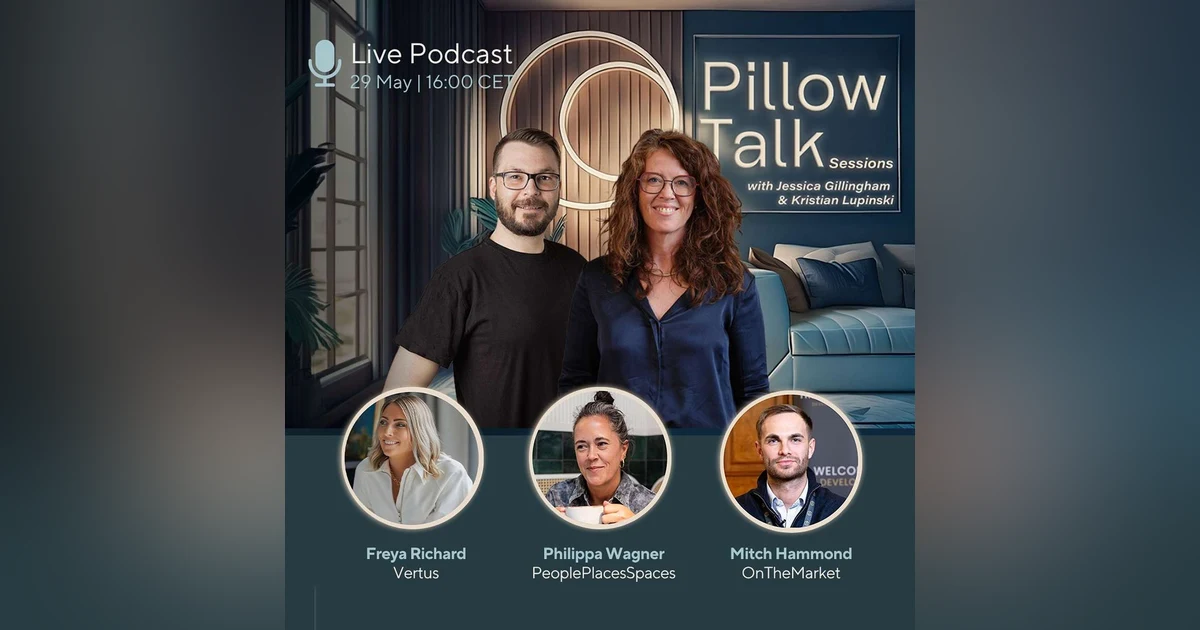
This week on Pillow Talk Sessions, we’re excited to release our first live-recorded episode, where we brought industry leaders together to unpack the future of resident experience in front of a live audience.
Hosts Jessica Gillingham and Kristian Lupinski are joined by:
🔹 Freya Richard (Vertus)
🔹 Philippa Wagner (PeoplePlacesSpaces)
🔹 Mitch Hammond (OnTheMarket)
💡 In this episode, we explore:
📊 Why renters are prioritizing belonging, values, and community over physical amenities
🏨 The influence of hospitality on rental living
📲 How technology must serve experience—not drive it
📍 Why authenticity, service, and local context are essential to resident loyalty
Don’t miss this dynamic panel discussion packed with real-world insight and forward-thinking perspectives.
Meet the host of Pillow Talk Sessions
Jessica Gillingham is the Founder and CEO of Abode Worldwide, a strategic public relations agency dedicated to elevating the profile of transformative technology solutions in global hospitality, lodging, and rental living. An established industry thought leader, Jessica is a frequent conference speaker and author of Tech-Enabled Hospitality, a new book exploring the innovations shaping the sector.
Welcome to a live session of Pillow Talk Sessions. My name is Christian, and joined as always by my co-host Jessica Gillingham.
SPEAKER_05Thank you, Christian, and thank you everyone for joining us on this live Pillow Talk Sessions podcast, our first live one. And today, instead of having one guest, we've been greedy, we've got three. And so we're really excited to have you here with us today.
SPEAKER_01Yeah, that's true. And um, you know, we we are excited to have our our our our three experts uh for the round table, uh, and that is Freya Richard, Director of Operations and Leasing Advertis, Philip Wagner, founder of People, Places and Spaces, uh, and Mitch Hammond, Builder Rent Manager of On the Market.
SPEAKER_05Absolutely. And for those that listen to the podcast regularly, you'll know that we have themes that we really like to explore with our guests. And one of those themes is around how hospitality principles and sort of service-led principles are kind of infiltrating residential living as well. How there is that sort of learning from hospitality that more the modern rental living is kind of learning from. That's one of the themes that we talk about on the podcast a lot. The other is about technology and how technology is impacting both operations but also resident experiences. And then the third one is actually the convergence of the asset classes of rental living and hospitality, whether it's apart hotels or it's senior living or it's built-to-rent, co-living student. We're kind of looking at how they're all merging and melding. But today we're going to really look at focus on one particular topic with our guests, and that is experience being the new amenity, and how sort of a resident-centric future is what we're seeing. And it's certainly something that a lot of our guests have been talking about on the podcast. So we're really excited to talk about this today.
SPEAKER_01And since this is a live session uh for our live viewers today, um, you know, we want you guys to be a part of it as well. So as we talk uh in the round table unfolds, you know, make note of any thoughts or or questions you may have. You can drop them. There's a chat panel, or you can drop them in the QA panel. Either's fine, we'll find them. Um but without that, we'll we'll we'll start with a brief presentation and then invite our experts on.
SPEAKER_05Thank you, Christian. And what do we mean by experiences is the new amenity? And what we're seeing is is a shift, or certainly what we're being told is that there's there's a shift. Sort of amenities are just not enough for residents anymore. And by amenities, it's those physical things, like whether it is a pool or a gym or or whatever. It's not just about those kind of tangible things, it's more about how you make your residents feel. So things like kind of emphasis on community and social connections, and also emphasis on sort of lifestyle and convenience, of course, location, um, using space in a way that is is is really kind of an important way of doing it as well. That flexibility and modern features, but also outdoor spaces as well. So we're seeing that shift that just amenities are not enough. Experience has to be there as well.
SPEAKER_01Yeah, 100%. And you know, the the more we talk uh through this podcast series, the more we see this the shift in priorities, you know, identity, community and service, you know, are no longer perks. They're they're you know, they're they're the deal breakers. So this mirrors, you know, hospitality quite a bit. I mean, if you think like boutique hotels and you know, not cookie cutter rentals. Um, this this data that we picked up, of course, uh, I'm happy to share the the links in the show notes if people are interested in reading more about it. But 65% of renters uh under 40 say that they're willing to pay more for brands that reflect their values and lifestyle. 61% say a sense of belonging is important when choosing to live. I don't know what the other 39% are saying. Um uh for me, it's 100% that a sense of belonging is important to where I live.
SPEAKER_05Uh, and nearly 50% want curated personal, personalized services, which is kind of what hospitality offers or is certainly trying to offer, which is that kind of personalized service for individuals, so that they feel special, that they feel connected, that they feel seen as well. So we're looking, we look at some hospitality brands like Citizen M and the Hoxton, they kind of have really prioritized things like design and service and having a vibe that that really wins over a certain demographic of guests rather than just selling, you know, a room. There is more of a community feel towards what they're offering. And this thinking is also moving more into rent or living and certainly in built-a-rent. And if we think about when the shifts, you know, there's lots of reasons why the shift would happen, but one of them is of course the the Airbnb generation, you know, many of us have got very used to having home-from-home experiences, wanting to try different things, and um really putting that kind of value on how we feel in a place. We, you know, many expect sort of more soul and personality and having things that are offered to them that have more intentionality, you know, and that's not just about when we're going to visit somewhere, but it's also when we're renting somewhere as well. And it's not just the millennials um that are looking for that, it's all consumers are looking for really putting their their need for experience, their need for personalization kind of at the forefront.
SPEAKER_01Yeah, 100%. And then, you know, again, it's it's a lifestyle change. And um, you know, one of our guests, Philippa Wagner, you know, to her podcast, um, you know, said something uh during that episode, which I thought was, you know, fits directly in with what we're talking about today. Uh she says that guests are looking for brands that they would like to have a dinner party with, you know, somebody that would sit down to the table next to them and that they can have a conversation with and that share their values. You know, they want to feel like there's something deeper than just somewhere to put your head for the night. Uh it was a great episode. I mean, all of our episodes are great. So we do recommend you guys go check that out if you haven't yet. Um, but uh, of course, we're gonna talk a little bit deeper uh in that today.
SPEAKER_05This is where technology kind of comes in as well. So that service layer is that it's it's invisible, but it's not, but it's indispensable, really needed. And over the course of the podcast, you know, every operator talks about the fact that they have a resident app, you know, a resident experience app, but also a communication app to really help kind of create that sense of community, uh create that that ability for their residents to feel kind of seen and heard and their needs kind of met, whether it's just for maintenance stuff or whether it's for booking events, but also loyalty as well. One of the kind of themes across the podcast are the different guests that we've been speaking with. They've talked a lot about building loyalty through their brand with their residents. So it's not just about you know the convenience of being able to get maintenance orders and workflows done and those sorts of things or information passed. It's also about building that loyalty and loyalty through community as well. So um I guess the thing, and we'll talk you know with our panelists more about brand as well and how brand plays a role in here. Because you know, with something like brand, residents aren't always going to see it, but they'll certainly feel it. And so um, and and the technology is really helping to kind of empower that as well. So rather than take away from the human experience, it's really that enabling of the human experience.
SPEAKER_01Um, and you know, this goes straight to the basis of designing uh your spaces for uh again, this emotional connection. I mean, residents uh are placing a greater importance on this genuine sense of belonging, uh, as we mentioned earlier. And this this doesn't happen by chance, of course. It's a result of intentional design, thoughtful programming, and you know, um a deep understanding of human connection. Uh hospitality is uh, of course, hotels have long recognized the value of creating environments where um, you know, as we as we said, that guests feel like, you know, seen or welcomed, or you know, that they they feel like they're part of something bigger. And and now we see that it's you know time for the rental living sector to kind of embrace the same mindset, you know, designing spaces and services and communities that foster things like inclusion or engagement, uh, even emotional connection from the very start. And there's there's ways that you can do that, whether it's you know, hosting regular events, um, you know, offering shared spaces that you know encourage social interaction. I know one of the operators we spoke to, they're talking about uh building podcast studios, you know, uh and using that space as that's uh that's a big thing to do nowadays. Uh and and then designing layouts that promote uh a neighborhood feel with this, you know, within these urban environments.
SPEAKER_05Before we move on to this one, I just want to um kind of bring in a point as well. And and I was in a discussion this morning for a for another panel discussion actually, and we talked about the rental reform bill and and the potential for change happening there. And then if that happens, you know, if residents can can basically choose when they leave a property, the emphasis really is on the operator and the property to make sure they're doing everything they can to keep and retain residents who will be much more able to kind of churn. Um so that's something that we'll talk with the panelists about as well. But what I also what we also want to talk about is, and and certainly has also been another theme across the podcast, is about talent and about the staff and the teams that work across build to rent and the living sectors. And one of the kind of the trends we've been talking about and certainly been seeing is that more service-minded professionals from hotels and hospitality are either joining build to rent and kind of co-living and other service living sectors are or are being encouraged to come across to bring that kind of guest-centric mindset, that kind of service-first mindset. Um, and we're also seeing that blend of industries where operators maybe focused more on longer-term stays, but are also now doing short-term stays. And we know that uh Virtus, you know, um, and um Virtus Edit does the hotel stays and the short-term stays, the hospitality stays. We're seeing that sort of molding between hospitality and the longer stays. So bringing different mindset to it is really important as well.
SPEAKER_01Uh of course, a lot of these lessons are are coming from hospitality. Um, you know, whether it's from onboarding to renewal, hospitality thinks in journeys. And every um touch point is intentional. Um, you know, and these kinds of things create lasting loyalty. And of course, you know, if you get a touch point wrong in a hotel that can just ruin your whole operations, whether it's through reviews and things like this, uh, and things that they can take away from hospitality, the living sector would be like these branded experiences, you know, seamless tech integration, not just having tech for tech sake, but tech that actually works and enhances the living experience. Uh again, we got Freya Richard from Burtis, and you know, I'm sure she'll talk a little bit more about uh the third thing on here is uh local partnerships and how to build that, you know, uh kind of environment uh around around your place of living. Um, you know, the the service model, the customer-centric service model, and of course, ultimately, you know, knowing your customer and collecting all this data so you can build this customer lifestyle mapping.
SPEAKER_05So, where's it all going? So we're heading towards a service-embedded living with flexibility, values alignment, and digitally enhanced, because that's the other thing that that's come across really loud and clear is that residents are expecting a digital experience from the minute they sort of decide that they they want to move right through to um leaving as well. So that digitally enhanced experience. And also what we're looking at is branded residents, more of that digital journey, the focus on the lifetime value of residents rather than just their their one-time, what's the cost of getting them, what's the what's the ROI, but actually looking at the lifetime value of a resident. And then, of course, convergence, convergence of hospitality and living. They're now starting to speak the same language, which is something else I'd really love to explore with the panelists, which is you know, around brand service experience and loyalty as well.
SPEAKER_01So, with us, uh, these are all certain things that Jessica and I have learned through uh the podcast series so far, but I think it's important now that we invite uh our experts in. Uh, so I'd like to welcome Freya Richard from Virtus, Philippa Wagner from People, Places, Spaces, and Mitch Hammond from On the Market to jump out on the stage and join us. Um, and then additionally, uh, before we start, maybe we can start with Freya if you get want to do an introduction, quick minute, then Philippa and Mitch, and then we can get into the question uh round table.
SPEAKER_02Yeah. Hi everyone. Um so Freya Richard, director of leasing and operations for Virtus. We're part of the Canary Wharf group down on the on the Canary Wharf estate. Uh we set up Virtus about well, 2019, we launched our first building uh into COVID, which we don't really love to talk about, but um we did. Uh and we've got about 1200 um apartments uh under management at the moment. We've also just launched a uh a part hotel with 378 rooms. We launched earlier this year under a sub brand called Virtus Edit, um, and we've got two more buildings with of about 1300 apartments that are due to deliver over the next couple of years, so lots going on, and all um centrally in the in the private estate, which hopefully most of you know have has evolved quite considerably in in the last 10 years. So quite an exciting project to be a part of.
SPEAKER_03Hi, so I'm uh Philippa Wagner, um and I'm the founder of uh People Places Spaces, which is a creative strategy studio that really works sort of with a cultural and futures first approach, uh, with sort of to how people will want to spend their time and experiences across that wider spectrum of hospitality. So, although hotels is a big part of what I do, um obviously it also expands out into that, as I said, the wider context because hospitality, exactly if you've just been talking about Christian and Jessica, the you know, the the blurring of the edges through um through everything. So from kind of uh co-living uh to student accommodation and and everything else.
SPEAKER_00Hi, I'm Mitch Hammond. Uh I'm the built-in rent manager on the market. Um on the market has only obviously been acquired by CoStar Group. So our parent company is now based in America. Obviously, huge ambitions to dominate the residential sector, the commercial sector, and the hotel sector as well, uh, under the different brands that CoStar owns. Um, very much so my sort of day-to-day role is obviously covering the built-to-rent sector, the sort of single family rental, co-living, all the way to through to the PBSA sector and the retirement living sector as well. So, very much focused on rental developments um across all of the different demographics.
SPEAKER_05Brilliant. Thank you guys. Welcome. Thank you. Really good to have you all here.
SPEAKER_01Yeah, 100%. And I think this is a great panelists uh to discuss our topics today. Um, so for our listeners, if you guys have any questions, drop them in the QA panel or in the chat panel. Uh I'll just kick us off uh right from the get-go, and I'd like to start with Freya. Um, you know, as boundaries um uh between hospitality and residential living, you know, continuing to blur, how has hospitality-inspired service models like concierge, wellness programming, or lifestyle curation, you know, how is it changing what residents come to expect from longer-term housing?
SPEAKER_02Yeah, good question. I think, I think, look, I would like to say we we've kind of become experts in this space. And I think mainly because we we've aimed to do this from the get-go. Um, you know, taking taking us back to 2018, 2019, because we sit at that more premium end of the market in terms of a price point and location, we knew we had to do something different to really stand out from the competition and and stand out, set ourselves outside of what people typically recognise renting to be and what that experience is like. Uh, and concierge is such a great example of that hospitality. Um, and it and funnily enough, every time we come to launch a new building, it's one of the things we always talk about. You know, are we still going to do concierge? Is it still going to be 24 hours? And we have that conversation, we always come back round to we absolutely need 24-hour concierge. It's it really is, uh and I've I've definitely said this on many panels and conversations before, but they are the unsung heroes of those buildings. They, if you read through our Google reviews, which I had a quick flick through today, they are the people that are mentioned the most in all of your reviews. And I think that the main thing for me in that is that it's it's ultimately about standing apart from what people have typically remembered a rental experience to be. And you know, if you if we do take ourselves close to the days of COVID, if you were living in a standard you know apartment, no concierge, no amenity spaces, that would have been probably quite a lonely time. And I think the the great thing about built to rent and what helps us stand out, it's that amenity base. So being able to come home and actually see a friendly face who's there to greet you, ask you how your day was, whether you live alone or you or you're living with somebody, there's always someone there. So I think that it has been has been really key, along with all the amenities and everything else that goes along with it. Um, but yeah, I mean, I I'd like to say we're we're doing it pretty well. We're obviously moving and have moved into the to the more hospitality space as well. And and even just the the high that we highs that we've done over the last six months and seeing those guys in actions who are true hospitality um, you know, veterans, they've they've been around the block, they've worked in all the hotels, you can really see their skill sets, and we'll definitely be taking learnings from what they're doing and pushing that more into the build-to-rent stuff uh and making sure the guys are consistent across across both both assets.
SPEAKER_01No, that's um, you know, again, it kind of reinforces uh some of the things that we were saying in the presentation. That's the other side of it. Um, you know, of course, you guys are a panelist, so if there's anything that we we said during the presentation that you don't quite agree with, uh feel free to correct us on that as well. Um, you know, in in another thing, you know, again, this is open for everybody. Um, you know, Frey, I mentioned during one of the slides that local partnerships uh have become you know more important as well when building your operations. Maybe you can touch a little bit on that as well.
SPEAKER_02Yeah, I think we're we're in a really unique um destination where we we have very good relationships with all of our retailers. Um so that's something we really play play on. Um, you know, we've got our internal teams here in Canary Wolf Group who are sort of onboarding all of our new retail tenants. Um, and the second there we we even get a whiff of them coming onto the estate, we are straight in, our events team are reaching out, speaking to them. And it and it's not just about, I think these days there are always offers everywhere, right? Everyone's got an app for this and an app for that, and they've got a discount code for this, that, and the other. But I think what we really focus on is less is more. We try and hone in on new, you know, new retailers that might be coming to the estate and actually getting promotions or discounts that are genuinely exclusive for our residents. They're not the ones that you know every uh Tom, Dick, and Harry can get on the streets. It's genuinely uh an exclusive discount that's quite significant that allows them to experience something that maybe they wouldn't have chosen to experience before. And it also gives our retailers um you know access into our residents as well. Um, I think a really great example, which is which is very recent, is we had our launch event, or what we call our neighbourhood launch event, um, for Bertus Edit, our apart hotel. And that was such a great example of how those partnerships work in practice. We we worked with two different um restaurants on the estate who were providing the sort of canopes and cocktails. We had like a dining experience from another restaurant. We worked with our local um art artists, the people that did all the art for our hotel. They came in, we're doing screen prints with all of our guests, and it uh we had a local DJ from a bar that's um opened on the estate a couple of months ago. So it was a really great example of how we as a business can work together with those retailers to showcase them and all the great things that are going on in the estate, and but also just create a really great and memorable evening for uh for you know new people who haven't heard of Virtus Edit before. So yeah, it's it's a it's a great opportunity for us and we we use it a lot.
SPEAKER_03I can vouch on that because I was there at that party and it was absolutely spot on. So very, very good.
SPEAKER_05So I've actually booked rooms in in two weeks' time at Virtus Edit for myself and and our team. So I'm very much looking looking forward to giving it a good old try. Um I don't I want to ask Freya, so so if we actually looking at the big the broader theme of experience is the new amenity, how much weighting do you put on that at Virtus, do you think? Like is it is it really is it You know, really important, and it have we seen a shift?
SPEAKER_02Yeah, do you know what? I was giving this some thought earlier before before we came onto this podcast, and I'm a bit simplistic when I think about this, right? I think people are quite simple in that your initial sort of get-in and getting them into the buildings is does come down to location and price, right? That those things are really important, and that's what gets them into the building, but the experience is what makes them stay, and and I truly think we we see that in a lot of what we're doing. And um, as I said, I was I I had a flick through our Google reviews uh before before today, and just reading what people say, you know, that they're saying things like we're making I'm making new friends, I'm making new memories, you know, the concierge are like my family, the things that they're saying, you just will not get that in a in the PRS. And until I think until people experience it, they don't realise how important it is. But once they do experience it, it's a struggle for them to come out of that that space and and go elsewhere. Um, and and I think people then will continue to look for that that service and that and that amenity and and ultimately just the the lifestyle that comes with with what we're providing, it is more convenient. You've got people there to deal with problems. You know, the the reality is problems do arise, and and again, you'll see those on Google Reviews where people are saying, I had an issue with you know my washing machine, but it was fixed quickly. People were understanding, they were really friendly, they were efficient, like all those things are so important. And when you're faced with a decision of do I stay or do I go? The chances are if that experience has been really good, you are going to stay, and you know you know you're gonna get good quality, and you know you're gonna have a friendly face when you walk in at the end of the you know, end of a long day in the office. So, yeah, I I would say categorically it's it's definitely making a difference to people staying in rented accommodation.
SPEAKER_05Do you think it's going broader? So I know at Virtus it's really important, and maybe this is something for for Mitch to answer as well. Is do you think it is going across build to rent as well? It's not just particular brands that may be the higher, kind of the higher rationale, if you like, but is it is it going across well?
SPEAKER_02I think let's let's look at examples. I know we we had a conversation earlier this morning. There are a lot of operators that are not doing amenity. You know, they they are quite simply delivering apartments with minimal amenity, but they might have some concierge or or they might not even have concierge, but the service that sits behind what they're doing is good. So I think that shows that you know it is really important and it is being done across across the whole sector, whether you have amenity or not. Um and I think everybody recognises the importance of it. So yeah, definitely.
SPEAKER_00I think just to add to that, yeah, that just what Freya said, it there's different experiences, and it's I think I guess it's the resident experience that makes somebody stay rather than maybe a certain specialized amenity. Um, I was certainly working with an investor some time ago where they were looking at some niche amenities that were close to uh Edge Baston, where they wanted a virtual like cricket game inside the development. And we were thinking, well, does that really cater to a wider demographic, or is that specific to that place? Um, but certainly we've got different types of um sort of rental living across the platform from co-living to sort of a mix or a blend of co-living and build to rent. And now we're seeing, uh I think you're gonna cover it later, but where are we going? We've seen sort of new types of tenancy agreements come out of the woodworks where you're now classed as a member rather than a renter or a tenant, which obviously everyone wants to stay away from that word tenant because if you're a tenant, you're sort of presumed to leave at the end of 12 months. Whereas if you're a resident, you're potentially going to stay there a lot longer, and you may renew for another further 12 months, or you may live there, you know, in total potentially three years because you feel as you know as part of a community, and certainly we've seen it's all about sort of the language change as well, where certain brands have changed from living to communities, um, and trying to sort of figure out and sort of you know adapt to you know the the amount of maybe homes that they have, or that they're sort of got lots of different brands under one group brand. So it's really interesting to see from our end where I get to the the joy of going to see a lot of these places and how they're run, and some are run with huge you know teams and run very, very efficiently, and some are run with maybe maybe a few people on site, a couple of people here that would then sort of dot around Manchester and actually cover three sites all in one, but actually they're three different completely different demographics and two three different completely different locations within a city, so it's it's very interesting to see. But I think just to sort of edge what Freya said it is definitely coming down to the experience, and as we are, you know, the front end, we are the first point of call essentially is to what people see online. I think that transparency is really, really key. Um, I think from my opinion personally, I think some operators maybe overcomplicate the wording, and you know, it's great that you can put like a 24-hour gym with techno gym equipment and all this stuff, but at the end of the day, it's an on-site gym for residents. It's you don't necessarily need to do all of the rest of the text because the on-site team should have the pleasure of doing that, and actually that then creates that resident experience.
SPEAKER_02And just to add to that as well, I think the other point that's really important, Mitch, is that we're it is about the demographic because every building, every location, and it is going to have different, a different target audience, a different demographic. And I think where we're trying to be clever about it is taking, you know, there's some real big brother things that we can do where we kind of look at data that shows um, you know, location data and spend data and spend analysis of the where these the types of people that live with us are shopping. So then we can work out right what type of brands are they like, and so then so then you're not just kind of finger in the air picking a random brand that you you you collaborate with to run an event, we're actually aiming for brands that resonate with the type of residence that we have in our buildings to make it more targeted. Um, and everyone will have a different and a different demographic and different things will be successful. But I think if you're putting in the the kind of legwork behind the scenes to consider that, and and that in itself makes Builds Arendt special, right? You you know, again, you're you're just not gonna get that in the PRS world. Like there is a team of people that genuinely put a lot of thought into everything that goes on behind the scenes and in front of house. Um, and and I think that you know they genuinely make a difference.
SPEAKER_01I want to uh switch over because uh we got some questions in the QA panel, and I think this one would be good for you, Philippa. Um, you know, especially with a lot of work that you've done. You know, how can operators curate services without you know it feeling manufactured? Uh I suppose that's uh you know, when you walk into a place, you're like, yeah, this is too much now.
SPEAKER_03Yeah, I mean, I think that's exactly when you get operators who think that it's a tick box exercise, isn't it? It's a bit like what you just said, Mitch, in terms of having the gym and sort of highfaluting the reality of what it is. Um, there are some, there's sort of the fundamental kind of just basics that you're gonna expect. And then there are the things that feel authentic and honest. And it comes back down to having a guest versus talking about a guest purpose, it's a guest promise. And if you know what your guest promise is, you stick to that, then it feels they they will always feel like the right thing. You know, there's absolutely no point if you're um, you know, I'm gonna look talking sort of hospitality terms, but if you're if you're an IBIS hotel, um, you are what you are. There's no point trying to pretend to be anything else. Again, if you're a you know a baseline kind of basic rent uh rental, same thing. But if you are going into that higher end market and you want to deliver things, it's understanding what the real value is based on your location, your neighbourhood. I mean, again, Freya, you were talking there a lot about you know being being Canary Wharf and you know being part of the estate. And when we work together on the Virtus Edit product, you know, we were sort of really discussing things like that word boroughness that we came up with, trying to understand what that really would mean because Canary Wharf historically has a certain association with it, and we were trying to understand what the new association will be and how people will think about it's wood wharf, so it's obviously slightly different, but on the grand scale. And it's when you start to peel back the layers of those things and you get to find the truth about what matters to you, and again, using data like you talked about, Freya, or or just knowing who you are as a brand, then it doesn't feel like it's just thrown on top for the sake of it. But it it's just a question of always saying, is this correct, is this right, and should we actually do it? And again, I think that that point about sort of demographics, I hate demographics because I think you know, you know, it's mindset, it's how I work, but I appreciate demographics are really important to sort of be able to use data around it, but it's also understanding that time of where you are in your life or at the stage of life. So, you know, somebody is coming out of a university who's maybe gone to a really great hall of residence, which is basically like a posh hotel, you know, on sweet bathroom, TV, you know, in your room, didn't have that when I was at university, so their expectations are higher, so therefore understanding their kind of journey of trajectory, or somebody who's coming from the kind of spare room um rental aspect and who's been sofa surfing and who's kind of moving through, and understanding what added value it means to them.
SPEAKER_05So it's putting a lot of thought into it and being very intentional about what you're creating and who for. Yes.
SPEAKER_03Yeah, I mean, I talk a lot with my clients about um helping them be in sync, and it's really about saying, let's get a red thread that runs through everything that you do. So you know the guardrails of what your brand expressions are. It's not about brand, it's it's brand versus branding. So branding is the logo, the name above the door, the colour palette, but brand is the experience that back to that quote that you showed. Brand, brand is how you feel, a brand is that friend you want to sit down at the dinner party with. If you know who your brand is, then you know what those guardrails are. So you go, okay, I'm all about just use wellness as an example. If we're all about wellness, of course we're gonna have the gym because that's your baseline everyone expects. But we're also going to have really great light. We're gonna use, you know, sustainable materials to go around us. Or if we're not, if we're about party, party, party, those two things, of course, are not separate, but just this, um, you know, then you go, okay, we're gonna have rooms, maybe we're gonna have windowless rooms so you can get the best night's sleep. We're gonna have circadian rhythm lighting so that you sleep really well in different ways. But again, it's knowing what your boundaries are and then to your point, it's intentional, it's making a clear decision. And then it's knowing your must-haves, your nice to have's, and your non-negotiables, versus just throwing everything at it and just being really, really clear with that and almost making a concentric ring around those and making sure you don't just throw everything in just for the sake of it.
SPEAKER_05And is there also so you talked about IBIS, you know, is obviously going to be a very different proposition and attract a very different kind of customer than say, you know, some other brand. But it's the same concept, isn't it? Wouldn't operators have the they would still put brand as important, it's just their brand means different things. The guardrails are just different.
SPEAKER_03Yeah, I mean, you know, you have functional and emotional brands, and that's absolutely important to have functional and emotional. What you don't ever want to be is in the middle, in that kind of mare, you're not really quite sure what you are. Lots of brands do sit in that middle. Um, but if you're functional, um, and I think a brilliant example of a hospitality brand that is super functional is Premier Inn. You know, it does what it says on the tin, it's in the locations that people want. They have fantastic blackout blinds, they have fantastic um comfortable mattresses at a very you know accessible price point. They don't try and pretend to be anything other than that, and that's important. It's when you start to try to be something else so they know what their brand expression is. Obviously, they're not always going to get it completely right because nobody gets it 100% completely right. But again, you reference the Hoxton and System M, you know, other end of the spectrum. They're very much about becoming community, connecting people, building public spaces where you want people to linger. Very much their brand DNA and they know what they were doing and why they were doing it. So, again, but you know, it works really well for that reason. But again, it's also remembering I'm not always going to want to be at the hoxton or always want to be at Premier Inn. There's a re there's a time and a place for all of them, and it depends on that job that I've got to do. If I'm staying somewhere for a few hours before I catch a flight, Premier In's going to be perfect. But if I'm going for a long weekend and I want to go out and spend some time in a really beautiful bar on a rooftop, I'm going to go to the Hoxton in Southwark and watch the sunset. It's different experiences and expressions why I would choose those different directions.
SPEAKER_05And then how can build-to-rent operators learn from this as they're they're looking develop more on brand?
SPEAKER_03I mean, I think again it comes back to that blurring of the edges, and you've already seen this. I think Mason and Fifth are one of the sort of the first um kind of built-to-rent, well, kind of long stay, co-living, I guess it's sort of the slightly on the edges, but who really started to talk about uh themselves in a way, stay for one night, stay for one year, ARC co-living also doing something several. So I think this co-living industry has been pushing itself backwards and forwards in between the sort of build-to-rent um and the sort of hospitality world. And then I think as you you know, as you said in one of your slides, you know, the the teams are coming across and it's it's blurring that. But at the end of the day, where hospitality has been so successful is because it responds to our fundamental human needs. It understands emotions, it designs for emotions. And because of that, we it's it's enabled um it's kind of growth opportunities. And the more we've got to engage with that and recognize that emotional connection, the other industries around the edges also need to do that. So it comes back to that emotional connection, which most build to rent are actually pushing on is be part of the community, the connection, the neighbourhood, all of those things. But also, I think as um as Fre sort of touched on as well, is that convenience. So during lockdown, we all suddenly had a concierge in a way, didn't we? Because we had everything delivered to our front door, which we had never had done before. We were also able to order um, you know, really expensive, good quality bed sheets that you'd normally only have had in a in a hotel or a Michelin star meal to our houses and to our doors. So we got very used to that convenience culture. So there was that as well, has had a big part to play in how our expectations of how we live has changed. Whereas historically, that behaviour has sat in the hospitality industry. You pick up the phone or you press the button and the butler appears and does what you know, does whatever. So our Uber Eats driver was our butler, and now our Uber Eats driver butler is the you know is the concierge. And so it's finding all those elements and bringing them together and living whether we live for one night in a place or whether we live for one year or 10 years, we still put a lot of our heart and soul into it. So you want that same experience and expectation across all of those touch points.
SPEAKER_02And interestingly, the hospitality side is you know, people who were typically previously would look for a hotel, now they're wanting a hotel with a kitchen because they don't necessarily want to go out, they want to cook in. So the the two worlds are really blending quite a lot now.
SPEAKER_05I love how you say live, Philipper. So live for one night or live for you know the whole year, you know, you that emphasis on live rather than stay.
SPEAKER_03Yeah, and that's something again we talked about, didn't we, Freya, when we were working on the you know on the Virtus Edit, sort of exactly that is uh and looking at the types of guests who would be coming and staying. Um, and obviously, because it's a you know you're a um a sort of hybrid between the kind of long stay and the short stay, you can obviously come for one night if you want to um at Virtus Edit, but you can also be there for three or four months. And we were looking at what does that mean for student living? So they could be living there, but what is it, what does it also mean for either people already living on the estate who maybe have a one bedroom and their family are coming to stay and they want it as a spare room, as an extension of that, or the sofa surfers who who are, you know, just arrive in London uh trying to find somewhere to live, but don't have we don't want to put roots down yet because they're not sure about which neighborhood to move into, you know. So it's all about just we live every day. Um, we're not compartmentalized in the same way that we used to, you know, we used to go to work, go to school, now because everything's blurred, I think it is about living. And therefore, uh, you know, to Freya's point, hospitality, the the biggest growth in hospitality has been the apart hotel sector, because there is that crossover, partly because it was able to continue during COVID. So of course it had a big uh big bonus as well, but because it's that flexibility, that's that there's that accessibility, and there's that sense of if I've got the things around me that feel more like a home, I feel like I'm living there more. Like I'm sitting in a hotel room in Milan right now, and I'm in a hotel. I don't feel like I'm living, but when you're in an apart hotel, you definitely feel like you're in that semi-space living room.
SPEAKER_01No, that's really interesting. And I like that that perspective on and living. It's uh, you know, the pandemic, I think, just kind of accelerated this this idea of lifestyle and how we choose to live and how we want to live our life, uh, and not being compartmentalized. Um, we have a couple more questions. First, we gotta make uh mention of Ian here. He said he couldn't agree more about the premiere in does what do you uh exactly what do you expect for business? Great, but for long weekends, no. Uh so agree with Ian on that, Ian. Um, I want to go to Mitch. Uh, we got a question from Victoria. Um, you know, and I'm also gonna add a question in there from me as well. Uh, what emerging lifestyle expectations are you seeing among renters, especially Gen Z and Millennials? Uh, and from my side, are you seeing any trends in how renters search for or choose build-to-rent properties? And how does the experience factor into that decision making?
SPEAKER_00I think one of the most popular questions I get most from the build-to-rent operators that I work with is how do I get the maximum amount of exposure for my my listings? Um, typically, renters search by location. Um, and you know, they they start their search by typing in Canary Wharf and then looking at the properties in Canary Wharf. But the challenge is that potentially not always the you know the target demographic is going to be in Canary Wharf. So, how do I get exposure in some other locations of London when my listing is obviously attached to the location? So we have certain tools, listing tools where we can uh raise exposure for the development and actually lead the renters to the development website, which has worked really well in places like Scotland where not everybody meets affordability. Um, we've worked with uh a developer really closely there that's building built-orent uh developments and found out that actually when you type take away the actual pricing aspect, they get loads more inquiries. But the when they stick a listing on, it almost scares away the renters because they're like, Well, that I don't know if I can justify that rental price. Whereas when they're scrolling through the listings and they see the development without that pricing as a sponsored advertisement, they see that and think that is the experience that I want to have, and this is the home that I want to live in. And then they get educated about all of the benefits, and like Freya said, you get all of the potential discounts, or you know, the one-month free rent before your actual tenancy agreement starts, or it could be the partnerships that then attract the renter, and then finally it gets to the price, and actually they say, Well, now I know everything that's included within that package, and what I get that's extra, could be a gym, could be you know cinema room, uh co-working space. Um, they're then sort of more certain on the product that they're actually going to live in. Of course, that doesn't work everywhere. There are some markets where built to rent is very, very challenging, um, more so in in sort of southern parts of the UK, certainly places like Exeter. Um single family housing is normally around that area uh where we've got house builders, uh popular house builders selling off house builder schemes and creating single family rental or single-family housing. Um built to rent is is definitely shocking there from an affordability aspect. But uh sort of just going back to the question, I don't think there's any I guess lifestyle expectations. I think there's an expectation that if you're paying a premium rent, then obviously you're receiving a premium service level, and that means that they the renter potentially doesn't have to go down to the front desk to actually speak somebody, that they've got that connectivity through the branded app, which you mentioned earlier in your presentation, and there's that you know, again, that transparency to actually communicate with your your renters and actually that they uh fully understand the benefits. Um, something that we've seen in co-libbing is that uh they are consistently running resident events to keep the renters engaged with actually the wider community, um, some so running their own events, so allowing the the renters the well the residents rather the freedom to actually host their own events to you know pitch to potentially the the wider community. So it really depends on the uh I guess the product and the offering. Um but at the moment it's it's a bit of a balancing act between sort of the the investment behind uh the building itself and the operator sort of either adapting to the amenities that they've chosen, or you know, if they're lucky enough to be an owner operator, then actually getting uh involved within the planning stages and actually you know having a better understanding of the wider community, even around that development. Is there, you know, is there three or four other gyms in that area? So there might not be, you know, that might not be the best purpose of that particular space. Certainly, I live in Wimbledon and we've seen third space and six other gyms appear within a one mile radius, and it's ridiculous. So you wouldn't necessarily want a gym in a building or a brand new builder building in Wimbledon because that wouldn't necessarily work. However, there is a lack of co working spaces and Would definitely see that the demographic of Wimbledon would sort of migrate to that style of living where they get all of these extra benefits within that community. So it really depends on the building, but certainly there's a there's a wide range of things going on at the moment in the built-in sector where some are, like uh Philip has said, trying and testing, and some have actually thought about it before the you know before even breaking ground as to what the purpose of that space is. Um, and some uh have got it wrong, and then and now looking at repurposing and making that into a multifunctional space where it could have been potentially like a you know a cinema room that isn't being used, um, and it's you know kind of the elephant in the room where some builder end operators have an unused space, which you know they dedicated to a cinema room, and then now having to look and say, well, if we repurpose this into something else, could we get more of an engagement from our existing renters or residents?
SPEAKER_05I've got a big question for you, Mitch, and it's quite a general big question. But do you think that build to rent is meeting the sort of expectations and the needs of residents, you know, as a whole? How is it doing as a sector?
SPEAKER_00I mean, it was described to me by one build-to-rent developer that we are sort of in a pre-COVID time again. Uh, I think the the luring sort of factor is that rent reform is coming, and there are definitely other factors that are affecting renting alone rather than just the supply. Um, I think the most recent change was about the sort of the sanctions list. Um my partner works in rentals, and it's it's certainly affecting the the transaction uh from both the you know affecting the landlord to affecting the renter and actually how long that deal is taking to get processed now. Um, but rent reform is definitely coming, and you know, we'll we'll definitely see new metrics put in place. And I think now more than ever it's gonna come down to you know what is the experience of the renter, and actually, do they see the value for what they are paying for that particular community?
SPEAKER_01Well, I'm just uh yeah, there's there, I I think this conversation goes on for a long time, and I'm just looking at the time. Um, and you know, I don't want to take up more of you guys' time today. So I guess for our our final question for each of you, Freya, Philippa, Mitch, um, you know, based on what we were discussing today, we just get the get a brief take of you guys and what you think and how you see the future of built to rent or the living sector uh unfolding over the next couple of years.
SPEAKER_02I'll I'll jump in. Um, I think I think we're we're we're set for an interesting time. You know, Mitch has talked about renters' rights. I think that that is going to be interesting. I would like to think it's actually really going to demonstrate the strength of Bill to Rent. It is only becoming more challenging for the PRS sector and the private landlords for multiple reasons, not just renters' rights, but EPCs and tax and all these kind of things that I think this potentially could be, although I feel like we've always shone, I think this is our opportunity to really shine some more as that as the market becomes a bit more challenging. I think we're probably going to see um buildings that continue to evolve, you know, technology is going to continue to evolve. Um, so I I think it's uh a good a good time for for our space uh for sure. So we'll we'll we'll see how how it goes. I think everyone's gonna be a little bit nervous. That's I think that's that that's clear, um, and we'll we'll see what happens post-September. But I I would say as long as things with planning don't become more complicated, and we can get things through planning, and we can get things moving again. I think general appetite in in into the space is is gonna is gonna sort of reignite again and we're gonna see some really positive news.
SPEAKER_01And Philippa, what do what do you think? How do you see this? This is this lifestyle sticking around? Is this the way people are gonna want to live from now on? And it's like, you know, get used to this because this is how things are today.
SPEAKER_03Yeah, I was sort of just mulling that over in my head as as Freya was talking, because obviously I'm not inside the industry in the way that both she and Mitch are. So looking at it from I guess a rose-tinted glasses perspective in some in one sense, but also from that cultural perspective of what's obviously what I do in my practice is um we're live living in a demographic flip. So 20 to two last 2024 was the first year, there were more over 65 than there are 15-year-olds in the world. Uh, gen alphas who are being born this year on, you know, are going to live to be two out of every four are going to live to being over 100. So we are going to have we have an aging population, and as we get older, we need more services, we need more simplicity, we need more flexibility, we need more access to the concierge who's going to keep us connected to our communities. So I think this is really going to be a growing market because it gives you the support system and the structure that historical renting hasn't given people because you don't know who that dodgy landlord is and when you're going to be thrown out. And I know that obviously that's going to change with all of these uh new laws passing, but as the industry evolves to uh support that, I do think it's going to completely increase. I also think the impact is going to be um a cross-fertilisation of student co-living and um senior living all blending into one. So at the moment, I think there's apart from a few locations, it's very much still kind of you know that category, that demographic. Um and I think we'll also start to see that kind of mixed use, which of course comes into that planning conversation, but that um that sort of headwind that we're starting to already see to say that the building and all the amenities and all the support system get around it will be for those people who live there and are permanent residents and maybe even people who've bought those. Uh then you've got the kind of the rental within that, and then you've got the apart hotel, and then you've got the sort of short stay and the co-working and everything else, that really that life ecosystem that um that builds to rent really already starting to offer, but can offer in kind of in in a more elaborate way, I guess.
SPEAKER_05Can I add just another demographic bit in there that may impact as well? Is people staying single longer? Yes. Um, you know, fewer people partnering up, getting married, those things where it becomes much more of a needed or attractive option is to live in community, if you like.
SPEAKER_03Yeah, 50% apparently of the UK are divorced now is a new statistic I heard recently. So, again, of course, that means that sort of separation, possibly downsizing, maybe not a financial downsize, but maybe a footprint downsize for a lot of people. Um, and exactly that, and and also which something that I think you know a lot of brands like Virtus and Virtus Edit are already starting to do, that hybridity between you might rent there and it is your home, but maybe your children come to stay with you because you, you know, you're divorced, you don't have the family home, you only have a one bedroom, you can put them in Virtus Edit or you can rent them somewhere else. So I think that we're gonna see you're absolutely right, increasingly more and more of that. Because it comes back to that flexibility of life stages and no longer, you know, three life stages. Life stages now are sort of multiple, maybe 11 life stages. So our living has to adapt to that.
SPEAKER_01Yeah, totally agreeing. And Mitch, you know, with on the market and CoStar Group and uh the whole kind of shift over there, uh, you guys might have a lot of positive outlook uh on the future as well. So I'm curious to hear from you on that as well.
SPEAKER_00I think from a wider capability, uh on the market is certainly preparing for global exposure for their residential portals. Um, they are in the final stages of buying the number two now in Australia, which is uh which was off the back of the failed riot move acquisition. So they really do want to be the dominant player within the uh the resi, uh the hotel and the commercial space. And uh, and as far they've you know they've recently bought Mataport. So Mataport is a CoStar backed company now, and that will definitely help the the built-to-rent sector where you can essentially create that um, I guess the internal sculpture of a building, which will then help to to potentially select an apartment within a built-orent community. Um, so co star are definitely preparing, obviously, they're doing a lot of research behind the scenes on how to get that connectivity within Europe and well within the portals they own in Europe, uh, the US and Australia. Um, and really we're we're creating a sort of a new sort of wave where you wouldn't have to go to a different portal if you're going to a different country, you would just search via homes or um the or Loopnet, which is the commercial platform. So they've got big ambitions. It's uh the one thing is obviously time um and how long that's gonna take. But I think the one thing is getting it right, and as Philippa said earlier, is like the preparation that's going on behind the scenes is crucial to make sure that the launch is absolutely perfect and nailed. Um, with the built-in rent sector, I think it's only going to grow. We're seeing some amazing new communities come out of the woodworks, and uh certainly others that are repurposing, you know, old office spaces uh and commercial spaces into to Resi, which is amazing to see. Um, I think there will be some brands that obviously sort of absorb a lot of the sort of the smaller communities where they have their brand and their branding um sort of sorted and it's clear to the consumer what they're offering. And I think some of the others will sort of allow new entrances. I think we've seen lots from people like Galliard and Barclay that have aspirations to actually do build-to-rent themselves. So it's great to see that the sort of the new homes culture is is looking at adapting and moving into the build-to-rent spaces as well.
SPEAKER_01Exciting times for the future. So in that case, I know we've ran 10 minutes over, so I want to uh say for myself, and I'll turn it over to Jessica as well. But Freya, Philippa, Mitch, it's been a pleasure to have you on the show for our live audience. Thanks for the questions. Uh I'll let Jessica uh close us out here, but uh appreciate you guys joining.
SPEAKER_05Yeah, I will just say thank you all for your insights, your time, and and for sharing your knowledge with us. So thanks very much for coming and also for our listeners as well for listening in.
SPEAKER_01And that wraps it up for us today. So thank you guys so much for joining us on this episode of Pillow Talk Sessions. To stay connected and catch every new episode, do us a favor and head over to PillowTalkSessions.com to subscribe. And be sure to follow us on LinkedIn for more insights and interviews with leaders who are shaping the future of hospitality, multifamily living, and community driven spaces. Thanks again for tuning in, and we'll see you next time on Pillow Talk Sessions.


