Community, Affordability & Long-Term Value with Stephanie Smith (Muse)


 RSS Feed
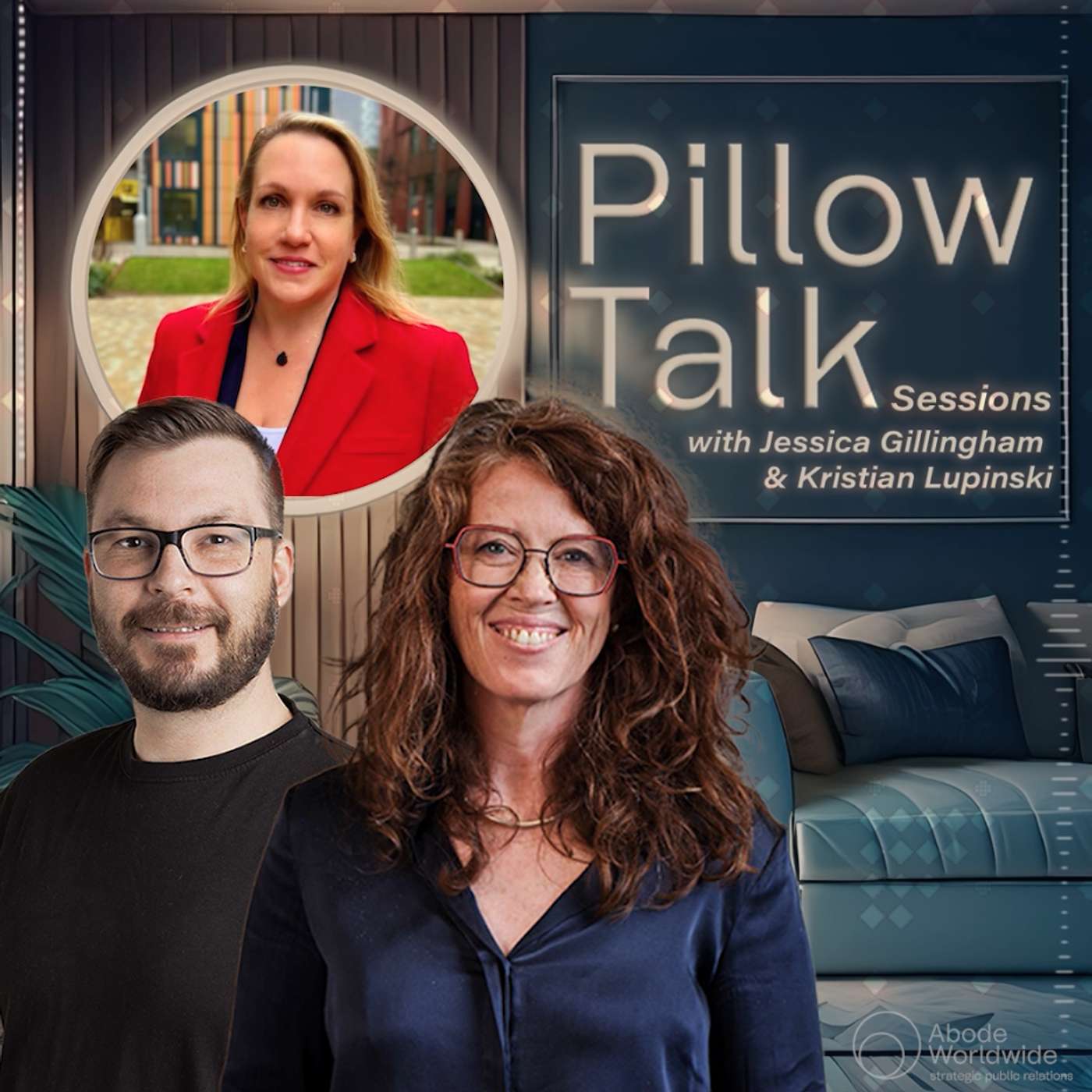
In this week’s Pillow Talk Sessions, Jessica Gillingham and Kristian Lupinski sit down with Stephanie Smith, Head of Residential at Muse, to unpack how thoughtful design, data, and collaboration are shaping the next era of residential living in the UK.
💡 Highlights include:
🏡 Why responsive service and maintenance matter more than flashy amenities
🌍 How early engagement with residents and local schools drives better design and safety
📊 Why “tech for tech’s sake” is out — and data-driven benchmarking is in
🌿 The financial and environmental benefits of Passive House design
🏘️ How Muse balances regeneration and affordability without triggering gentrification
Stephanie’s insights offer a refreshing, pragmatic view on how to create homes that genuinely support communities — not just markets.
Meet the host of Pillow Talk Sessions
Jessica Gillingham is the Founder and CEO of Abode Worldwide, a strategic public relations agency dedicated to elevating the profile of transformative technology solutions in global hospitality, lodging, and rental living. An established industry thought leader, Jessica is a frequent conference speaker and author of Tech-Enabled Hospitality, a new book exploring the innovations shaping the sector.
Welcome back to Bill Talk Sessions. I'm Christian Lefinsky, joined as always by my co-host, Jessica Gillian.
SPEAKER_01Thank you, Christian. And today we're joined by Stephanie Smith, head of residential at New, who are really known for creating places that put community first and blurs that line between living, working, and leisure.
SPEAKER_02We'll also be exploring the blurring of asset classes, PropTech's role as both enabler and pressure point, and what true community first regeneration looks like in practice.
SPEAKER_01Stephanie, thank you so much for joining us on Pillow Talk Sessions. We're really pleased to have you on the show and excited to get into this conversation with you. But before we sort of get into the nuts and bolts of it all, give our audience an overview, please, of both yourself and your and your kind of career path, but also Muse as well. We'd love to hear a little bit more.
SPEAKER_00So, yes, hi Jessica Christian, thank you for having me today. My name's Stephanie Smith and I'm the head of residential for Muse. Um, I came over about 13 years ago as the build-to-rent sector was largely shaping at the time after a long history in the US, in the multifamily world. Um, through my career, I've worked uh over 20 years across nine different countries, um, whether that's in senior or related living, student, um, multifamily, and also single-family rentals. Uh I've also had commercial as well, but I'm madly in love with the the living sector and maybe I'm a bit of a glutton for punishment and moments, but um it's definitely had it's it's my calling, I suppose you could say. I've had the pleasure of working within the industry across asset management, operations, and also worked within investment houses such as Invesco, um having launched some of the first build-to-rent in the country here. Um and I joined Muse, actually, um, which is a large regeneration specialist here in the UK, and joined them earlier this year as their head of residential to really kind of think about the ever-expanding portfolio. And we have quite exciting programs going on. We do work across town and city centers, um, large projects such as Salford Central, but also working within you know kind of areas that might be considered secondary cities such as Wolverhampton, Solihull, you know, working in Bournemouth right now as well, and other areas to that effect. And it's it's really about breathing life back into these neighborhoods and seeing that potential. Um, so we've got some really exciting projects that are going to be going on, um, which obviously we'll we'll dive into a little bit through our discussions.
SPEAKER_01Absolutely, Stephanie, and what a broad, amazing experience that you have, you know, across the the living sectors and and all those countries as well. And I love, you know, when you said, you know, you're stuck in living and you you're really passionate about living, and we talked about this a little bit on the prep call that there are industries that people kind of fall in love with in a way, and live the living sector is one of those. You kind of find people that sort of find it, often quite accidentally, but but love it and stay and stick around. And hospitality is a bit like that too, you know, have people that sort of stay in it. But I just want to pick up something about Muse that that you mentioned, and um and actually around the name Muse. So Muse, from what I picked up on the website, means mixed use. So, you know, and that's a a really interesting concept. Can you go a little bit deeper into that, the mixed use side of things?
SPEAKER_00Of course, of course, very often we're going in and we're working with local councils, local authorities, and really thinking about um, you know, having that nod for the past, but then thinking about the direction that they're trying to go. And when you think about um neighborhoods, you don't just think about the houses, you also think about the pedestrian areas, the park areas, the um, you know, the kind of communal zones where people might go and have their cup of coffee, the flower shop down the street. And and so it's really about looking at the goals for the different local authorities, um, working with the council on their vision, um, you know, understanding the local businesses, understanding the local people's needs, um, whether it's you know safety focus, whether it's about attracting new businesses into the area, um, while and and all of that also being underpinned very largely by really good quality homes as well. Um, and so and very often we're uncovering these gems that may have sort of fallen out of glory, and they're but they're these great historic buildings that just need a little bit of love and and a bit of repurposing. And it could be that that is turned into a phenomenal event center, or it could be that it's um you know refurbished into um you know kind of a new market hall, these different aspects and really thinking about finding that right balance for each of the neighborhoods because they all have a very different heartbeat.
SPEAKER_01Absolutely, it's a real holistic way of looking at looking at things, isn't it? Really, really holistic way. Now, something to begin with on this conversation is that on this podcast we look at various themes, you know, and one of the themes that we look at is explore the concept of the the hotelisation of the living sectors or the hotelization of real estate, uh if you like. And it's looking at that shift that we're seeing across the the kind of the service rental living sectors that is around providing much more of a service-oriented uh offering to to residents. And you know, maybe prioritize maybe that also means kind of prioritizing experience over and service over just sort of uh four walls and a place to live. And from your experience, particularly, I guess, your experience of the US multifamily uh sectors, what's your like what have you learnt and what what's your kind of feeling? Do you think it's kind of overplayed this concept of hotelisation, if you like, or servicing of uh the living sectors, or do you do you really see it as something that is here to stay, it's got big impact? And then what lessons have you learned from from all your experience, particularly I guess the US, which we always think of as quite a service-led kind of country?
SPEAKER_00So I think there are a couple different facets to this. So when you think about hotelization, right? Like if I think of hotels in general, um, and and we'll liken this to here, right, in the UK. So you have your primer ins. They do what they say on the tin, they're clean rooms, comfortable beds, good quality, um, you know, nice service when you go up to the up to the counter. However, you also on the opposite end have the no-booths, the writs, all of that, right? And so I think for me, there's room for all of those because it's all it's all coming down to the service. And you have different price points within there to accommodate different people's needs and different people's expectations, I suppose you could say. Um, you know, similarly, when we're looking at, for instance, builds to rent, you may have some buildings that really do have all of the big bells and whistles, right? You may have the gym, the swimming pools, all of that. And that's not to say that that's wrong. Um, I know that sometimes that those can be vilified to a degree, but no different than the hotels, there will be people who want that lifestyle because it is about maybe to a degree subscription living, if you will. Um, and and some people may have additional disposable income and that's worth it in their mind as an investment for their lifestyle. Um, whereas for other people, you know, that they they want the primer in, they want that good quality home that is, you know, um if it's within their budget, they know that they're going to be taken care of. Biggest amenity is always your staff. It's making sure that your building is taken care of, maintenance is being responded to in a very quick time. You have a very competent staff making sure that the building is safe, um, you know, that they're taking care of any queries that you might have about the neighborhood. Um you can have, you don't necessarily have to have the concierge at the front desk to know where's your local school, where's the local library. Um, you know, very often, and especially um throughout all of the different assets that I've run, and I've run very different assets. I've run the Ivory Towers, I've also run, you know, kind of um refurbished properties, value add, where it could have been, you know, in the states we we kind of classify from A to D class properties, but it could be that it was a C class property, but actually excellent customer service and great layouts and good apartments. Um, but you know, it's about leveraging that greater neighborhood. And that's one of the things I actually love about being with Muse is that we're in these projects for kind of 10, 15 years, and we're seeing the evolution of these neighborhoods and really trying to build that value and amplify that value where you might have that sort of mid-market BTR that's that's lower amenity so that we can fit the price point for that average salary in that location, but actually being able to introduce and incorporate, as I said, kind of that local flower shop, you know, engaging with the local school, thinking about how you know you help to host events in the park, um, or it could be in a little town center area. Um, you know, that that's really where you think about service, right? Service doesn't always have to be the kind of big gym, um, you know, for instance, or again, not that there's anything wrong with having the gym. It's about finding the right product for the right market.
SPEAKER_02And I wonder on that, um, do you find, you know, adapting this you know idea of hotelization um differ based on resident demographics, you know, whether it's you know young professionals or families or older renters, do you see those kind of services being uh adapted in those different areas for those kinds of people?
SPEAKER_00To a degree. I mean, if you have uh obviously you know your demographic within your building, and I think actually we were all really pleasantly surprised. I mean, I kind of knew from from my US experience as well as my experience in Germany, up in the Nordics, that you are going to get demographics of all different ages. It's not just gonna be kind of the 22 to 28 year olds, right? Like, um, and and actually, even then, and I know you and I discussed this before, but it's like show me 10 different 25-year-olds. You I'm gonna show you 10 very different people. You might have some that are beginning their families, you may have some that already have an established family, you may have some that are just leaving school and actually they kind of want to be in a really lively sort of kind of party neighborhood where there's always nighttime activity. Um, and and so it's it is, I think to me, about tailoring. Um, so you reference the four walls. The four walls are really important. You build your quality four walls, you might um set up some of obviously the different events and whatnot within the property, and you might have obviously some of your amenities, but it's about creating flexibility and empowerment for your residents to define that. So, I mean, my first site down in Southampton after moving here, um, you know, we we did host some different events, but actually a lot of the residents said, can we use the space on X day? Um, we had knitting club startup, we had book clubs starting up, we had um Thursday night potlucks out in the garden that the residents initiated. They would all bring their food down, go and barbecue, and you'd see multiple generations out there together. And and you know, we had retirees that were some of our first residents who moved in, and they engaged really closely actually with a lot of the families with young children there, and it almost became like kind of adopted family, if you will. So it's again about empowering that, and actually, through if you think about the life cycle on these properties, um, you know, 15, 20, 30 years, that demographic is going to change. Now, hopefully, a lot of those people stay. You're building that value and they stay in that community because they they've grown those roots with their neighbors. Um, and that's actually really powerful when you actually see that evolving.
SPEAKER_01It's a really interesting point you make also about how we can't look at demographics as being a set thing, you know, like or generations being so broad, like giving broad brush strokes to a generation and assuming everybody in their 20s wants X or needs X. And I guess that's also something that you would bring into your all your thinking at Muse about when you're building the mixed use. You're you there's so many different priorities that that your different stakeholders, your different types of residents would would need and require. It must be extremely complex to think about it in that way.
SPEAKER_00We engage very early. So, this is one of the things that I absolutely love about having moved into the development side of the world. I've been screaming for for ages about building value from the beginning and really understanding your neighborhood. Um, and and with being on the development side now, Muse is, I have to say, phenomenal. So one of the reasons that I joined them was because of that community engagement. Very early days, going to the local schools, sitting down, talking to not just the teachers and the administration, but talking to the students and working with them in workshops and hearing what they like and what their interests are, um, talking to the parents and hearing what their concerns are, um, you know, talking to the community foundations, because very often any of these cities that you go into, it's definitely a tale of at least two cities. Um, when you think about, you know, I mean, you may have some very affluent areas, but actually you go over just a couple blocks, and what you find is that you have a lot of the students who may not eat breakfast or lunch because their family can't afford it. And so really understanding the people in your neighborhood, and alongside sitting down with like the destination group, sitting down with the council, um, you know, really diving in and trying to genuinely understand. And I mean, often I'll just go and sit in one of the neighborhoods, get a cup of coffee, and just watch how people flow through. And I know that that's something that is at the core of what MUs do. Um, because as I said, you know, especially when you are building this community, you have a responsibility. You have a responsibility to that neighborhood very much. So even though we may have our red line, we integrate very much into the overarching neighborhood. Um, I mentioned about like the schools, um, one of the projects that we're currently delivering, um, we're working alongside Poplar Harka on delivering some town homes within Bow. And and some of those actually was really pleased looking into it. We realized that there was a need for neurodivergent adapted homes. And so we're delivering those alongside Poplar Harka. We have some open market sales, which are just really good quality homes suited for that price point, that neighborhood. Um, you know, we're also going to be delivering a pocket park. And one of the concerns is we were talking to the local school, the local residents, and especially the parents, there was concern about safety, walking over to the school, um, you know, kind of dark zones and things like that. And so what we were doing is alongside this, we're opening up the walkways along the shops so that the local store store owners have, you know, a bit more inviting of a of an entrance, better well lit, um, also a bit of a really kind of artistic and colorful pathway over to the school. Again, great lighting creates that better atmosphere. Um, you know, and just sometimes it might that's not necessarily about the building, but that's very much about creating that environment that's welcoming and home for people.
SPEAKER_02Uh I I want to move to another topic, um, which you kind of mentioned it earlier in one of your answers, uh, which is the blurring of asset classes. You know, we're witnessing a growing convergence of living, working, and leisure spaces. You know, what's driving uh, in your view, this shift and how are developers and investors responding to this demand for this more hybrid multi-use environment?
SPEAKER_00I I think we have to be careful in when sometimes there's the blurring within one individual building. Um, you know, we have seen issues, for instance, in the US where you may have hotels with private residential above. Sometimes you get into issues around service charge. Um, but actually you you definitely see that on that ground floor. It's about creating um, you know, really great tenures that are going to add to the lifestyle for the residents above. Um, and and actually sometimes it's not about finding the right coffee shop. Yes, sometimes you definitely need a coffee shop. You may not have one nearby, but you know, when you are taking a look at those different communities, it could be about understanding, for instance, um, where maybe you need a new NHS hub or a new BUPA hub in the neighborhood, or is there a need for a crash daycare within that location? Um, you know, or then thinking about actually one of one of my passions is also around creative industries. Um, you know, really thinking about that kind of heartbeat of the neighborhood when you've got that great historic artistic balance and you don't want to lose that kind of identity. That's part of the reason it became attractive in the first place, right? Um, you know, thinking about um whether it's meanwhile use or hopefully long-term use. You know, can you create artist workshops? Can you create, you know, music studios if it's if it's an area that has very deep roots in that? Um, and and it is about finding that alignment and working with the investors, your investment partners to who will believe in that area. Very often we're working in areas that are outside of you know the big four, or I guess now the term is being expanded to the big six, since we're seeing some um additional interest in other areas too. And and you know, it's about seeing that potential and really understanding what that that mix would be. Um, and and also, you know, if you think about groups like Art Club that are coming out and they're helping to activate some of those ground spaces and some of the amenity spaces on behalf of operators and investors. Um, you know, it's a bit of a service type of program. Um, you know, and and even within lobbies, you know, you're seeing great systems around like Pantry and Tulu, where you've got these these rental products that help to bolster the lifestyle within. Um, you know, it does go back to just really thinking about what those needs are within that community. Um I I do often think that there is a complexity around, you know, when with thinking with my old investment hat on, my old asset management hat on, thinking about, you know, how do you consider underwriting for that commercial space, that kind of um ground floor space. Um, very often any kind of tenant who might want to go into that space, they are going to want to know who the residents are that are moving in there. Are they going to have a customer base? Um, you know, and so that is that does take a bit of diving into, but again, this is where like within Muse, we try to work as early on, again, with the local community and looping that um, you know, looping that investment partner in so we can make sure that we're delivering on that product and and that promise to the local community, um, and then thinking about how long term there is that stewardship. I did have um one of my communities where we very much looked at like walking outside the door. You've got multiple gyms, which are within arm's length, really. Um, you you also have local coffee shops, we have shopping centers everywhere around us. How are you going to fill commercial spaces? We ended up doing a really nice kind of community center that was opened up to the entire neighborhood, flowed through, so it wasn't the you know big white box that hopefully it was going to get rented out every now and again. We had a great curation committee in conjunction with the operator. It was a it was the investment operator and and also the um uh and and also with the councils um for the local area, making sure that we were opening that up to the local artist guild. We had after-school clubs coming in, um, you know, then we had you know kind of family yoga classes on the weekend, all of that. It's about maybe a bit more creative use instead of just going, oh, you need this commercial space, you need to have some retail there. Do you? Or is there something that you can do that would be far more impactful to that neighborhood longer term?
SPEAKER_01I I have a question. So when you're looking at when when investors are approaching, you know, where they might invest, and we have a mix of different asset classes of the residential rental products. So we might be looking at build-to-rent, single-family homes, we might be looking at co-living. Is it for investors, is it is it complicated for them to sort of see that these different ones and to really buy into the fact that there might be within a project or a scheme, not necessarily within, you know, all within the same building, if you like, but across a broader scheme and product, those different asset classes, or do you think they would prefer just one thing, like it's build to rent? I know what I'm getting there, I understand that. Whereas that's sort of the complex, is there more complexity? So is it more difficult to get buy-in, if you like?
SPEAKER_00Um, no, actually, so if we look at it this on two different sides. So, one, very often um within an investment house, you'll have a fund that's dedicated potentially to alternatives, right? So that's where you're gonna find your co-living, potentially your single family, maybe later living. Um, but they typically have a goal, and then sometimes you'll have that kind of wider residential fund, if you will, um, that might be more focused on specifically build-to-rent, for instance, or maybe it's just kind of single-family rentals. So it's not necessarily that you're going to be, so for instance, if I think about ours, and we've got sometimes very, very large red lines, if you will, in an even larger sort of amber line, if you will, for potential future um development throughout the um different projects. But um, you know, it could be that we're talking to one specific partner about this plot, but actually they see a huge benefit in also what's coming up alongside that, because it could be that I'm talking to one investor about the co-living block right next to next door to it, and then another one about the bill to rent, and we could be having a different conversation. About maybe an office building or an event space, something like that within that greater red line, if you will. So would a fund typically kind of go, yeah, I'll take that entire kind of four different type of 10-year block? Probably not, because very often they have different um goals within and different hold periods, for instance. Whereas would they see the value of going, actually, we know that you're going to have some open market sales over here. We know that you're also going to have co-living next door. This is going to, and especially senior living, this is going to activate that space. We're going to realize the value. We're going to be adding that value back into the neighborhood very quickly because of that. Um, and and sometimes that's actually easier to absorb, maybe than, oh, actually, here's an area that's up and coming, but you don't necessarily know what's coming outside of sort of that one building, um, you know, over the next six years, because um when sometimes you're reliant on different developers, you're reliant on potentially um different councils sort of working through the planning processes and whatnot, that can add that additional stress, and you may not necessarily realize those returns and that value within that potentially five, 10-year hold period. It is really um promising to see new funds or or actually even some very established funds now starting to really look at that longer-term hold, that longer-term commitment to those buildings and ensuring that they are able to also incorporate additional measures around sustainability, knowing that they're building for the future, um, as opposed to kind of maybe sometimes what might happen on some of the shorter holds, is that there tends to be a little bit more of that value engineering to help close some of that viability gap as well. So yeah, I think that we're seeing some really positive trends in that direction. Um, and I think that that's going to add up loads of um loads of promise for these different neighborhoods because it can't just be, like I said, if we just focus on those, the big four, the big six, we're gonna run into a very large issue.
SPEAKER_02No, super interesting. You know, one one topic that we we like to talk about uh a lot on this podcast is technology. So I want to talk a bit about that now. Um, you know, with Prop Tech uh is always playing a pivotal role in enabling both uh operational efficiency and enhanced resident experience. You know, where do you see the the greatest opportunity uh and then of course and the biggest risk uh when implementing uh new technology across the living sectors?
SPEAKER_00So it's it's funny you you asked this question because actually PropTech's always it's kind of always there and it's about balancing out the value. So I think that what we did see for a little while was that there was almost like a tech for tech type of approach, as opposed to really thinking strategically about where it was going to add that value. Sometimes you ended up with very disparate systems kind of talking to one another or not talking to one another when one went through an update and the other one wasn't designed for it. Um, and and so it's really about thinking about how you create efficiency, right? This is what PropTech should do, whether that's creating efficiency for the residents or that's creating efficiency for the site teams, especially when you consider the pressure that's coming in about controlling fees, controlling OPEX, making sure that you know people are working in a smart manner. Um, but also I I think some of the really big opportunities, and I'm gonna harp about this because it's what I do, um, is around actually sharing data. I'm not saying share IP. What I'm saying is is share that information benchmarking so we can all as an industry make smarter decisions, right? Like if you look at any of the more mature markets, if you look at Germany, you look at the the North American markets, um, and I and obviously there are others out there as well that are very good about this, they do have consistent benchmarking. We're starting to move towards that within the association. We've got a great operational benchmarking program going on. We're designing a glossary so that people are actually defining it and calculating things in the same way. Um, you know, and this will be complementary to some of the work that MSCI does on the investment side, um, especially now that we have years of data. Um, it was very difficult at first. So I think that's actually one of the biggest opportunities because when you have good information, you make smarter decisions, right? And we can also explain things and educate the, you know, the other stakeholders within the greater industry, if you will. So obviously planning, um working with the local councils, also working with our agents to steer these neighborhoods and think about what they need. Um, the other area as well is definitely around sustainability. We we have to have this data. Um, you know, there's unfortunately very often what you do see is is, you know, kind of you've got these sustainability goals, um, and obviously we're seeing an impact because of some other countries, some investors, and and maybe where their priorities lie right now. But I do think that that will be passing because at the heart of it we want to build for the future. Um, having tangible information so we can build the case on why these things actually do build that longer-term value and and create better communities. So if I think about our passive house schemes, right? So we do passive house, and we've been very lucky to work with a phenomenal RP on that side with Salics. Um, for anybody not aware on who's listening to the podcast right now, passive house is very much about um, you know, it's building for the future, it's green housing, better air quality, um, better insulation, and just better build quality all across the board. And and yes, we can actually say that we can take an average renter's utilities from 1200 per annum down to about 125 to 150 pounds. Can you imagine that? Um, you know, saving that kind of money in one year. But it's more, it's about more than that right now. So we're we've already got great data around that, and we've got phenomenal information about the air quality uh where we first delivered passive houses up in Salford, where um it it does have it did have one of the worst air qualities in the country, actually. And so we were trying to overcome this because of some of the health issues, and and um again, it was about getting a partner on board who saw the vision, right? But actually, what we're doing now is we're taking a look at the knock-on effect, right? So that longer-term tangible benefit, not just to our community and to our opex lines, but really thinking about, for instance, um, you know, the easing the burden on the NHS, um, you know, thinking about when you have better air quality and better health, you're able to, you know, make sure that your kids are healthier getting to school, you're able to get into work, fewer missed days, um, you know, obviously being able to build your career path, all of those different things that actually those have a very huge benefit to your mental well-being as well. So it's not just about your physical health, it's also about that mental health. Um, and and again, having that benefit where if you're not having to go into the doctor all the time, you know, that opens up appointments for other people who need to get into the NHS as well. So, again, I think that we've got some great opportunities around tech to really capture this. There are also some other great case studies too. Um, you know, in in later living, they're now using sensors within the lights that can actually track and say, well, Christian, I know how you walk. It learns, learns the way your gait and the way that you move through the apartment home. And if you were to slip and fall and you couldn't get to your lanyard to press that button, that can have huge detrimental impact on if you're able to, you know, what are your survival rates? How much longer are you going to have if you can't get the help that you need in a timely manner? So with this technology, it can actually alert people that you need assistance and get it to you much faster. So it's like, you know, it this is about again having that technology and thinking really intelligently about how it can benefit the community, not just because it's kind of a cool, flashy thing. Don't get me wrong, sometimes the cool, flashy things are really great to have, but you know, it's it but realistically, if you can help make somebody's life a little bit better, let's do it.
SPEAKER_01Yeah, brilliant. And it's about being in in intentional and strategic about technology use. I just want to just touch on something that you said and actually just give a reflection to it, is that it's very heartening to hear from you that ESG sustainability is still a priority and is still something that you see being important in the future because we are all seeing across all, you know, we work in hospitality as well as the living sectors, but seeing certainly on the hospitality side how it is falling down the agenda of priorities at the moment in terms of being a topic that's that's important to the industry. So it's so it's really heartening to hear you say that you still, you know, you definitely see it as being uh something that's important in the future. But I just want to come now to our sort of final topic, if you like. And you know, you're talking really exciting stuff here. You know, there's an awful lot of really, really interesting things that you guys are doing and thinking about when it comes to regenerating communities and adding value to communities when you go into them. But a question that I have is how do you balance that coming in with that regeneration sort of you know, all everything that you're doing and thinking and bringing to the table with the gentrification that we might have of a of a community that then might kind of make it feel very different from how it was, or make it maybe less affordable for the people that you know come from that area, or or whatever gentrification kind of means to us. How do we do that balance, do you think?
SPEAKER_00I'm a firm believer in regeneration versus gentrification. Um, you know, it again to go back to you know, kind of the heartbeat of the neighborhood, what made it interesting? Um, you know, what else are the goals for the neighborhood? How can you benefit that community in a really positive manner? Um, will there still be at times, you know, beautiful, more luxury communities that are getting built? Yes, there will be. Um, but also a lot of the areas that we're looking at, you know, we're kind of looking at that squeezed middle, right? That missing middle housing, um, you know, where actually it can't absorb maybe the rents that would come with more of that luxury style community that you might find in a, you know, the heart of London or the heart of Manchester or something like that. Um, and and we do obviously design in conjunction with our investment partners if one of them does want a luxury community, but then there's also a very good amount of investors who are also taking a look at that diversification and recognizing that you can have very impactful homes and communities. If I even think of like, you know, over my my time in Denmark and and also in Amsterdam, and thinking about they had great quality kind of mid-rise, lower amenity, and it was answering a question around that affordability for that local neighborhood. And so it's about finding that right balance. Um, I mean, one of the biggest things that you can do to help tackle affordability, right? Don't get me wrong, we all want to do the right thing. I understand where the rent reforms are coming from, I understand where obviously regulation comes from. Um, I've seen it work very well. I've also seen it where it's completely bottomed down to market, which is unfortunate when it's not kind of managed the right way. But actually, the best way that you can that you can conquer the affordable affordability question is really about delivering homes, right? This is no different than supply and demand on, you know, airlines or on concert tickets, unfortunately. Um, you know, it this is about if we can open this up and get these homes being delivered, then that will actually create that impact. You know, if we think about um, you know, I think latest numbers are around 290,000 homes that were rentals in the PRS market, have now left the market and are actually on the open market sales because of some of the detriment that these um kind of buy-to-let landlords have experienced. You know, that's now taking away that housing. If we think about the pipeline around build to rent right now, that's not even going to cover completely that lack of housing that's just exited. You know, and and so we need to be creative, we need to unlock this so we can get these homes delivered for everybody, whether that is the luxury tower that somebody desperately wants to live in because that's the lifestyle that they can afford and they want, or whether it is the really great kind of mid-market, you know, maybe it has some nice kind of co-working, really thought, well thought out community amenities, whether that is, you know, the um the local crush, or maybe it is the the great local coffee shop down the way or the we work that's being put into that neighborhood. You know, it we have to deliver this housing and it has to be at the crux of every one of these neighborhoods.
SPEAKER_02Just one one question on that, real quickly. You know, do you think that there should be any policies or practices that should be adopted industry-wide, you know, to safeguard affordability during these large-scale redevelopments?
SPEAKER_00Policies are a tough one because of the fact that there are already a lot of policies that are in place that aren't necessarily working, right? They before we start creating more policies, let's take a look at the policies we have, figure out what's working really well with them, where we can work together as an industry alongside um, you know, obviously the government, making sure that we're all aligned, that we understand what we're trying to deliver, we refine what's not working so well, and make sure that we can get these homes delivered, and then address if there are continuing issues that need to be taken care of. Um, you know, I mean, I think at the end of the day, developers, investors, uh, you know, the local authorities, um, in the government, we want houses. We we want to create these communities where people can live in nice, safe, warm, clean homes and afford to live there as well. Um, again, you know, I think some of it to start with, like, let's unlock and get development going again. Let's make sure that the doors are open so that investors feel comfortable to invest again. Um, and and let's make sure that we're also engaging with the local communities so that when we are developing these, that we are actually putting something in place that makes sense for that location and for that community.
SPEAKER_01Brilliant. Stephanie, this feels like a perfect place to end the interview. Thank you so much for coming on. But before we say goodbye to you, is there anything you want to share with the audience that you have coming up that you feel they should really hear about?
SPEAKER_00Actually, it's it's kind of a very broad question because with Muse, we have a tremendous pipeline coming up. So when I joined at the beginning of this year, we had about 9,000 homes that were in the pipeline alongside some really great retail and other product um projects that we were working on. And that's now almost doubled just in our um development agreements that we have. So we we now have just shy of 18,000 homes, um whether that's build to rent, open market sales, affordable. And obviously, when I say build to rent, I'm kind of encapsulating also the subsectors within there. Um, and and those are across so many different areas and and often in locations that people wouldn't even think of, to be completely honest. You know, um I I know I mentioned obviously earlier about Solohull and Oldham, for instance, but we're doing some work over in St. Helens right now. We have some great work that we're doing in areas like Withenshaw, um, you know, Slough. We've got loads going on down there right now. So um, yeah, having a brilliant time working with our partners on those different projects. And, you know, also we do have a couple of um, we're gonna be doing our annual unveiling of our sustainable futures report coming up in the new year. Um our our head of sustainability, Sarita, um, always has it's a phenomenal project, and it's really about everything that we do. It's at the heart of every single project that we work on, whether it's measuring our social impact, whether it's measuring the um you know our carbon footprint and the products that we're putting into the different communities and that longevity. Um, and then obviously in the upcoming year, we're we're excited about joining over at MIPAM and UK Reef, where um over the last few years we've had the Ferns Pavilion and a phenomenal lineup talking about our um our relationships with Habico, which is our partnership to develop and deliver our affordable homes, um, and that's in conjunction with PIC and with Homes England, and also unveilings of new projects coming up with ECF, which is the English Cities Fund, and that is our 20-year-long relationship with LNG and Homes England. So loads going on. Um, there's definitely information on our Muse website. I would encourage people to get over there and take a look at it and be more than happy to have a chat with anybody at any of the different events that are coming up that we surely will be um attending to make sure that we're we're linking in with the right investors and and with the right policymakers.
SPEAKER_02Oh, that's fantastic. Stephanie, uh a real pleasure to have you on the show. And uh just as Jessica said, uh thanks so much for taking the time to join us.
SPEAKER_00Oh, it was an absolute pleasure. Thank you both.
SPEAKER_02And that wraps it up for today's episode of Pillow Talk Sessions. Thank you so much for joining us. And to stay connected and never miss a conversation, head over to Pillotalksions.com to subscribe. You can also follow us on LinkedIn for more insights and interviews with leaders shaping the future of hospitality, multifamily living, and community-driven spaces. Pillow Talk Sessions is brought to you by Aboat Worldwide, the strategic public relations agency for tech brands and tech enabled operators, transforming the way we work, play, and stay. About Worldwide creates category leaders and builds brand value across hospitality in modern rental living. Thanks again for tuning in, and we'll see you next time on Pillow Talk Sessions.


