The Future of Casual Living with Asli Kutlucan (TFE Hotels)


 RSS Feed
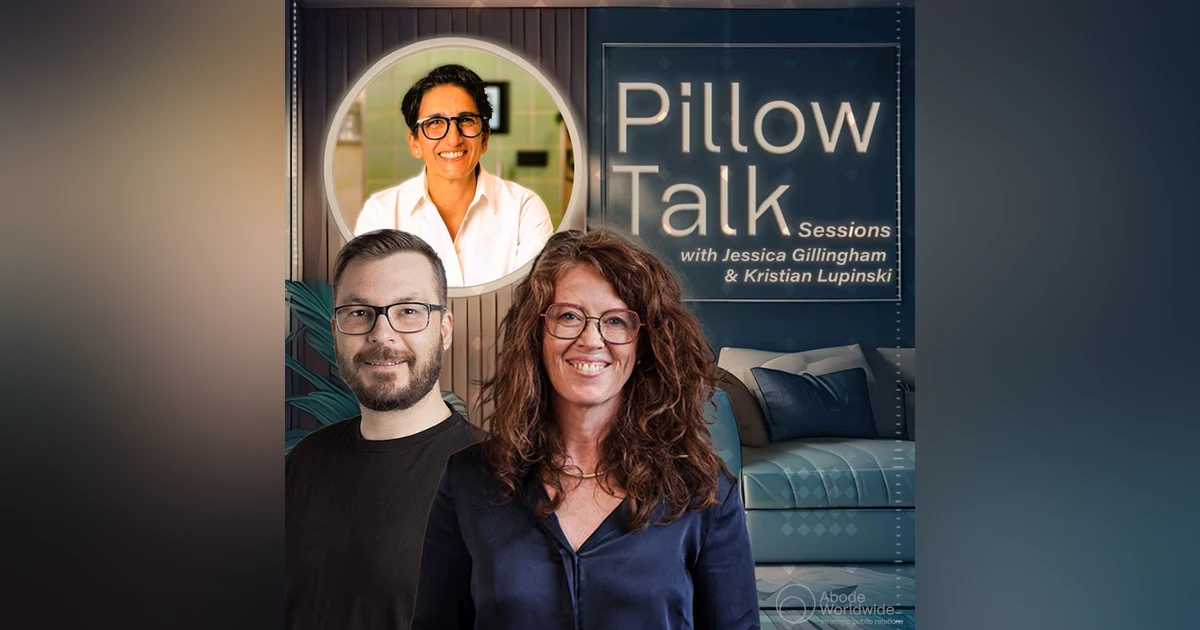
 In this week’s Pillow Talk Sessions, Jessica Gillingham and co-host Kristian Lupinski sit down with Asli Kutlucan, CEO Europe at TFE Hotels, to explore how the company is bridging the gap between hotels and homes with its fast-growing Adina and MM:MT (Moment) brands.
In this episode, Asli shares:
🏨 Why casual living is the next evolution of modern hospitality
🏗️ How adaptive reuse is unlocking new value from underused city buildings
🤖 How the new GXP platform is transforming guest experience and staff operations
🌍 Why flexible, service-led living is resonating with a generation on the move
💬 How to balance tech-driven efficiency with authentic hospitality
From Berlin to Cambridge, Hamburg to Glasgow, TFE is leading a new era of living that’s flexible, connected, and human-centered.
Meet the host of Pillow Talk Sessions
Jessica Gillingham is the Founder and CEO of Abode Worldwide, a strategic public relations agency dedicated to elevating the profile of transformative technology solutions in global hospitality, lodging, and rental living. An established industry thought leader, Jessica is a frequent conference speaker and author of Tech-Enabled Hospitality, a new book exploring the innovations shaping the sector.
Welcome back to Tell Talk Talking with Arc Telefoncy, joined as always by my co-host, Jessica. We'll be exploring TFP's federal living strategy, the evolution of the DNA and Moment Brands, and how adaptive reuse of technology is shifting test expectations for making the next generation of flexible service terminal living.
SPEAKER_02As we thank you so much for joining us on the Pillow Talk Sessions podcast. I'm really looking forward to sort of delving deeper with you on some of the things that you've got to say about hospitality and some of the really cool things that you're doing as well. So before we sort of get into the conversation, really love it if you could introduce both yourself and TFE hotels to our audience, please.
SPEAKER_00Absolutely. And thank you, Jessica and Christian. I'm very delighted to be joining to your podcast. I did listen to quite a few of your episodes over the years, and it's just uh very nice and very thought intriguing. So um, yeah, I'm Aslu and uh geez, I started my hospitality career early 1990s and my family hotel. So it's uh hospitality and hotels been in my uh blood, and uh that's what I've been doing since that day. Uh my career has taken me uh across uh from Turkey to America to UK, Africa, Europe, all around the world, uh, which I'm um very grateful. Um my career has spanned and started, of course, with uh resort hotels and moved into uh luxury country house hotels uh segment and followed by uh Before Europe can spell extended stay, I joined uh very early days of Fraser's Hospitality on an extended stay. Uh and then since then I just sort of did a bit of both of everything and in uh my previous role. I grew a company both from an extended stay and full service perspective across Europe. Um, and yes, uh now I've been part of the TFE family uh as their Europe CEO since January 24, and uh what we are predominantly focusing here in Europe is that uh sort of the living uh sector, if I may call it. So the the Adena brand family as well as the moment brand are our key focus here in uh Europe, um casual living segment. However, in Australia, where uh we come from, uh we uh apart from uh these uh casual living brands such as the um uh Adenas, we have many other uh brands that are a bit more tailored towards the uh transient hotels, uh luxury heritage hotels. So, and today in Europe, um we're proud to say we have uh 22 hotels um currently across four countries, and looking forward to growing this uh to many more hotels in the coming years, both with our Adena as well as our moment brand families.
SPEAKER_02Oh, brilliant, Ashley. And firstly, you've got like it's such a a really deep experience in hospitality, everything from the hotels to the extended stay, and now moving into living. And we'll talk a little bit later of what you're doing with the moment brand as well, which is really is very unique. But firstly, you know, you're you're your TFE is an Australian company that is also now in Europe and of course across Asia as well. And but firstly, uh you talked a little bit there about the casual living, and you know, what is casual living and hotel living? Like what what is it that you're doing there from the with the A by Edena brand?
SPEAKER_00Sure. I mean, uh casual living is the sort of the terminology we use internally for everything uh we have in our hotel brand family, let's call their hotel at the end of the day, because you can stay there for one night on all of them. However, of course, these are hotels with additional services, especially within the room, with additional amenities, where you uh almost feel like home-like comfort in a hotel-like reliability, right? So that's sort of what we are providing in our Adena brand family. A by Adena, especially, it's our sort of the newest brand in the Adena brand family, which is our sort of um uh relaxed luxury where uh again, where you find very high-end amenities uh within the hotel and the rooms. But you know, you can choose to be there one or two nights alone or with your family, or you can choose that that's your pied-terre every time you come to that steam on day to Friday because you're leading a company but living on the countryside, or you're relocating a location where you will feel comfortable enough to live there for an extended period of time, whilst you have the home-like amenities, but the hotels great service. So that's sort of in a nutshell what I can describe them to be the segmentation.
SPEAKER_01Super interesting. I think that's a good segue into our first topic that we're discussing today is this idea of hotelization of residential real estate. You know, your career, as you mentioned, has extended, you know, span across extended state, co-living, service apartments, you know. How do you see this hotelization of residential spaces, you know, reshaping, you know, the guest expectation, but also the operational models, um, you know, especially over the next decade?
SPEAKER_00That's a great question. Um before I allude, perhaps how I see it's developing, uh, if I may allude to what happened in the last decade and what is sort of dictating the future of that blurring lines between residential and hotels and everything in between. Um, most of our uh youth, when we went to university, uh, we all end up sharing some very questionable accommodation in a shared house, in Victorian houses, or you know, with uh 10 other people. And for us, that was what we learned. Student accommodation in certain universities, of course, had their dormitories, and but that was it pretty much. Now, over the last 10-15 years, what we have seen is the immense growth on branded student accommodation. All right, so every country you go these days is literally this very, very fancy uh sort of branded uh um student livings, 12 or 15 square meters. Some has their own kitchen, some has their share. But what happened is that this has affected that new generation coming into the workforce to first of all get used to having hotel-like services, if I may say, right? So they sort of came out from their parents' house where most of most of them being very well looked after, and then go straight into this accommodation type. Whilst this is happening, of course, it comes Airbnb, which completely sort of changed the mindset of the uh consumers that there are so many different alternative accommodations, and then on the back of it, then we start having this co-living. So, what happened is that we have a whole new generation already in their mid-30s that started their life after their home to be on a branded uh student accommodation, followed by some Airbnb on their travels, then followed by on their first role in an internship in a different city, some form of a co-living, right? So this is where for the whole mindset actually starts shifting. Extended stay hotels were always there. Quite big in the US and quite big in Asia and Australia, even much longer than um Europe. Today, I think Australia is around 20% of the hotel inventories extended stay hotels, and similar uh stats both for Asia and America's, but in Europe it's still around 5%, just to put that into concept as well. So we're catching up, but surely with the new generation that have much different expectations from their life they're gonna spend from university until retirement, they are looking to find uh a solution that where they can actually be first of all get great service, some form of a great service, all right. They don't probably want to deal with cleaning, perhaps, or they don't want to deal with council tax or the the the the how to get the internet and dealing with those things, and they also choose the flexibility, say okay, well, three months here, I'm gonna pack my back and go somewhere else. That's what I want to do. Now, if you had a house and apartment, that's a bit more difficult. So, where we're coming from is that sort of those are, I think, I believe the key shift pattern shift changes started, and today uh we are in a much more mobile lifestyle than uh than before. So that then kind of becomes that what do we do with our current residential stock and what we do with the new hotel stock and how we define them, and that's becoming blurry. And I think more and more people are gonna start living in a more apartment-like lifestyle in the cities and less in big houses and gardens and etc. Because they want to have that flexibility to be able to be moving around and going different places, and while that's happening, what we define a branded residency versus an A-Bayedina versus a co-living product depends on the what kind of demographics we are going to be welcoming into each under the roof, uh, into each uh product, and how we are going to be uh amending the uh the flexibility of the service offering and the residential unit of offering.
SPEAKER_02It's so, you know, the cultural reasons why hospitality and living are changing. I I find just absolutely fascinating. And and it isn't just lifestyle changes, but I guess it's also affordability as well, you know. Buying a house with a garden is is perhaps out of reach for many people, or it comes later on the journey, doesn't it, in our lifetimes, and maybe it did 20 years ago or you know, definitely probably 30 years ago. I've got um, and then also, you know, I've got a couple a couple of things I want to ask you now, actually. I've got one and then I'll wait till you answer that and then I'll go to another. But also that extended stay, previously it would be business people, wouldn't it, typically, or relocation, um, you know, people project workers, that kind of thing. But when now that we're seeing this sort of shift culturally, if you like, or lifestyle, what do you think is, and you talked about convenience, flexibility, and then also wanting that kind of service side, what do you think is most important for the next generation or as we move forward in what we're we're offering as a hospitality offering? Out of those, what do you think is the probably the core that everyone is really looking for?
SPEAKER_00Yeah, it's uh if I just quickly allude back to your original sort of saying about the traditions has changed. Um, my experience um has been you know, sort of having lived in very different parts of the world. Um I certainly uh was surprised sort of in the mainland continental Europe, house ownership is less of a thing and rental life is much, you know, renting something was much more common. Uh whereas uh you know, my upbringing in Turkey and UK, where your ultimate goal was always to own a house culturally, or you were lucky maybe you inherited a house. And in America, sort of there was a huge difference between the city living and and sort of the New Yorks and Chicago's of where sort of people only rented and whereas you go into so countryside. So I think that there is a variety of different approaches, and in Germany today, I'm I was very shocked because most people are renting, and that has been the culture. Um so going back to your second part of your question is that um where um the new generation, you know, what is it affecting their sort of decision is they're getting married later or not even getting married. I think there's building a family concept slightly shifted, right, between generations, and that's I think also another pivotal point why accommodation both from a hotel or residential perspective has changed. Because, you know, again, if I just give two extremes, my mom's generation, I think before 30, everybody had a couple of kids and settled down. And I'm looking at uh today my god children in their 20s, they're like the the the M of marrying is not even spelled, right? So that's the whole and that affects everything apart their career choices, living arrangements, travel choices. So I suppose I I don't have, of course, the crystal ball to say where these uh generations are gonna take us to, but I can certainly today define uh and see it with our products, with the Moment product, um, in the Adena uh product, and also in other products where uh watching these um young professionals so being so fluid in their lifestyle, and that is reflecting on their choices. Now we've gone through a major globalization piece um a couple of days decades ago. Today we don't know where we're going with the globalization, but I don't think you can stop globalization. Therefore, I think this is gonna continue off people feeling much more relaxed to sort of call home where their suitcase is rather than the city they were born, right? So then again, that's sort of gonna push through that if these people come into Berlin to work as a nomad for three months, are they gonna stay in a shared house, on a co-living, or a moment, or a Dina? That's where we are today. Now, when this generation, which let's call them to be the meat management, young management today, in ten years from now, when they start talking about uh family and and and and kids, now obviously I give you guys the sort of my personal timeline, you know, branded student accommodation, co-living, um, and then sort of arenas and whatnot. So when they get to that level, there is a huge indication that they're gonna choose more uh branded and serviced residential, if that makes sense, right? So they're gonna look into the options where I don't want to start planning everything three months ahead, uh applying for the internet connection and this and that, the water. They just want to basically bring a truck and bring their suitcases, bring the new family, put in that uh whatever it is, an apartment or a house where somebody already done all this for them. And when something breaks down, they're least likely to know how to fix themselves, like perhaps our parents and some of us, and they're gonna be looking for a service, like they can call a concierge or a house manager, building manager to say, Oh, my dishwasher is not working or my water is not hot enough, and they expect that to be delivered or fixed. So I think that's the transition we're going towards, uh, more towards, I think, in the future. Would that be the end of normal residential? I don't think so. I think there's still people going to be sort of looking to that beautiful house with a garden and where they can grow. But more and more generation, current generation, uh habits are shifting towards that kind of a living solutions.
SPEAKER_02Absolutely. What I'd say there is Christians about to buy a house and become that person.
SPEAKER_01Yeah, that's exactly you explain my whole situation like spot on. I'm 40 now, I'm 40 years old, and now I'm starting to look to buy a house. You know, I got a two-year-old, and you know, just looking at all those things, you know, I was looking at uh now I have to when I buy this place, it's not connected to the city sewage, so I have to have the step thing cleaned and all these things. Like, do I really want to do this?
SPEAKER_02But can I just say so I'm at a different end of the scale? I'm about to be an empty nester over the next year or two. And you know, I'm British, so I was ingrained to buy a house as soon as I could. But now I'm like, okay, once we're empty nesters, we'll go and do the service living, you know, three months in Berlin, three months in New York, you know, all of those things. So it's exciting. But before we get to the next topic, and I know Christian will be biting for us to get to the next topic, but I have a question about operations, right? So how so how do you like how like it's more complex or different to be doing, let's say, a hotel where it's just like one, two nights that somebody comes and stays, two more of this casual living hotel living. Operationally, what have you learned in terms of being able to kind of offer those differences? Like, is there anything or is it just all easy peasy?
SPEAKER_00I wouldn't 100% confirm that statement. Um I think how the guest is increasingly expect um sort of um uh sort of consistency and home-like feeling in their temporary accommodation, let's call it, so it can be the service apartment or co-living. The service expectations also change. They're not looking to find someone dressed like they're soldiers with a three-piece suit and sort of yes ma'am, yes sir. I think that's what sort of originally all hotelies being trained to provide, which is uh can come across less home-like, less family-like. I think therefore we sort of move towards more friend-like service, if that makes sense. Some way we care about your service because that's you know, if you're there one or two nights, you're not gonna build a relationship either. So if that person is just a bit rigid and in a sort of just kind of a bit more like an administrative person behind what I call a rejection desk because it's just so high and massive things behind, um, they're not looking to build a knowledge. But if you're just there for more than two nights, even if it's four nights or five nights or two weeks, then your mindset and your expectation shifts. I mean, the best way to explain this perhaps, and just everybody, most British, you know, most Britain, most people in Europe goes to holiday for a week or two weeks in Spanish cost resorts or Turkish coast or Greek costs, where you go to these hotels where you certainly they choose more relaxed service because they know they build that rapport, they build that service. So that's just basically bringing it into the city. So you they're looking for a bit more friendly service, someone who can understand them. Um, perhaps one interesting point I can give you. Now we brought the Moments brand with fully tech enabled, right? So literally fully tech enabled, and our lab hotel has been able to run with no human, let's call it, you know, if if we want to. So we tested that tech is working. Now, our ambition here wasn't to open hotels or sort of the extended state or casual living hotels so that we can run them without people. We want to open these hotels with fully tech enabled to actually have a bit of a different type of people within the building to welcome you. Now, first of all, um hospitality has had a big loss of um workforce over the COVID and et cetera. And uh and secondly, because what I just alluded to, people are looking for something different. If I can stop having to employ people that has super administrative skills to be on a reception because they need to be able to understand all that complex interfaces and constantly do the things on the computer on the PMS, give you a piece of paper to sign and then file that and this and that. If I can just remove that, that means I can hire anyone who has a care for people. So with the moment, I'm seeing that we are gonna be designing a hospitality stage, a theater, right? So in every city we're gonna open these moments. I want people to already come in, checked in, and done and dusted, no administrative, they're just gonna welcome. And they're going to be greeted by people with lots of sort of care and in you know intention to understand their purpose and how can they help you. So we're going to be able to now look into hiring people from performing arts or from care homes because I don't need them to have that extent or the hotel experience. So just kind of a saying, why are we doing this? Because that's the expectation. People want to speak to people they feel they can connect. And my job as a CEO, bringing these new brands, opening these new hotels is that hire the people who can give that what we really call genuine care and what we really call community feel. And we the community feel is just this high hip word everybody uses or connecting with no community connection starts first within that building by the people who are serving you. And that then brings the rest of the community and the neighborhood. So that's sort of where we're trying to take, and we will be taking the service ethos and then the mindset of the people who are providing the service.
SPEAKER_02I think this is a really good opportunity for you to just give us an for those who haven't heard of the moment brand, and for our listeners, it it looks like MMNT. And we did previously do a podcast with Philippa Philippa Wagner from People, Places, Spaces, who talked about it, but actually an overview of what it is, because it is really cool what you're doing there, and it's really unusual what you're doing with the Moment Brands.
SPEAKER_00Yeah, um, yeah, I mean, Moment is a is a is an incredible uh solution to a couple of the big problems we're facing today in our lives in the cities. So, first of all, it sits somewhere between co-living and extended stay, all right? But it also gives the guest the community without losing their sort of privacy, uh, and they still feel their own space but still feel connected. Now, the moment brand is an adaptive brand. Um, so for example, Adena brand, we have very you know sort of brand standards, um, you know, sort of, and usually it needs to really be built ground up, and it usually will be a bit more difficult to share the same floor space with other people, right? So today, our biggest problem from a real estate and sustainability perspective is that we have every day more and more redundant retail and office space, right? And people don't know what to do with this because, say, for example, if there's a retail uh with over five or seven floors, today maximum the two-floor works. We know that, and the rest of that three-floor is empty. So, what can we do there? Can we put Adena? Bit difficult, it will cost much more because you really need to shift a lot of things, and that's where we thought that wherever retail is, that's already an activated street or location. So, therefore, it's suitable for anyone looking for a living or stay-over solution. So, our moment brand is being designed to be able to fit in in any piece of floor plan at the you know, workable location, it has to be, of course. And and we have sort of three types of room types, so a small, medium, and large. And what we have done is that when we sort of start developing this idea, is that we wanted to not just put it on the paper, but we wanted to experience this and really test in the real life. So we have created our Berlin lab uh here where it took out this retail space and it's a six-room prototype life better hotel. Now, what are the key differentiations about the Moment than some other similar products? First of all, Moment is not a budget brand, that's very important that everybody needs to know. It's not a sort of uh budget brand, and it's never gonna be. That's not what we purposed it. It's not a luxury brand either, but it is not a budget brand. So everything that we have used within the design and material is a very much high-end. All if ideally all or close to all items should be recyclable, recycled materials, and all the the paints and and items use, you know, non-toxic and etc. So you can't, you know, that definitely doesn't become a budget, is you know, because you know, in order to do budget, you have to compromise on quality and sustainability most of the time. The second thing uh we have about moment is going back to that. We wanted to create something fully tech enabled. So we have all these incredible uh prop tech guys came into our industry with these fantastic products where they sort of put on the buildings and they sort of created a new segmentation of hotel, hospitality living, uh, without any hospitality, just tech enabled, which is great. And we want to be one of those first hospitality companies can bring in all the tech into the um product. And we basically built this whole mini beta hotel with six rooms in Berlin with all those ideas we had in mind as a test uh uh better hotel. We invited about 200 people to be our initial test guests to test everything from product to tech stack and everything. And then we sort of shut down uh for a month after that two months period with 200 guests. This some of the adjustments that we can within uh whatever the building or the tech stack allows us, and then sort of last year, July, we reopened to public uh that the public can book directly from our website and social media or Airbnb only. Why? Because we all know that Airbnb guest is the most uh tech um adaptive guest. They never had this expectation to go somewhere that is going to be traditional welcomed by someone and this and that. They they know that they just knowing that they become an Airbnb guest, right? So, and we've been selling that um products through the Airbnb in our own uh social media and our website. And so far uh we've been monitoring all those feedbacks as well as our initial guests. So, whenever we can, we made some tweaks in uh here there on the design, on the concept, or in the tech stack. And um we are now uh on the verge of hopefully signing our first real moment brands, and uh the first, hopefully, one I don't want to jinx it, and I'm sure Matthias, my head of development, will kick me if he hears that, but looks like we're signing it in Hamburg. Um, and this is the perfect, perfect uh location because this is an existing building that had some retail, a couple of floors, and they had some offices, but not all of the floors up to the seventh floor, the offices work, so they ended up about four or five floors that the office wasn't working, always retail will not work, and they were sort of what can we do with this? And it's also an interesting floor space because you have this huge atrium in the middle. So this was for us like even if I had a sort of blank canvas asking, okay, this is my ideal first property, it would look like this, it is that project. So we're now going to be able to hopefully all be well, take this product where we can just plug in into each of these floors and bring over a hundred key uh Moment brand. And and that's for us, is that this is exactly what we needed to do with this product is that help the landlords, the real estate owners, the office owners to bring that additional solution so that they don't end up with vacant spaces for forever. So that is exactly what Moment is uh for, and uh we're very proud of it. So far, everything you know is religiously every week, several times on Airbnb. We check in all the reviews because um, you know, that's where you get the real real feedback. And you know, albeit it was just a um a trial better hotel. Uh none of the rooms have fresh, real windows, and and four of the windows have no windows whatsoever. And the feedback is fantastic because people feel um kind of a homely, kind of a relaxed, and just sort of the amenities make them feel like they're not somewhere, they're somewhere in a 12 square meter room, but they don't feel they're in a cheap room, right? And that makes the whole experience very different. Now that small rooms we build very small, 12 square meter, but very beautifully decorated in a compact way, they're all gonna have their sort of shared um kitchen space, uh, apart from the main sort of uh the lobby or lounge bit, where they can, of course, during their stay utilize the kitchen, kitchenette, coffee, whatever they want to do there. So that almost becomes somewhere, as I say, hotel, is it co-living, or somewhere in between? And I see these, you know, young people say, for example, leaving um their halls of residence, the branded service uh branded student accommodation, getting their first job with Google or whatever the international company they're gonna do, a six-month or a year internship, they're not gonna be able to find the right apartment or afford a nice place. So this will be their solution, for example. On the other hand, our large suites uh that can sleep up to four. Uh we had a lot of families testing, and now we're reading all the reviews, they're loving it, the the sort of the flow of the room, the kids, the parents, the kitchen in the uh sort of the um in the room, and they just basically became a super happy guest that are staying here over a long weekend because it's easier for them to have that room with two kids than having two interconnected rooms in a hotel where they're only depending on an outside restaurant or bar during the night if their kids want to have something or early morning. So, yeah, this is uh this is for us the one of the most exciting uh journey we've been through so far. And and having this product now being able to roll out in in Europe and Australia and and hopefully one day maybe America's that's uh really excites us.
SPEAKER_01Yeah, that's very cool. And it's uh it's definitely uh a place I have to book next time I'm through, you know, between you and Philippa uh and seeing what's on the site. I want to talk a little bit uh deeper on this, you know, because you mentioned it briefly uh in your last answer. You know, your strategy with TFE Hotels is you know, emphasizing this transforming uh underutilized buildings into this mixed use spaces. Uh for an operator, I mean, what are the keys to making these adaptive reuse both financially viable and operation compelling for this long stay or co-living audience?
SPEAKER_00The operational real estate operators, and I will call ourselves as hotel operators, the office operators and retail operators, I don't think we any of us have any issues with making these spaces work. We first need a fundamental mind shift change in the cities and local authorities first. Um, because that is actually the only reason perhaps we have so many empty spaces across every city you can think of across many of the European cities, is because uh the adaptive use and conversion for us, any of us, and to collaborate together as the operational real estate operators, and again, that's the retail, that's the office, that's the hotel here or extended state. We can't work. It it works. Our biggest first change is to sort of reduce that uh amount of underutilized space, is that we really need uh the local authorities and and um and local governments to actually start appreciating this change as well because zoning is just killing everybody at this stage, and that's one thing. On the other hand, of course, going back to your question, assuming that all being well and we have the zoning approved for that building to be both uh uh commercial as well as sort of residential slash hotel, um, we obviously need to first look at the guest journey for all of them, right? That's the most important one. And and we have to, everybody has a slightly different uh journey. So the retail and office behaviors will be more alike in terms of hours of operating and uh heavy footfall, whereas with the hotel or residential, it's slightly will be the opposite side. So, what we need to figure out wherever we're putting these products, and let's say the R moment product, we have to make sure that the integrity of the building, the guest journey from arrival experience all the way to their, you know, sort of room, is not sort of cannibalized by the other usages either. And likewise to the office user as well as the retail user, right? So we have to figure out that um do we have enough lifts to serve in the peak times? Are they fast enough? Is the staircases and so on and so forth uh suitable? Once if you can get the guest journey right for all of these different usage types, that's already a fantastic starting point. Then inside the building is obviously what you do in each of your you know sort of uh respective areas is gonna be down to you. Uh but I I suppose, let's say, if I had an opportunity to put a um a five-star conversion product on the aqua floors and what I have in the retail or in the office, probably it's gonna be a matter. Um, and we just have to be you know respectful to those expectations. But in a bigger picture of things, I think as long as you can dedicate a nice first impression with the guest arrival journey, the right you know, arrival and signage and whatnot, then I think the what you can do uh in above floors and in respective parts, it shouldn't be too difficult. And that sort of one was the one of our first things that we spend the most time uh on that uh project of looking to sign is what is the guest journey feels like during the day and at night, because that two important things. So, and uh but apart from that, to make these buildings sort of uh co-habit by these uh different segments, it's uh it is really viable. We've seen it in many different examples, and I think there is going to be a huge game changer going forward. Uh, should especially the sort of be able to get zoning for in the UK that will be commercial and C1, or in Berlin will be commercial versus essential.
SPEAKER_02Can can we dig, Asley, a little bit into technology with you? So, one of the themes that we talk about on this podcast is around how technology is enabling service, or how it's enabling operations but also service. And I know at the moment, hotels, and I think you may have said it here. If not, I saw it on the website, is that you refer to it as a digital, digitally hosted hotel. You also talked a little bit earlier about how Airbnb guests or your your you know your experiences, that Airbnb guests are much more open to essentially a digitally hosted experience than perhaps you know a more traditional guest might be. How are you seeing that play out, not just in moment, but also across hospitality and hotels? What do you what do you think we're seeing as a future there?
SPEAKER_00Yeah, yeah, it's a that's a great and and I can now understand perhaps that word or the sentence may confuse um digitally hosted. So from our from sort of let's say the TFE perspective and from our perspective, um, to tech should not replace hospitality, that's starting point. It should free wonderful humans that worked with us to deliver the moments that matter to them, right? So that's the key thing. I alluded earlier on as well, um, being a hotelier since the 1990s, uh, wherever I worked, this whole rejection desk full of computers and machines has always I always been allergic. It's just because it's really the tech and the layout didn't allow you to have that more personal connection with your guest coming onto it. So what we are sort of achieved with our tax stack today in moment, which is a version of that we're now rolling out for the rest of our Adenas and every single other brand we have globally, is that we're allowing uh the guests to do what they've been doing for the last two decades with airlines to do with us. I mean, we are a little bit dinosaurs, unfortunately, in hospitality. We were very late to catch up, and and and because obviously this kind of a tech switch required many startups to try different things and get funding and etc. Perhaps in the airlines that was a bit easier. Um so, but we are now finding that we have fantastic products out there, fantastic that you can utilize to sort of connect. And you know, everything comes first of all, open APIs, right? So everything is now can be connected, and that starts from the connection to your guests before their arrival and throughout their stay and post right uh departure. So for us is first of all to be able to get all that unnecessary barriers between us and the guests to be done and dusted with their mobile phones because that's literally everybody is going to sleep with their mobile phones, they wake up with their mobile phones, they go to a train with their mobile phones, they go to an airplane with their mobile phones. So why can't they just do that where everything is checked in and they've got everything before they arrive? So once they arrive, then first of all, I don't need that rejection. I can just have people just hanging around to welcome them, just through hosts of their house. And again, I told you, sort of the people we're gonna hire are gonna have much more different backgrounds. We want them to create this whole sort of um soulful hospitality slash theether stage to sort of really kind of engage with the people. And we are more and more lonely anyway. Every studies are showing, so we're desperate for that human connection and less computer connection. So if I can remove these computers between us when you arrive, I mean that's already a win-win. If I can get you someone that is gonna smile from their heart and really curious about where you're coming from, what would you like to do, how can we help you? I mean, that's a very, very missing part of a lot of people today. So, with technology-enabled hospitality, is that I'm releasing and freeing my people to welcome these wonderful guests that are gonna walk through our doors and just be able to be welcome. Now, I'm a business traveler. In average, for the last decade or more, I probably sleep travel almost every week. I sleep probably around 160 to 180 nights in hotels, and I'm usually a one-night hotel say. Now, for me, tech is greatly important because I'm flew to a city, been on the meetings all day, knackered, all I want to do is just go to my room and have a nice shower and relax. And I'm perhaps a bit tired to talking to people because that's what my job is. So tech-enabled hospitality also allows me to be that person that just musically I'm in and out one night, all I want is just kind of quickly go and relax, and I can do that as well. So, this is the purpose of TFE, investing uh quite a few millions to be able to develop what we call the GXP, guest experience platform. It's not just a guest-facing platform, that's also an employee platform to help them also to do their jobs much more proactively and with much more user-friendly interfaces and with much faster than what the old system legend systems are today forcing us to do. So that's the tech enabled for us. The the employees have less admin work for them on the computers or those softwares and tools we use. And then the guest has basically less interaction with the computer when they arrive or paperwork that's just being removed from the middle, basically.
SPEAKER_01I got one more question for you on the tech side. Um, you know, as you mentioned, that there's a lot of opportunity to put people back in hospitality and you know, smiling and saying welcome and actually enjoying their jobs and not punching a computer away. Uh, but the last question. Have on that is you know, how do you balance the speed of innovation, you know, with the risk of you know disrupting operational continuity? Because there there could be some speed bumps along the way. So I'm wondering how do you balance those two things?
SPEAKER_00Christian, uh, that's a great question. Because um we're just rolling out this year the GXP um across our portfolio. We're gonna start rolling out here in November in Europe, and that's gonna be rolled out across all um once we sort of have everything down and we agreed uh as the exec teams uh uh earlier this year. Us I send a note to our um digital team and the tech teams and all these genius people who behind us say, all right guys, so now we have the approval to roll this out from November. Can we start having our meetings on what GXP 2.0 looks like? Because by the time we roll this out, we are already behind tech stack on what the world is offering. So I think that's one side of looking at it. Um now your question is more about the people who are going to be adopting using this. And look, I'm fairly comfortable to say that um we are say the guest interface is the important part, same equally importantly, the we focused on the employee interface side, right? And there we invested a lot of time to make it user-friendly, no nonsense, and much speed to sort of learn and adopt. And given that majority of our let's say in first line guest services, ambassadors, the teams, the guests, the employees, associates, they majority of them are probably between 25 to 35 year olds. So that's a generation that was born actually with an iPad, not like us. So I think um they are quite forward-looking, they are quite looking forward to actually having this. I can tell you they already are all being informed, and they've been eager to have something like this even before the ancient ones in the company that are you know half a century old trying to roll this out. We collaborated with everyone. We had test drives in different countries with different products and different teams and and the feedback because we've been waiting for it. So I think operationally, um, the team members certainly not gonna have any issue. I think we will probably have, of course, natural some adaptation period, both for the guests and for us. And of course, we're gonna make some mistakes and things gonna not work and gonna work. But that will be very sort of you know, short period of time, just very quickly can be adjusted. Um, very much uh seeing this that's gonna be a very one of the fastest things they're gonna adopt and and utilize.
SPEAKER_02That sounds really exciting, and then and and your point being making sure that the team comes along on the journey of transformation is so important. Asley, before we kind of end, I'd love to firstly, I really, really, really want you to come and talk at our tech enabled hospitality event next year. I would love to have you on the stage talking a little deeper about this because you know I think you've got so much good stuff to say and and so much to kind of add to conversations. But before we sort of sit say goodbye to you because we're kind of coming up to the end of the of the podcast, what's what's in the you took you you kind of hinted a little bit at Hamburg, but anything else that might be coming up for for you for you at TFE Hotels?
SPEAKER_00Yes, uh we um in the last uh one and a half year we really focused not just the tech and the new brand but growing the uh our footprint and and and and portfolio here in Europe. So um we finally have our UK hotels and that we are opening them in uh November, uh one in Cambridge and one in Glasgow. That will be the first time TFE entering into UK, and we are super super excited about it. Uh, on the back of opening our first uh A Bayardena in Vienna, we just signed, and it's on the news, our second A Bayardena for Europe, which is going to be in Berlin. And yes, and on the back of that, um yeah, we have a very strong pipeline uh that our fantastic development team is negotiating with the Moment uh brand across both Europe and the UK as well as Australia. So too early to say, but those are sort of, I think, uh in the next, you know, before the end of the year, hopefully we will have a bit more news to push through and and give you uh a bit more uh news about the moment brand. But Adena brand is on our roll, so we've been growing very fast. Yeah, that's all we're looking forward to. Just uh keep growing, uh growing with the right people in the right places, and uh that's uh what makes me happy.
SPEAKER_01That's brilliant. And you know, we we wish you a lot of luck, and then also uh as Jessica said, uh absolute pleasure to have you on the show today, Asley.
SPEAKER_00Thank you guys. It's it's absolutely a pleasure uh talking to you guys, and uh yeah, looking forward to continue these discussions next year, maybe at the conference.
SPEAKER_02Brilliant. Thank you, Asley.
SPEAKER_01And that wraps it up for today's episode of Pillow Talk Sections. Thank you so much for joining us. And to stay connected and never miss a conversation, head over to Pillotalks.com to subscribe. You can also follow us on LinkedIn for more insights and interviews with leaders shaping the future of hospitality, multifamily living, and community-driven spaces. Pillotalk Sections is brought to you by Abode Worldwide, the strategic public relations agency for tech brands and tech enabled operators, transforming the way we work, play, and stay. Abode Worldwide creates category leaders and builds brand value across hospitality in modern rental living. Thanks again for tuning in, and we'll see you next time on Pillow Talk Sessions.


