Redefining Modern Hospitality with Michael Levie (citizenM)


 RSS Feed
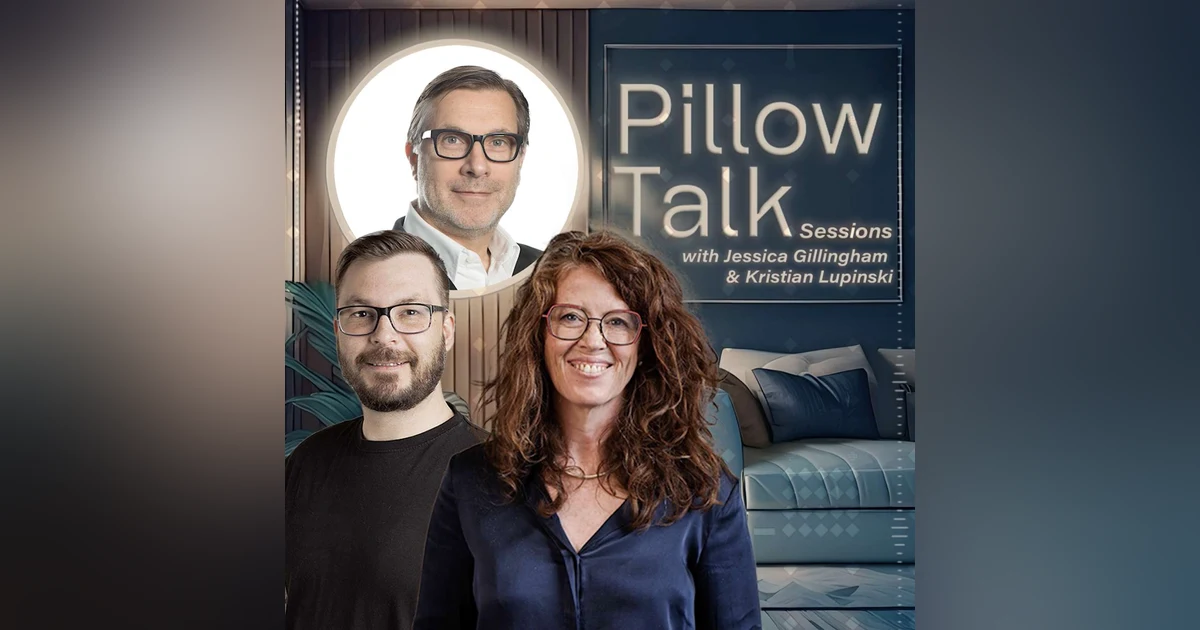
 In this episode, hosts Jessica Gillingham and Kristian Lupinski sit down with Michael Levie, co-founder of citizenM, to dive into how citizenM is reshaping the hospitality industry with a bold, customer-first approach. 🎙️
Michael shares his insights on everything from digital transformation to creating unforgettable guest experiences. We explore citizenM’s unique strategies and how they’re influencing the Build-to-Rent and hospitality sectors. 🏢✨
Listen in as we discuss:
How citizenM balances technology with genuine human connection 🤖❤️
The power of brand identity in redefining guest experiences 🌍
Lessons in creating adaptable, modern spaces for today’s travelers 🧳🛌
Don’t miss this inspiring conversation with one of hospitality’s visionary leaders! 🎧
#PillowTalkSessions #Podcast #citizenM #HospitalityInnovation #CustomerExperience #MichaelLevie
Meet the host of Pillow Talk Sessions
Jessica Gillingham is the Founder and CEO of Abode Worldwide, a strategic public relations agency dedicated to elevating the profile of transformative technology solutions in global hospitality, lodging, and rental living. An established industry thought leader, Jessica is a frequent conference speaker and author of Tech-Enabled Hospitality, a new book exploring the innovations shaping the sector.
Welcome back to the Pillow Talk sessions. My name is Jessica Gillingham, and I am joined as ever by my co-host Christian Lepinski. Today we're really excited. We've got one of the co-founders of Citizen M, Michael Levy, joining us on the show. Now, Citizen M is a brand that I have long admired. The way that the brand focuses on space is really different from traditional hospitality.
SPEAKER_02Absolutely, Jessica. Citizen M has really redefined what modern hospitality can be with innovative modular rooms, a strong focus on sustainability, and a unique approach to guest experience in community spaces.
SPEAKER_03Michael, thank you so much for coming on the podcast and discussing with us. I met you first in Toronto at High Tech a couple of years ago, and I really enjoyed having a conversation with you there about tech in hotels. Obviously, it was high tech. And so when we were planning this podcast, I really wanted to have you on. And also because I am actually a big fan of Citizen M as well, and um, and I know you know you've done so much in the world of hospitality. I read what you write in hospitality net and things like that. So I know you've got real vast experience. So thank you so much for coming on and welcome to Pillow Talk Sessions.
SPEAKER_01Thank you so much for having me, Jessica.
SPEAKER_02I guess for our audience, if they're unfamiliar with you, Michael, maybe you can give us a bit of a background on you, you know, some brief moments in your career uh and where you're at now.
SPEAKER_01Yes, great. Thanks, Christian. Um my career started after graduating from uh EMI, a program that Cornell did together with uh uh SEC in Paris. And um it was a master's in hospitality management, joined Sunesta Hotels, or where I had worked previously already, and uh enjoyed an 18-year career with them, uh, opening hotels, uh, remodeling hotels uh in Europe, the US, the Caribbean, and in the Middle East. So quite a rich experience. Um and subsequently I joined uh NH Hotels uh in Europe and was responsible for their northern European portfolio, which was a wonderful journey. But at one point in my mid-40s, I realized that either I had gone outgrown corporate or corporate had outgrown me, one of the two, but I needed to do something myself and started to become uh entrepreneurial and uh ended up with uh partners in the end uh building Citizen M over the past uh 19, 20 years. Um I would say Citizen M for those that don't know the company, uh we are a mid-market uh player. We have boutique hotels that maybe in its offer have uh small and efficient rooms, however, are at AAA locations in metropoles and have an extremely high-end luxury uh touch and feel. So it's more like an aspirational property for people to be at. And we developed it with my partners actually for the frequent traveler, those that are always on the road, whether that is for business or leisure. So we offer a limited service product, but to them it comes across as 100% what they're looking for. And with the brilliant locations, we are able to offer it at a lower price than the competition in our immediate surroundings. Um, but uh we call it affordable luxury, but still be accessible for everybody. So that's a little bit where we are. Uh we have most of our hotels in Europe and the US, although we do have uh two properties in the Far East as well, uh in Taipei and in Kuala Lumpur.
SPEAKER_03And I have stayed in two of the Citizen M's, and I and I guess I'm probably the absolute example of your target customer, you know, a business traveller. I've stayed in New York in Times Square and then also Tower of London. And I also frequently actually meet people for business meetings at the London one, the Tower Bridge one, as well, because not only is it just, you know, really good, simple rooms that are just what you need when you're on a business trip, it does also have that kind of co-working lounge facility where you can really do meetings and work. And it feels like a co-working space or like a sort of cafe, but nicer than a cafe kind of co-working space. And that's one of the things that I really love about Citizen M.
SPEAKER_01Yeah, thank you. It it we we try to create a living room feel. So uh, you know, if you look at our homes, uh the epic center of our homes is the kitchen. So when you walk in, you stumble against the bar, and whether that is for a cup of coffee in the morning, burst a mate, or whether to uh shake a cocktail at night, uh it is right at the center, and the food and beverage is more sort of served in a pantry style. So it's very homey, and the living rooms provide uh you know, easy sections, uh high, low seating, uh more around the table. Um uh so there is a variety, and indeed that co-living, co-working is what we want to achieve because our rooms are extremely small, uh very efficient and and and profound in their execution and and in their functionality. So there is no problem, but we want people to come down just like you would uh be in your living room at home, and uh that I think has been a huge success factor of Citizen M.
SPEAKER_03Absolutely, and I think with Citizen M as well, it's it's unusual also in the fact that you aren't, you know, you're not just operators, you are hotel developers as well as designers. And you know, that is something that's that feels like it's it's kind of unique and different.
SPEAKER_01Yeah, I I would say that we're one of the few platform players in our industry, meaning we we develop, we uh we operate, we uh own the brand, and uh so we we do basically all aspects uh of uh of uh of the hotel side. Um it really came about because if you want to build a brand, you need to have full control over the brand. And so often do we see that uh in our hospitality industry, a brand is a beautiful name and a logo, but really the brand promise is not being delivered. And in order to be able to have a very consistent brand delivery and have that relationship and promise to uh to our guests, uh we felt we need to keep that under our control. And uh so far we have been able to do that, and I think that uh the loyalty that we've been able to build without a loyalty program and the guest satisfaction and employee satisfaction are so extremely high. They're ranking in the industry in the highest spots, um, where obviously we're a limited service product, so I don't uh you know proclaim that we provide the best service in the industry, but when it comes to price value, when it becomes to uh sense of belonging, uh our guest uh award us with the highest uh score.
SPEAKER_03Absolutely, and location too, spot on locations in terms of very central wherever they are.
SPEAKER_01Yes, absolutely, very important. Uh uh I always say it's hard to pick up a hotel and put it on another street corner if you don't like the one you're at. So uh, you know, locations are fundamental. Um, we have developed a methodology uh, you know, very early on in our rollout, whereby we like to be sort of in between the central business district and the core of a city, and uh preferably a little bit closer to the CBD than to city center, but it needs to be on that core axle. And um, you know, obviously when you have multiple units in cities like uh London, Paris, uh you know, like in many cities where we are actually we try to have multiple units, uh you get to have some choices, but they're always core, they're always triple A. And I think that our guests know that if they choose a Citizen M location, it's a AAA location, and they know that they can by foot basically reach any uh location in the city, uh, have always public transportation that they trip over, and uh it's easy uh to navigate the city from there.
SPEAKER_02And it it's great. I mean, uh not only okay, the rooms and everything like this, and how you have them set up, but each location, they really have the feel of that location, you uh besides the the location of the property. But when you go to, you know, just looking at like Copenhagen versus Rotterdam versus Zurich, you know, the style that is incorporated into all the properties uh is you know unique to the area, which also I find uh you know quite interesting and you know really fascinating about the properties as well.
SPEAKER_01Yeah, I think Christian that that uh is possible because it is one and the same team that has done everything. So uh from the partners in the project, but also uh architects that do the interiors for us, from the styling, from the choice of furniture, from uh you know, the choice of art, uh, the music, the scent, everything we do uh is done by the same team. And we do believe in a very high degree of cookie cutter so that you know exactly what it is that you get when you get to a Citizen M hotel, but it's a local game. So obviously uh there is locality about it, and you need to be part of the local community, otherwise, you're never accepted. So we do that in the styling, we do that obviously through uh the teams that run the hotels there, and we want to be a local player. So it's a little bit of contradiction in terms to be a cookie cutter and to be local, but it seems that we're able to uh to accomplish that, uh especially also that we realize that you come to stay at a hotel and we don't expect that you do everything while in the city with us. So we want to recommend the right cool places, we want to be associated with the right uh uh you know venues. Uh so we spend a lot of time and diligence on uh being you before you arrive so that we can advise and hook you up into the right direction. And uh we chose a target audience. And whereas most hotel companies in the industry basically want to be something to everybody, we uh looked at the frequent traveler, and be that for business or or leisure or a combination thereof, um we know what you want, we know what your expectations are, and also what you're not willing to pay for. So our product uh resembles really what you're looking for as 100%, whereas we have a very limited uh product that we we offer. And I think that that has become the strength combined with uh teams that provide service based on uh the value of my partners and myself, and these values uh are very human-centric, uh, very down-to-earth, uh, not overly complicated. So a hi and a smile is more important for us than repeating your name three times. And uh we we believe that in today's digital age, you you want to have an app, you want to be able to do seamlessly everything. But when you walk in, you want some eyes catching you and a smile, uh, and even if it's an air whisper like, uh, hey, welcome or I'll be right with you, whatever it is, it it uh we're still in the business of providing hospitality, and we're able to do that efficiently, I think, in our living rooms.
SPEAKER_03Absolutely. And I think that in terms of brand, knowing what to expect, especially for frequent travelers which are gonna come back again and again, you know, to different cities and have they want they want to, including myself, know what I'm gonna get, know that experience. And even you mentioned scent, and you know, even the scent is the same, isn't it, in each of the hotels. Like you know you're in a Citizen M because it smells like a Citizen M.
SPEAKER_01The orphanic is is important because it it is subliminal, right? So it's not when you walk in, you go, like, oh my god, what hit me, but it is a recognition point. And so we try to touch all the senses, but it's not only in the scent of the uh living rooms, if you wish. Uh, in the rooms, we do the same. So our soaps are especially created for us. So we have a morning soap that is based on talcum powder, and an afternoon soap that is uh, you know, more uh and uh so so the scents and the things that we try to combine is that there is a high degree of recognition and comfort. So that that's really where we are.
SPEAKER_03One of the things that we're really interested in is is the hotelification of real estate and how different types of lodging are coming towards things more from a service-oriented model, whether that's the multifamily or the living sectors, or of course the hotels and short-term rentals, sort of looking at things from from a guest perspective in a way, and an experience perspective rather than just a building. And um, and I suppose you know it is making sure that there's that, but it's not trying to do all kinds of different lodging, but with that mentality, it's knowing what you are, whether you're a hotelier, whether you're an apart hotel, whether you're a um, you know, a built-and-rent multifamily student living, you know, operator, but kind of keeping keeping to that. Because we know that there are lots of operators that are trying to do quite a few different things today.
SPEAKER_01Yeah, I think that uh you know you're mentioning a couple of ingredients that uh mount up to the fragmentation of our in our industry, right? So uh as asset owners, you are one particular class where you mention brands on the other side, uh, where basically through asset light and franchising, uh you have about two extremes that really are making consistency in our industry difficult. So uh the brands help out a little bit, but if you look today at the larger chains, um the relationship that they have with their customers, where they really know their clients, is through the frequency programs. If you're outside the frequency programs, they know very little about you simply because the technology infrastructure behind doesn't allow them to recognize you or to bring that together. So I think in the newer models, uh you see that the use of technology, uh, the use of uh open source technology whereby uh the guest profile is an enriched uh uh item, uh it can be used for so many other things, uh be that recognition, be that access, be that a conversation with you, be that commercially, uh, whereas uh you know, traditionally the larger chains talk to you only through their frequent stay programs. And that is quite different. Um I do believe that um to the asset owner, there's a lot of opportunities available and they see success. So uh apart hotels or the the other flavors du jour, uh you know, whether that is the Airbnb or any other hospitality solution, I think that there are answers being offered by many. Uh, but if you want to really stitch all the consistency together and you do not have the technology and you do not have the brand recognition or the name recognition, it's a very, very uh uh you know toll ask and it is complicated to be efficient and successful.
SPEAKER_02No, I I I couldn't agree more. I mean, I I suppose you know my my time in hospitality working for an OTA uh in technology has always been kind of a uh a hard go for a lot of you know hospitality uh and hotel owners, managers. They kind of shy away from getting too deep into technology. But you know, with generational shifts, you know, my my nephews, they just they live on an iPad, you know, and these are the things that they expect, and these generations are getting older and they're expecting this technology to be available for them when they go to these different properties. So, how I mean, what do you say to those different property owners who do not want to go into having uh an app and being you know remote keyless entries and things like this that are kind of shying away from that kind of technology?
SPEAKER_01Um, well, first of all, I think that um we need to look at our digital behavior away from hospitality, but more in our daily life. So um, I mean, our smartphone we use for banking. Uh when is the last time that you didn't check in for a flight on your smartphone? And uh when is the last time you printed a boarding pass or picked up a boarding pass for that matter? Um when you retail, uh, I mean it's so easy to do that on your on your uh devices, whether that is uh you know uh a tablet, your your smartphone, or or just a computer. So I think that um post-COVID, uh it's not a nicety to have a digital uh relevant uh connection with your customer, it's must. And those companies that are on the fringe and just go like, oh yeah, you can download the app and you can check in on the app, but if I still stand in line to do my payment and to do my passport and to do my key recollection, stuff like that, or I still need to check out, uh, you have defeated the whole purpose. And uh most hotels are not capable of giving seamless digital uh access or uh uh experience is because their tech architecture simply doesn't allow it. So most of the architecture is based on the property management system, the PMS as being the core, and they're great for um for inventory management and for administrative management. They're just not good connectors. And uh today, uh, without uh good connectivity uh and uh and rich data profiles or guest profiles, you don't get there. So a guest profile with your first name, last name, and maybe an email address is simply not enough to have a digital conversation with you. So um it your bank does not only have your first and your last name and maybe an email address in order to give you access to your account or make transfers, right? So unless we as an industry mature and understand that unless we get our architecture under a tech architecture under control, we can never live uh deliver digital. And digital has become a must. So those that do not invest in there, or those that do not find solutions, uh they're dead in the water. And maybe not tomorrow, but the day after tomorrow definitely. Uh that's bad news. The good news is that there are really relevant systems out there for large chains, for mid-sized change, and even for the uh independent hotels, whereby you can step out of your legacy nightmare and get into an API first or a an open source system that provides all that. And you can buy it right now off the shelf. Uh, what is really the challenge and uh what is holding the industry back is that untangling legacy from the past is a huge job. So, you know, it's uh straightening out all the spaghetti in a pot is is a lot of work. So uh I always advise people make the transition but outsource that as a project and bring people in from the outside because it's inhumane to ask that from your in-house people.
SPEAKER_03Yeah, it does feel like it's it's the last bastion of digitization, doesn't it? Hospitality in our lives as consumers. You know, we we we're used to doing it in in everywhere, you know, even with children like booking, doing homework, everything is kind of digitalized, as well as anything retail or travel. It does feel like this is, you know, booking a hotel room, going into checking in is often very painful to do it. You know, I've just booked with travel a couple of different places, and you know, they they're asking for all sorts of information from me, you know, that I I have to then go online and email it and find it, rather than actually them knowing who I am, which any other place that I buy things do know that they don't need to keep I they don't need to keep asking me for different bits of information.
SPEAKER_01Yeah, uh Jessica, there's another reason why it is important, and you mentioned that ownership and the asset side of things. Uh let's be honest, that uh the valuation of hotels is still a multiple nonprofit, right? And uh I do believe that uh with the rising cost, uh if we do not understand how we can reduce our cost operationally and where that sits, we never get there. So can I automate a cook? Can I automate uh you know several services? No. Where can I automate and basically have the gas become the employee, because that's what it is, by providing a digital job. Journey. And the funny thing is, the guest perceives it as having control. I don't have to wait in line. So they see there's a benefit to have this control. So they are willing to participate, but then we need the technology to do that. I guesstimate that if we want to make use of technology and AI and maximize that, it could have an impact of maybe 20, 25, 30% on our costs in the industry. And what we need to do for that is make that migration and make that mind shift. But often in our organizations, it is a CTO or a CIO, a chief information officer or a chief technology officer, that is a lonely wolf that is crying something, or it is a chief commercial officer that has a need, or an operations, a chief operating officer that has a need. But it's never as the C-suite under the leadership of a CEO that they say, hey, what do we really need to do with our tech architecture? And where does it touch all of you? And how can we do this as a joint effort? And that deals unfortunately with the under-education in our industry, whereby the depth of pragmatic uh you know um problem solving is just simply not there. There's no academic philosophy to fall back on. And uh I'm not saying that they're stupid. I'm not saying if you have learned the industry through operations, you're you're useless. On the contrary, but when it comes to this progress and you do not know how to be more self-critical and to uh reinvent yourself constantly, you're gonna miss the boat. And that's happening in our industry.
SPEAKER_03With Citizen M, you you you know, you've started it and built it tech forward, really, from the beginning. And obviously, over the 20 years, Citizen M's been around or however long. Tech has changed hugely since then, but I guess you've had that mindset right from the beginning. And I've got two questions for you. What do you know about your guests? So, so what do you sort of know about your demographics that are coming to you and even the individuals? And then you also talked about how your decisions are all data-driven decisions that you make at Citizen M. So, what kinds of decisions are they and how do you make them?
SPEAKER_01Uh both very relevant questions. So, let me first address uh the guest. So, in in most uh organizations, like we mentioned before, a guest profile is built up out of three fields consistently. Um if you want to have a relevant conversation with a customer, uh the requirement sits uh, you know, if you're between 50 and 100 fields that you utilize of relevant information, you get to a certain degree of relevance. And I need accuracy in knowing that I talk to you, Jessica, or to you, Christian, because I cannot just think I'm talking to you and have a conversation with you. I need to know it's you. So we need 98-99% of accuracy in uh guest recognition and knowing that I talk with the right guest and that profile enrichment and that profile cleansing can only take place if all systems are connected and have one uh system of record, and that reproduces the truth to everyone. So that is mostly from our systems because if you come in through the app or you come in through a reservation, or if you come in through a food food and beverage reservation, or whichever way you enter the system, uh I need to make sure that it is you. Uh, and there's many methodologies to do that, and it's getting more and more refined. But if I do not know it's you, it's a serious problem. So I would say that on average, including the frequent stake programs, our industry sits at 35-40% of actual accuracy in knowing it's you. Whereas you need 98, 99%. So it's it's terrible. Um, so I cannot get there unless I build up that and I use your profiling against not only my own uh data, but also outside data, uh, whether that be uh social media, whether that be other uh you know information that I can find on you, and I always need to tie it back, and it's not only on name. Um so uh you know there's many methodologies that have been enriched today that can do that. Once I know it's you, now I can have a meaningful life cycle relation or conversation with you, and then I want to know a lot about you, but it doesn't have to be personalized about you. I need to know your patterns, I need to be able to fit you in patterns that deal with my business, and then I can communicate with you very efficiently. So uh we have built it up, but when you talk about um database decision making, that does not only come from our tech architecture, that comes from business intelligence. And business intelligence in our industry uh is uh maybe coming a little bit of age, but it's still way behind of other industries. And uh within Citizen M we have built our uh BI department over the past 15 years. So we were very early on and understood that we just simply had not enough data to make the right decisions. And the data, the BI department, sits with tentacles in each of the verticals of our organization and independently collect and produce uh data for us. And that are data scientists, so those are people that have no clue what a cup of coffee is or or how to straighten out of bed uh or provide any hospitality service. These are data geeks. And uh, you know, through that we have been able to shift our thinking quite a bit. Uh is it only there? No, uh especially with artificial intelligence that you can put on top of that data. There's a human impact, there is an entrepreneurial impact, there is a visionary impact. We as people need to stay alert and be part of it. But without that, and without having that volume produced to us, we're dead in the water, we cannot do anything. So uh two different uh answers to that. But I think that um if you as an organization decide not to have your data uh you know at the highest level, I see on the horizon only trouble.
SPEAKER_02You know, on the other side of it, you know, hospitality is about human interaction as well. So how do you see those two things balances with you know the data-driven decisions and digital engagement versus the human element to it?
SPEAKER_01Christian, I think that that is like sort of the old question that is being asked in the industry, right? Can you be high tech and high touch? And do they fight each other? Uh I say today you cannot be high touch if you don't have high tech. If I don't know who you are and you walk in the door and I go, like, maybe I recognize you, maybe I don't recognize you, I need to know who you are, I need to know about you. So I think that uh high uh touch is enabled by high tech. And if you do not understand that, you cannot do that. So if your bank every time you sign on needs to know where your mom lives and you need to do, you know, 92 verifications, you're gonna be tired. It's not what you expect. So uh if your bank is able to really customize things for you, or or retail for that matter, or airline, then you feel hospitality through technology as well. So uh those need to be enabled. Uh having said that, uh one cannot live without the other. So today you cannot provide great high touch if you don't have the technology and you need to run all over the place to get everything. And vice versa, if you only provide tech, that is short-lived, also. And I think that uh I might choose for an Airbnb for convenience, I might use an apart hotel where I only use uh digital and technology, but when I travel with my family or have a serious uh occasion that I want to celebrate, hospitality remains hospitality. So um I do believe that uh they go uh hand in glove, uh they support each other, and if you do not recognize that they're equally important, uh then you're never gonna get that answer right.
SPEAKER_03I think that also goes right to the very beginning. It's knowing who your customer is, who your target audience is. It's the bus, you know, in Citizen M's case, it's the frequent business traveler that is looking for an aspirational product in in a certain location. It's getting that bit right, not trying to be all things, you know, you're not trying to attract families, you're not trying to say, oh, we can do your honeymoon, you know, or any of those things. It is actually being very targeted.
SPEAKER_01But but Jessica, that comes with um hard decisions. So um when we started out uh and we created a uh small and efficient room, we set for our target audience the frequent traveler, whether that's for business or leisure, we leave that in the middle. Um it's for frequent travelers. So that's not for families. So we do not have rollaway beds, we do not have uh cribs, uh, we do not have connecting doors, we do not have suites, it's one-size room that is the same in the 10,000 rooms we operate. Um so I think that it comes with a discipline that you need to be willing to uh accept what the consequences are of dedicating yourself to a certain target audience. And I can tell you uh, you know, uh if I got a dollar for every time somebody gave me advice to do connecting rooms or cods or roll aways or cribs or you name it. I mean, I I tell you, it's pathetic. So it comes with a consequence. Now, why do we have zero problem with that in our guest satisfaction and in the guest journey is because we're transparent. So we underpromise and over-deliver at all times. And that is a concept that most people do not understand. They over-promise and underdeliver, and then when the guest satisfaction goes south, they go, like, I don't know what happened. Oh my God, we need to analyze it. No, turn it around. So you need to uh underpromise and over-deliver at all times, and your gas satisfaction is through the roof. So we provide information on what we have, what we don't have, the square meters, what you can expect, uh everything to the T. So when we went um uh to uh you know uh um uh only electronic money, so you cannot pay with cash in our hotels. I mean, if you're like, you cannot do that. Why not? I mean, if COVID was not the ideal moment to do that, then that's what it is, and don't refer it back afterwards. But we're very clear on it. So everybody knows. So it's just a mentality whereby you need to be very clear on what you do, and then you need to think about all the consequences. What does it do with tipping? What does it do with with a lot of the consequences of those people that create every day who we are? So it's just all those business processes need to be looked at in such a minute detail that if you don't do that process right, you cannot get on to the next. And hoteliers are sloppy. They're just, you know, they they they when they think for a second of it, they've thought about it. But thinking is rethinking it, rethinking it again, going deeper, challenging it and trying it out and failing, and setting up also uh an environment whereby failure is high-fived, is celebrated. Uh why? Because then you can do something quickly about it and people don't feel embarrassed. So in our organization, it's very normal where people brag about the screw-ups and and then show how quick the recovery was in the recognition process. That's where we pride ourselves. So it's mentality, it's a mind shift as well.
SPEAKER_03And actually, you when you started talking about your journey from Sunester and going then into Citizen M, one of the things you said is that it was your time to be an entrepreneur and do something entrepreneurial. And that's quite an entrepreneurial mindset, isn't it? That failure is good, that you learn from it, that you do kind of look at things in different ways rather than a sort of a legacy corporate kind of mindset, I guess.
SPEAKER_01Yeah, the idea of entrepreneurship is that you don't make too many failures and you have more successes than failures. Uh but I do believe that you're right.
SPEAKER_03But you're a risk taker.
SPEAKER_01Yes. And I think that uh entrepreneurs are willing to go through a learning curve and they are never satisfied with the end result. So they keep on going back to it, how to perfect it, how to get it better, how to and so if you have that drive, then you also know you're never satisfied and you're never happy. Um and I think that that mentality uh is very difficult to get across. So what we did in our hotels, we have uh an inverted pyramid. So our line staff uh that meet the guests, uh we call them ambassadors for the simple reason if you walk into a citizen M and you meet an employee, they are the ambassador of the entire company. Very simply, if you meet the ambassador of a country in wherever around the world, they represent the entire country and culture. And uh what we have done is we have empowered them. So they are accountable for guest satisfaction, they are rewarded and incentivized as such as well, but um the rest of the organization supports and services up so that the ambassadors have everything at their fingertips. And that philosophy and that accountability and hiring on uh value overlap, making sure that 85% of your values live within an uh individual, it becomes very easy to become a consistent product, whether that is in Taipei or in San Francisco or anywhere in between, any culture, it is uh it is that that uh you know gives the recognition for for our uh our guests, and and we're fortunate about that.
SPEAKER_02And Michael, uh you know, how do you see the future, you know, whether it's you know multifamily living, bill to rent, I mean hospitality in general evolving.
SPEAKER_01Yeah, I I think that the common threat in the future will be sense of belonging. So um I think that in uh every step of success that I have seen is that the the brand tie of the customer to that product is uh a sense of belonging. And in the hospitality, sense of belonging is I gotta be part of the community. And whether you are the customer or whether you're the employee providing the service is irrelevant. That's the same. And uh there are uh people that better recognize that than others. So I do believe that sense of belonging is one. Uh, second of all, uh, that human component, uh, that hospitality component uh becomes uh rarer and rarer because we automate everything, we're so used to digital lifestyle that um family dispersed, uh we live by the social media, but when we really uh you know have the rubber meet the road, we still want that uh high sense of uh comfort, of uh care, of uh even to the extent love. And uh I think that a lot of organizations are driving emotion and love out of their organizations and replace it by efficiency automations, need to cut cost, uh, whatever it is. And I don't understand that they they they cut out the very fabric they're made of. Uh so I think that the future will dictate more, whether it is uh assisted living, whether it is uh family living, whether it is uh you know student housing, whether it is any sort of uh asset, but also in the hospitality space in general. Um yeah, I think that those guys are able to deliver a consistent product uh that lives up as a brand. Uh, because how many true brands do we know in the hospitality industry? So Hilton or Marriott is not a brand in the end, right? I can have a great Hilton experience and a terrible Hilton experience simply from physical or from updating or from whatever uh ownership based point of view. So it's difficult, and I'm not saying that we are spotless in Citizen M as far as experiences, but what I think we can pride ourselves on is that everybody that stayed at any of the Citizen M hotels recognizes that high sense of comfort, of belonging, and of uh you know uh brand uh connect. And that I think is what it's all about. Uh so in the future I believe that those uh brands that are more consistent will find easier clientele and definitely will find it uh cheaper because the cost of acquisition is a bear to uh you know to anyone in the industry, and and that's where a lot of our efficiency goes lost.
SPEAKER_03Michael, there's two things that I want to ask you, and one of them is that actually Citizen M has the highest profitability per square meter of any other hospitality business. That's one thing that I want to ask you about. And then the second one is about the fact that you guys do prefab rooms, so all the rooms are made and created somewhere, which I presume is Holland, and then actually put into the buildings as prefabs as well, which just seems quite incredible to me.
SPEAKER_01Uh yeah, Jessica, let me first answer the second and then go to the first uh question. So um we believe in modular construction, and indeed our rooms are a standard size that can be produced efficiently in factories, and then has the right size for shipping as well. So if you need deep loaders, it becomes very expensive. But uh the modularity that we have achieved, the the shipping, does not impede you from uh building and shipping uh the rooms across the world. And we started out with building the rooms in the Netherlands where we started the company, but we migrated to the UK where there was an ability to have modular construction. We shifted it to Poland. Uh, we are now uh producing uh as well in China because we have a high degree of uh repeat and a high degree of quality of value engineering, not only from a financial but also from a product point of view. Um so uh yes, we can ship the rooms uh all over, and um the only thing that needs to happen on premise is uh basically uh the caulking and the placement of the uh easy chairs, because that's the only thing that moves, of course, during transport, but they are uh uh you know built for location and are the building module as well. About 60% of our hotels are modular built, and those that we build more traditional, um either because of mixed use or because of conversion, we're still capable of uh taking advantage of that uh of that learning, if you wish, that value engineering. Uh the second part, um, you know, indeed our efficiency in in operating the hotels is extremely high. Um, and um I think that uh uh we achieve that because of the business model, the business focus, uh, the business processes we have chosen, and have gone down the full depth of each of those business processes. And it is the accumulation of all those that makes us as efficient as we are. It is not one or the other. And um, just before uh you know getting online with you, I gave a guest lecture for uh INSIAT, and uh we were talking about Blue Ocean, and uh I was asked, okay, how many people have copied you? And I would say that it's not about copying because there's a lot of people that understand that the mid market boutique uh uh focus is a very good focus for industry. But if you see the depth of the uh business processes and the depth of success in that, it doesn't Accumulate to the financial success we have. So I think indeed we outperform per square meter the industry by far. And yeah, we're pretty proud of that. So you know, we can be next to any uh five-star, four-star uh hotel in any location around the world and still outperform them from a return per square meter or a square foot. And that's ultimately uh, you know, where the asset decision should be made, right?
SPEAKER_02Absolutely. Um, Michael, is there anything else you want to share before we wrap up today's episode?
SPEAKER_01I have maybe one other uh thought that I want to leave behind, if you allow me.
SPEAKER_03Yes.
SPEAKER_01Um we spoke a little bit about um the technology need and the uh necessity to have uh technology architecture. And I think that uh it's fair to say that the tech knowledge within our industry, uh in general within the operations or the running of organizations is insufficient. And I believe that we have been by far a vendor-let uh you know industry uh whereby today finally there are systems that come of um maturity that allow us to clean things up. Um, and uh mostly that sits in the middleware. Uh if we allow middleware companies to become the system of record and have any other system attached to that middleware, we provide ourselves a huge service because a system of record they can cleanse the gas profiles better and they can mirror it back to all the different ways where the gas profile is utilized or initiated. Um the biggest problem that I see, it's not that the technology is not there. There are great technologies out there today. The problem is that we have insufficient knowledge internally, or it is too heavy of a decision to make on how to get there. And I believe that if we do not see that as a significant project, and that ultimately allows us to get to the digital age that we need to be at, that we discuss, um see it as a project, get project management on it, uh, make sure that the entire C-suite makes that decisions in order to make sure you involve everybody's need and desires into the outcome, but more importantly, outsource the whole process of switching over. And if you do that efficiently, I think that we can speed up that process and uh get to that promised land uh faster.
SPEAKER_03And in a way, hotelias, whether it's brands, chains, independents, don't need to get to crisis point before they start to take that more strategic path towards changing and becoming more tech enabled. It's like, do it now, really think of this strategically like a project, invest in it, invest in people, resources, outsource some of this. Otherwise, you know, you will just get to a crisis point.
SPEAKER_01Yeah, the way I usually compare it is that if you're gonna build a house, then it's a good idea to get an architect, and it's a good idea to get some people making the appropriate calculations of load bearings before you start to look for your uh you know, contractor. And um, so also here, this is such a big job that we have ahead of us. Uh use the right people, outsource to the right people, but by all means get the knowledge on the inside and jointly as to where you need to go. And you say uh don't wait till your back is against the wall. Uh, I would say that our industry back is against the wall. So uh we're already late, and uh, if we wait any longer, uh, you know, people are gonna seriously feel the uh the negative impact of it.
SPEAKER_03And where can they go and get this information? Have you got any recommendations of of how they can start that path?
SPEAKER_01Well, uh, you and I met at uh high tech, uh, HFTP, and HFTP, the Hotel Finance Technology Professionals, is a great association. Uh, I would say that HSMAI, uh, when it comes to distribution and the commercial side and revenue management is a great association. Um, I would say that when it comes to technology and um get advice. It is going so fast. I I'm passionate about it, and I would still, you know, uh, you know, hesitate in giving too much uh direct advice because it is changing every minute, and there is great people that keep up and and make it their uh their their life dedication to do that. Um, and uh, you know, get the right people to help you from an outsource point of view. Do not overload your people on the inside or think that this is something that can just be picked up. It's it's not. And if you don't do it, uh the consequences are huge.
SPEAKER_03Absolutely. Michael, thank you so much for being a guest. It's been really great speaking with you and and learning more about Citizen M, but also your take on that technology, human touch, digitalization, and the future. So thank you very much for your time.
SPEAKER_01Sure, no problem, Jessica. Pleasure of being there, Christian. Thank you.
SPEAKER_02And that wraps it up for us today. Thank you so much for joining us on this episode of Pill Talk Sessions. Uge thanks to Michael Levy for sharing his invaluable insights and taking us inside the vision that drives it to TM. You know, it's always inspiring to see how industry leaders like Michael are not only adapting to change, but shaping the future of hospitality and thus build a rent. Now, if you enjoyed today's conversation, which I hope you did, make sure you head over to pilltalksections.com where you can subscribe to stay up to date on our episode releases. And don't forget to follow us on LinkedIn for more inspiring interviews and content as we explore the evolving world of hospitality, multifamily living, and the impact of brand driven experiences. Until next time, thanks for listening and you know keep thinking about how to make every guest interaction meaningful.


