Everything Is Hospitality – A Vision for Vertical Living with Philip Grace (Bob W)


 RSS Feed
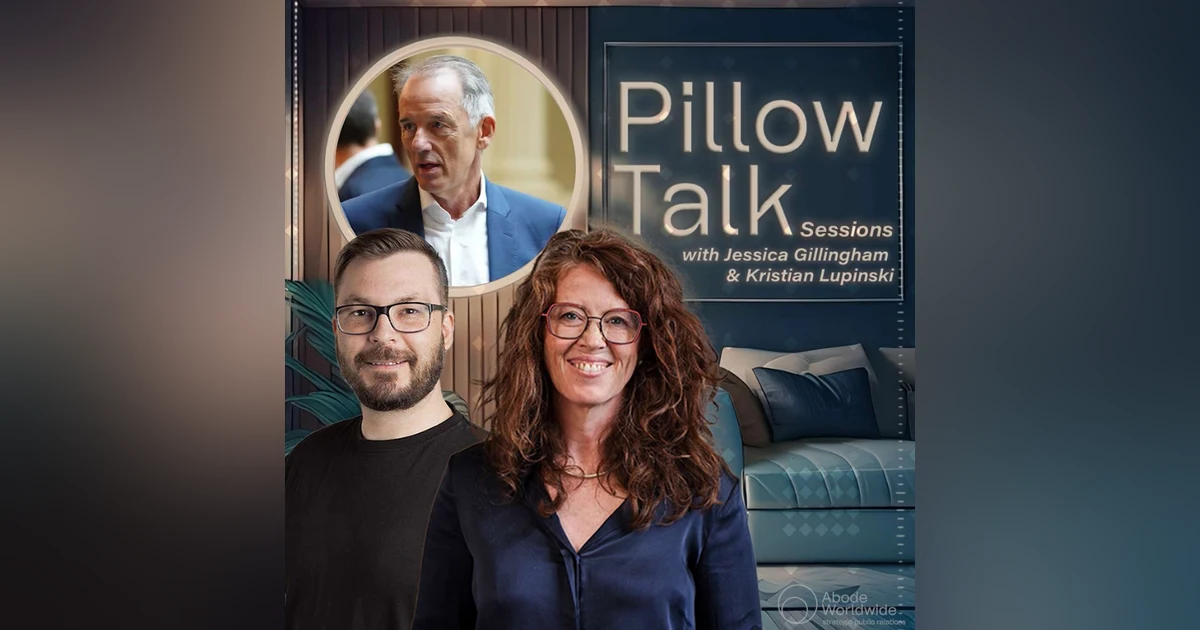
 In this week’s Pillow Talk Sessions, we go behind the brand with Philip Grace, CDO at Bob W, to unpack the company’s vision of hospitality-first, asset-light, and tech-forward living across Europe.
💡 Inside the episode:
🏘️ Bob W’s vertical villages that combine apartments, workspaces, restaurants, and rooftop pools
🤝 How strategic partnerships beat in-house ownership for long-term profitability
📲 What it means to run guest services across 13 countries
🤖 How AI is helping scale operations—without replacing the human touch
🚪 Why 75% of guests book again directly after one stay
Philip brings decades of experience with a future-facing lens—this one’s a must-listen.
Meet the host of Pillow Talk Sessions
Jessica Gillingham is the Founder and CEO of Abode Worldwide, a strategic public relations agency dedicated to elevating the profile of transformative technology solutions in global hospitality, lodging, and rental living. An established industry thought leader, Jessica is a frequent conference speaker and author of Tech-Enabled Hospitality, a new book exploring the innovations shaping the sector.
Welcome back to Pillow Talk Sessions. I'm Christian Lipinski, joined as always by my co-host Jessica Geelingen.
SPEAKER_02Thank you, Christian. And today on the show we have Philip Grace, who is the Chief Development Officer for Bob W, which is a hospitality brand doing some really cool things across Europe. Philip has extensive experience across hospitality, co-working, and also real estate. So I'm really excited to kind of delve into things with him.
SPEAKER_01Yeah, me as well. And I'm uh I'm excited as we're going to be exploring the future of mixed-use developments, how hospital is reshaping the way we live and work, and why breaking down these traditional real estate silos is key to creating smarter and more flexible urban spaces.
SPEAKER_02Philip, welcome to Pillow Talk Sessions. Really pleased to have you on the show. And before we sort of get into the nub of our discussion and conversation, can you give our listeners a little background about yourself? And I know you've got a really extensive, impressive background that kind of covers, you know, not just the living, build-to-rent, hospitality, but also co-working as well. So I'm very interested to hear about that. But also tell us a bit about Bob W as well.
SPEAKER_00Thanks, Jessica. Um so my name is Philippe Grace, and my current role is Chief Development Officer at Bob W. That involves finding sites for Bob W with an expansion team, delivering those sites until they open, then handing over to our operations team across Europe. As an individual, my background is probably 35 years in real estate. I used to be corporate, so I used to spend time with Abbey National, which is now Santander, of course, building their corporate HQs. And then I put together with some high net worth financial support a property development company and became a developer. During that journey, I became I was a developer, I was a GC, and I built Football Stadia, I built Residential. I discovered co-working, which was then called Serviced Office, in about 2001, 2002. And it fascinated me that as a developer you could build a building and have an end user, which could be the serviced office business that you could put into those that building. And those were the days where banks were more generous in their funding arrangements. And I managed to build something called Digital World Center in Manchester, close to where the BBC is today, which is something that was completed in the mid-nouties. So I found co-working. And in 2006, I gave up on the development side and focused purely on co-working and service to office and built that business to about 25 buildings across regional cities. I exited that in 2008 and then in 2009-10, just after the global financial crisis, I put together a business called i2Office, which is still out there today. I founded that business and built it from scratch. And when I sold the business to OCS Group, a family-owned facilities management business in 2016, we have 35 buildings, revenues of about 80 million pounds, with 22 offices in London or 22 buildings in London, around 15,000 workstations. So I had a journey through corporate development, development, being a GC, building a co-working business. And during my spare time, I bought land and built houses from a personal perspective. And I also built a property management company called Oak Hill in Milton Keynes, which had about 500 properties under management. I loved the concept of co-working, but wanted to do something different after I sold i2Office and got involved in co-living and worked with a company called Quarters out of Germany, based in Germany, and covered their global expansion, which really was North America, and spent uh three weeks of every month in North America uh growing co-living and also in Europe, growing co-living in Europe, signing leases, asset light structure. Unfortunately, COVID uh was not kind to that business, and I ended up leaving um in um around 2020, just as COVID hit. In fact, I brought COVID back from the States, uh, not me personally for the whole country, but just for me as an individual. Um, but but I I brought COVID back, uh, was quite ill with it, um, and then got approached by a good friend of mine called Anil Kira at Node Living and spent a couple of uh years working with Node. Slightly different to Quarters, it was um investor, developer, operator, and had two good years with Anil, where we raised some money, did various things, um, and got approached then by a company called Bob W. And my initial response was I cannot work for a company called Bob W, for goodness sake. Um, what does that company do? Uh, but I met the founders, uh, a guy called Seb, uh Sebastian Emberger, and Nico, and I really hit it off with them. And they had around four countries operational delivering service departments with about 400 apartments, and they wanted some crazy guy to jump on board and work with them to grow the business. And I brought grey hairs and experience in the real estate space as well. So I jumped on board about three years ago now, in fact, almost exactly three years, um, and the rest is history.
SPEAKER_02Yeah, excellent. I've stayed in a Bob W and I can attest, you know, it's a it's an excellent concept and an excellent offering. Um, and you know, it's it's it's great to have you here, Philip, because you've got such a sort of broad experience, and and and it kind of really fits the conversations that we like to have on Pillow Talk, which is the convergence of asset classes, it is how hospitality and and the the living sectors are and the working sectors are kind of blending as well. So thank you.
SPEAKER_00I think the one thing there, Jessica, is that people sometimes forget this everything is hospitality, and I don't give a damn what you're doing in life, everything's hospitality. Um, I was talking to somebody only yesterday um who's now working for a large co-working business and they wanted some advice. I often do this, and they were that I was explaining to them that their role is to deliver a hospitality experience, regardless of whether somebody's renting an office, renting a hotel, in a restaurant, in a bar. Hospitality is absolutely key.
SPEAKER_02Absolutely. I was speaking to someone this week who who kind of used the phrase the hotelisation of everything. So sometimes we say the hotelization of real estate, but actually it's the hotelisation of everything.
SPEAKER_00Yeah, we've got to go.
SPEAKER_02And I add that hospitality principles, service principles of everything.
SPEAKER_00Well, there's one important thing there that we shouldn't rem shouldn't forget is that delivering a people-based hospitality experience is dead in the water from a financial perspective. You cannot these days deliver high returns if you've got lots and lots of people delivering that service. Now, you need to have people interaction, and your experience at Bob is interesting because you will have seen that we don't have um a reception desk. We don't have that yet. I'm hoping you'll have had a five-star experience because our guest support, which we centralized, we will use AI, we'll use bots, but only in a limited fashion. Because immediately there is a need to speak to a person, you don't go into a call center environment, you speak to a real person. Um, and so we have people on the ground, but we're able to have fewer people on the ground than you might have in a traditional hospitality environment. And this is what we need to get our heads around. We all talk about AI and everything these days and how it's taking jobs out. The key to running a successful business, whatever it is these days, is using AI, but not losing that people touch, but needing fewer people to be able to do it and knowing when to use people and when to use AI.
SPEAKER_02So I've just written a book, Philip, and by the time this podcast comes out, it it will be published. It's called Tech Enabled Hospitality. And one of the leaders that I interviewed for the book is actually Jeremy Singer, the COO of Bob W. And we and he talks about this exact thing, you know, that you use technology for the bits where it really makes sense, but you still have the humans. And when I've stayed in a Bob W, I actually did have um uh a kind of a problem getting into my unit, and it was late at night. Um, and I WhatsApped because I'd already been what had a WhatsApp conversation conversation already with the Bob W avatar, so I kind of it was immediately there in my WhatsApp, and I just responded, I just quickly said, I can't get in. Immediately it was a human sorting it out for me, and it was it's one of those experiences of when it goes wrong, but it gets fixed really well and really quickly, you become a raving fan, and that's kind of what happened to me. I sort of it went wrong, could have gone really messy, it was quite late at night. If it had just been tech, I would have been stuck outside. But because it was dealt with really well, and in a and it was by a human, um, although sometimes you can't tell these days, but it was, and I and when I spoke to Jeremy about it, he said, you know, you guys do have humans there. Um, you become the raving fan. So um, yeah.
SPEAKER_00Look, it is true, and uh, and I'm sorry you have the experience, but let's remember we've got 365 days in a year, we're renting rooms by the night, we have thousands of apartments, stuff goes wrong. Um, it's how you fix it, and it's how you fix it, and how often have we all been in call center queues and everything, changing our mobiles or whatever we're doing? It's a nightmare. But when you've got a real problem and you're out on the street and you can't get into your apartment, what can you do? You can talk to a real human being. That's what you need.
SPEAKER_01No, that's um, you know, it's uh main point is having tech do the things that humans don't need to do to free up the humans for the things that we do need to do. Um, you know, I want to get into today's topics. I mean, you you laid the groundwork for a lot of the discussion that we're having today. Uh, and the first topic that I want to talk about is this concept of vertical villages uh and the future of mixed use. You know, this concept uh is where spaces uh of where people live, work, meet, relax, all under one roof, uh so to say. So, how do you see this model evolving in, you know, what does it reveal about the future of flexible mixed use developments in urban hospitality?
SPEAKER_00I think what people have got to understand is that uh when somebody goes into a city, a town, they're going for a reason. Um, and we need to recognize that people might want to stay, they might want to live, they might want to work, they might want to socialize. And it's how you create that that silo. I call it a silo, but how do you create that experience? Um, how do you provide the ability to shop in your lunch hour? There are some great examples of this. Um, if you look at um Canary Wharf now, I used to hate Canary Wharf uh in the UK. Uh, but you go there now, and what they've actually delivered is a phenomenal experience. Now, it's not quite a vertical village, but you could almost describe it as one because you've got the underground shopping there, which is always round, it's phenomenal. So you can eat, there are bars, you can stay there long term, you can stay there short term, and you can work. And that's what people need to get them back to the office these days. I live in Milton Keats, it takes me 30 minutes to get into London. I don't need to go into London unless there's a reason to go there. So I love having face-to-face meetings and hate doing things like this as we're doing online today. I'm a face-to-face person. But if you're younger, you need a reason to go. And if somebody's going to pay 15 pounds for a ticket to go into London, they need to have an experience when they get there that they can't get in their studio or their parents' accommodation or their small accommodation where they're working out of. So if they can go to a destination and it might be an office destination where they can eat, where they can socialize, where they can meet friends, it's a great reason to go. Um, and and I just have this concept, it's not a new concept. I remember Gerald Kay, uh great guy, retired now, used to run Helical Bar. He came up with something and he had this thing in Property Week, I remember it, and he was talking about uh, I think it's with number one Allgate Street. I ended up putting a co-working building in there, and he was talking about this vertical village. It was a massive um office development that had been occupied by a law firm. It was so big that you would get lost in there. And he did something like a vertical village. You could rent a cycle, you could eat there, you could work there, there were gyms there, there were restaurants. This goes back 15 years. Things have moved ahead in the last 15 years, it's a long way to go yet. People have got to get their head around the fact it's hospitality. How do you create that experience that gets people into the building?
SPEAKER_02It's um Canary Wharf is like a such a great example of vertical village at scale. And and I just wanted sort of talk a little bit about Canary Wharf because you you you used that as an example right in the beginning, and it has totally changed and transformed. I um have been there quite recently at an at an event, and it's it's just so impressive how you've got everything there. You've got the working, the living. Now, hospitality is you know, Virtus Edit has has opened up with the hospitality. There is even open swimming, open water swimming now there. Now I live in Bath, which is probably the diametrically opposite type of place to live than Canary Wharf. You know, a historic town that is, you know, a little not sleepy, but quieter. Now it's my dream to spend six months renting in Canary Wharf, you know, pack up my house and just go and rent and experience it because it, you know, it does have everything that you need in that sort of you know, place there, and they've done such a great job. Um, but it's difficult. Trying to bring all those elements in to one operating system, if you like, or one place is difficult. So, how do you A, keep it sort of cohesive so that for all the end users, whether they're using it for restaurants, working, sleeping, living, how do you make sure that it's a cohesive experience for them? But then also the management of it, you know, what kind of management systems you need, what kind of partnerships do you need to do a really good vertical village? And obviously, that's that's it at very large scale. It can also be, you know, within a building or within a in a kind of plot.
SPEAKER_00Yeah, look, I mean the game changer with Canary Wharf has been the Elizabeth Line because you can get there, the Jubilee line is just crazy unreliable. Elizabeth Line is great, you can get there very quickly from West End, it is super. The the key to this is having long-term investments. Um now there's no there's nothing wrong with buying a piece of land, developing a building, buying a building, converting it. But the vast, vast majority of investment strategies these days are short-term, short-term. So get some equity, put some debt in there, develop something, stabilize it, exit, make a profit, go on to the next one. The game changer that you had with Canary Wharf was long-term investment coming in and visionary investment. So you have Brookfield coming in, it changed the dynamics completely because they were taking not a five or a 10-year view, they were taking a 15 or a 20-year view. Investment strategies strategies are really important as well because dependent upon the asset class and the covenant of the tenant drives the value of the assets. The view that you sometimes have to take is actually this is a new company, or this is a company that's running a restaurant that might not have the covenant, but boy, they've got a vision. And you've got to have the financial strategy to be able to invest in that company to get these, I say unbranded, but not everybody wants to have a Starbucks and a preta manger on every corner. You need to have these more local operators, and you need to have that strategy and that vision to give startups, younger businesses, businesses with different concepts that people might not have previously experienced, pop-ups. You need to get all this working. And it only ever works if you've got a visionary leader supported by good financers able to take a long-term view.
SPEAKER_01Yeah, I was uh gonna add a little bit on to that. You you're right, it's that that long-term view, and it's um, you know, the the concepts behind it and how much it's changed, it's also a shift in kind of lifestyle and the way we live now uh and being able to recognize that. I wanted to uh go back a bit about the co-working because you have a lot of experience in this. Um, you know, with the rise of this remote work and the decline of traditional office use, you know, we're seeing new types of spaces um being created that so serve both work and lifestyle. You know, how are these concepts from hospitality influencing the design of these modern work environments? And, you know, what does the ideal work from anywhere set up look like in today's living spaces?
SPEAKER_00I think uh I mean I've done co-working or serviced office since 2000, 2001. I've seen it a lot. When I came into it, there were really three operators Regis, uh TOG, uh the office group, and myself doing what a company that's still out there, UBC uh United Business Centers. Um, and we were creating offices uh where people could rent 180 square feet, uh 18 square meters, and you'll provide telephone services, reception services, and everything. Things have developed, and COVID accelerated a lot of the technology and the ability for people to no longer need telephone services in the way that they have mobile technology, etc. We work came along, of course, and and did exactly the same as we were all doing anyway, and they just had glass screens instead of solid screens and call it unique. The reality is it wasn't. They talked about co-working, this was quite small. Um, and they got people's attention. So they had a phenomenal orator uh in Adam Newman who was able to capture the markets with this vision that he had. But it was a vision that coincided uh with technology changing very, very quickly. So the timing was perfect. What's now happening in that space of co-working is that so much of it is still being done in the way that it was done five years ago. So COVID delivered challenges when people moved out of their offices. What hasn't happened in that space, in the view that I have, and I've looked at um co-working buildings in the last last couple of years, technology hasn't got in there. So compare it to Bob W. You stay with Bob W, uh, you don't have a reception, you've got technology getting you into the building, you've got the ability to do uh certain things in apartments, you can work there, you can live there, you can stay there. You've got recommendations on the app where you can eat, how you can do this. We're looking after guests, and we're doing it because people might be going to um, I don't know, Amsterdam or Madrid or wherever people are going for the first time. So they need guidance, they need help. But compare that with where people are on serviced office space or co-working, they haven't got there yet. They're still focused on somebody's going to rent a desk and they're going to rent it for a day, a week, a month, a year. That's what they're going to do. We're going to have a reception if they've got a problem, um, and they're going to come into the building. And oh, it's really trendy these days to provide food. So let's put some breakfast on so people can have breakfast when they get there. And they forget that all this costs money, and then they cut that they worry why their gross operating profit is so low to compare with what they expected it to be. They're just giving it away by having too many people, too many services, too many facilities. If you are of a generation, and I'll I'll link in uh younger millennials and Zeds, um, you want to be fluid in the way that you do everything. You want to rock up when you rock up. You might not want to turn up at eight in the morning, but you might want to be there at 10 at night. You might be dealing with America or Asia or whatever. You just want to have an environment where you can get in 24-7, and it doesn't matter what time you're there, it still feels the same. You want to be able to uh grab something to eat? You might want an area that needs to be quiet, a library type of area, you want to make calls, you might want somewhere where it's really busy and active. Uh, you know, why do uh serviced office co working providers feel the need to put a gym in their buildings? I mean, they're useless at it. For goodness sake, you've got, I don't know, Equinox Pure Gym. Um, you've got all the different gyms on every street corner in most cities now. So, why do you need to put it in your office building? What you need to do is activate the ability to use that gym through your relationship in that building, which is exactly what Bob W do. So you can get picked up from the airport with Bob W, you can go at the gym, you can go for breakfast, you can do all these things, but you don't have to be delivering it in the building itself. And I just think there needs to be vision applied to a space that's got stuck. And as WeWork changed it with their glass screens and the great auditor of Adam Newman, there needs to be a new vision. And the barriers to entry are not tremendously high these days because a lot of these properties, the best properties, of course, are owned by uh long-term landlords, and they need to have that vision to be able to create an environment that is different to what the current providers are delivering.
SPEAKER_02So, in a way, operators like Bob W, you're facilitators. You know, if you're if you're saying that you don't necessarily have to have the the amenity like a gym in your building, but you can facilitate for your customers, your guests, to make sure they get the best of where they are by using you know other other resources. Um Philip, I know that Bob W in in Amsterdam you you have co-working within your Amsterdam Nord. How does that how does that work? How is it working? You know, is it is it is it good?
SPEAKER_00Well, there's two things here. I mean, the the building in Amsterdam it's it's in a it's in a difficult location in Amsterdam, but one of my favourite locations. You're five minutes by river taxi uh into the centre of Amsterdam, but you're not in that core core. So you've got to make it attractive for people to be there. Um we have 126 apartments uh there. We've got some duplex, we've got some studios, great space. When we looked at it with the developer, um they were very keen that Bob W take on the co-working space. And we sat with them and said, Look, we don't really want to do that because it's not our sphere of expertise. We don't want to take operation of the rooftop uh pool or the yoga studios that you're planning to build and the restaurant upstairs. It's not our sphere of expertise. But why don't we work with parties who are really good at that? And why don't we create an environment which is a small vertical village, if you like, where you have co-working, you have the ability to stay, you're very close to some residential apartments where you can do long-term stay, you can actually buy that if you wish, and then you've got the yoga studios and an outdoor pool up on the roof, and it's that cooperation with operators uh that is the way forward. Don't try to be an expert at everything you're doing, and this is why our technology that our preparatory systems that we we built, we own, we've got 30 engineers constantly evolving and developing our tech working out of Tallinn in Estonia, we're constantly developing that guest experience. And because we own that tech, we're able to add things into it. So, one of the things that we added uh a few months ago was the ability to get picked up from the airport. Super easy to do. People, if they're 40% of our people are on corporate travel, if uh guests are on corporate travel, if they want to book everything on their room, they can do that by just booking it through our application that allows that to happen. And we can monitor the progress and guarantee that success. Again, an interesting one, it's just a small, small story in Athens. We we acquired a couple of hotels in Athens a few years ago. One of the hotels, really nice in the Golden Triangle, it had a restaurant on the ground floor, and it was the hotelier was trying to operate the restaurant. He got 24-hour reception there, he was trying to do the restaurant. The restaurant, it was costing more in the employment of people than the revenue that they were earning. It was just losing money. The first thing that we did was automate the reception experience and sublet the restaurant to a restauranteur. You know, restaurant business is tough. It really, really, and it's seasonal, it's really difficult. That restaurant now is super popular. Um, and it just works so well, it's complementary to what we we deliver in Bob W. We don't have the I say hassle factor only because we're not a restaurateur, but we don't have that uh need to operate it, it's done by others. So we've now got a successful building that's profitable.
SPEAKER_02And it's so vital to pick the right partners for that. Because if they don't have the same level of providing an experience to their customers, it can reflect on on Bob W or you know on your brand. So picking those must be must be maybe a challenge, but definitely important to pick the right ones.
SPEAKER_00It it is so important, but if you get it wrong, and sometimes you get it wrong, you can change it. Um, and bring a different brand in, do something else. More difficult if you've got uh, for example, uh Starbucks. If you're signing a 15-year lease with Starbucks or something, there's very difficult to change. Uh, but if you work with a partner and construct a transaction with that partner, that means you are constantly reviewing the experience. Our guests at Bob W have breakfast in that restaurant. It's super important we get it right. Um, and so we work with a restaurateur to be able to do that.
SPEAKER_01Uh I just want to say not all traditional real estate things like you guys at Bob W. Um, you know, we we they often you know treat their assets like hotels, office, residential spaces, you know, all in isolation. You know, from your view, what's holding the industry back from this more integrated, flexible use approach? And you know, how can these operators start really rethinking their portfolios?
SPEAKER_00Well, what I would say there, Kristen, is that it's a box, uh, and we should get our head around the fact that that box needs to be deployed to whatever is required at the time and it needs to be flexible. The problem we have is, and I've been in real estate a long time, we have these silos, we have logistics, we have office, we have hospitality, uh, and we have specialisms. And and people who are specializing in office can't talk about hospitality. And if we look at the top four, you know, CBs, uh, CBREs and JLL, Savals, they're all the same. They've got these silos within their industry. But what they've got to understand is that actually it's delivering in that box what is required and what would deliver the greatest return for the investment that needs to be deployed at that time. One of the challenges that we often have is that okay, this box is big, we can't make it all uh hotel. Um, we don't want 500 rooms in one location, but how can we mix it up? And then you really get a complicated conversation going, well, we can't really put retail on the ground floor because the returns on the retail is going to be this. And can we put a conference facility in there? Well, actually, we can't do this because of that. Or the use class, you know, the planners can be the bane of our life because they only have retrospective vision, they don't have vision of what something might create and what what it becomes, they'll only look back. Um, you know, one of the greatest uh I'll give a shout out here to the City of London. The City of London have been so proactive in allowing officers to be converted to hospitality in the last couple of years. They realize that in the city they've got some phenomenal buildings. Everybody wants to be in the best building now, with hospitality or office or whatever. They don't want to be in secondary buildings that can't heat, can't cool, um, have leaks, have problems. They want to be in the best buildings. So, what the city have done is actively allow the buildings that don't fit in that call it ESG um uh silo bracket, allow them to be converted. Because once you move it to a different use class, you're going to spend capital. When you're spending that capital, you can improve the environmental impact of that particular building. So you can now uh rip out the gas-fired uh or refrigerant-powered uh air conditioning system and put something in there that's more environmentally friendly. You can actually activate that space. And what it brings is people into that environment that are going to be there maybe on a weekend, when if you've just got officers, you won't have anybody in the city or you wouldn't have had on a weekend. Can any wharf back to that, uh, Jessica, and what you were saying there? That's exactly what's happened there. That's why you've now got a theatre going in there, uh, and you've got so much happening because there's been that vision. Let's not just have officers as it used to be with all the banks and the law firms. Let's create a space where people now want to go for the weekend. Um, and that's what I hear now. People are going there for a weekend, uh, they're not just going there to work.
SPEAKER_02It's it's really saving the city, isn't it? Um, especially it was all so doom and gloom five years ago, you know, the end of our downtowns. But this is this is changing everything, really.
SPEAKER_00Well, it well, it is it is saving our cities. Um, but you've got to have vision to do it. Um, and I think you've got a lot of investment able to deploy, be deployed, but the roadblock, time and time again, is the local authority, and that drills right down to a councillor level when you come to uh Bath or somewhere like that. No councillor uh in Bath is going to vote for something that's not popular with the people that put them uh into the local authority because the next time they're not going to get elected, and we've got to get away from this, we've got to have vision. Um, I as I said earlier, I live in Milton Keynes. Look at the vision that we had with the development corporation some 50 years ago in Milton Keynes. Uh, if it hadn't been for that vision, we wouldn't have had now 270,000 people living in what I still think is one of the uh the best new town developments that there is in the UK. It's a phenomenal place to live.
SPEAKER_02In Bath, actually, we've got so much new build happening, like phenomenal amounts just down the road from me. And I'm excited, you know, to see what they're gonna do to the riverside there. Um, but it's not just London, because I know that you guys just converted or just signed a deal for a police station or police offices in Copenhagen to turn that into a hospitality offering?
SPEAKER_00Yeah, so we we're in 13 different countries now. Um we we will do everything from ground-up developments uh to acquiring hotels and converting those hotels into Bob W's to taking office buildings um and converting those office buildings into service departments. Um, this particular building we just done in Copenhagen, it's going to be 165 apartments. Um, we don't buy the assets, we lease the assets, so we are asset light, but we work with partners. This particular uh developer and investor that's doing this one is a company called Slato, and they're out of Sweden, and it's our third building with them. So we they acquired a building in Helsinki uh a couple of years ago, uh, which we opened. It was an office that they converted for Bob W. We opened it a couple of months ago, um, and we've also uh they also acquired the Rivoli Hotel in Helsinki, which they converted to Bob W. So this is the first one in Denmark that they've done. Um, and it's it it's it was a police station, um, and it's right in the center of Copenhagen. Um, and we're doing similar things with other partners in Dortmund, in Frankfurt. Uh, we're doing stuff um in the UK, we're doing stuff throughout Europe as we're working with developers. But the biggest challenges developers have is the planning regime in whatever city we're working in, the municipalities, um, and moving it into a different use class, and then convincing the debt that they need to put within the asset that the use class is sustainable and it's the right way forward. So vision is there, but there are lots and lots of roadblocks, or should I say, bumps in the road uh that you have to get over to be able to uh deliver it? Um yeah, we're delighted with the Copenhagen.
SPEAKER_02Wondering who gets the jail cells.
SPEAKER_00Like that's what I was gonna ask. What are you guys doing with that? Well, you say that, but it does work. I mean, it's a fun I forget the name of the hotel in in Oxford now, but fantastic. In uh and you actually pay to stay in your cell.
SPEAKER_01Yeah, I'd be interested. I'd be interested in that, seeing what that would be like, uh, you know, to do it uh that way, not not the other way of actually being put in a jail cell. Um let's uh we got uh a couple more topics today. Uh the the second to last one, we're talking about uh reimagining space for the next generation, um, you know, being a younger generation, maybe wanting to stay in a jail cell. Um, but you know, these younger generations are really redefining how how how we uh how they work and how they live and how they travel. You know, what role should operators and developers play in meeting these expectations? And you know, there's no crystal ball, but how do you future-proof spaces for generations that value this fluidity over fixed routines?
SPEAKER_00Well, I think you said that that one of the words there is fluidity. You need to be super flexible in the way that you deliver this space now. And uh don't underestimate the value of technology. You know, the my I've got younger kids, so they're not so young now, but they were brought up with iPhones with technology. I'm a Luddite when it comes to tech. Um, but the way that everybody now is comfortable using tech, and and people will often say to me, Well, there's nobody on reception, how am I going to check in? Well, I'm sorry, but you what what is on your phone? Your flight tickets, everything is on your phone. Uh, when you go to check out to fly, to rent a car, or whatever you do these days. So why would you not check into a hotel that way? But the key here is realizing that the generation that we now uh deal with, and I've got a lot of confidence by the way in Gen Z, I think they are gonna do super well. Um, they're so creative and have to be so creative and recognize the challenges that we have as a world right now and think so differently out of the box, but you've got to go with it. And you know, if my kids come up with an idea, I don't put it down. Uh, I very much listen and I learn. And I I love uh most of the people, well, everybody at Bob W is younger than me, but most of the people in Bob W are in their uh 20s. You mentioned Jeremy earlier in his 30s, they're all young. Um, but some of the people in their 30s, Jeremy, for example, um, he's learning from the even younger people coming through because they just think differently. Um, you know, they don't think about going out of an evening until 10:30, 11 o'clock at night and coming back at four. They don't want to start work at nine, they'll start at one. Um, and you've just got to have this flexibility in the way that you work. Um, and people stereotype often Gen Z, they can't get out of bed, they they don't want to work, uh, they don't want to go to the office. The reality is they do, they will, they can. They just need to have that fluidity to be able to work when they need to work and work as they want to work and use technology to the advantage of everybody. Um, and that is absolutely what we should be doing. Don't hide from it and put it down, embrace it and make it work.
SPEAKER_02I I've got children probably, I think, about the same age as yours, and I agree. Like they, you know, they're hard working, they've they've they're no different really than I guess any other generation, except for in their approach of things, it is different. I was at um a conference yesterday about AI, and one of the speakers was talking about how it wasn't that long ago that we were really keen on younger, you know, younger people coming into the workforce because they were digitally native and they could bring, you know, all of that. Now, and it won't be long, two, three years, the workforce will be AI native. And imagine that thinking coming into business and in and the working environment, having kind of brought up intuitively using AI as a thought partner, as a strategic partner, you know, in a way that that maybe us older ones, I'm gonna sort of say that. I don't know when I became the oldest person in the room, but anyway, it does happen, doesn't it? Um, kind of, you know, it's just anyway, it's exciting to see what might happen because it's often very doom and gloom about Gen Z, you know, Alpha, the next generation, but actually they've got such an opportunity to think to help the rest of us think differently.
SPEAKER_00I think you've got to look at um who is worrying about this. You're worried about it, I'm worried about it, they're not. Um, and there's some stuff in the Times or Telegraph this weekend talking about how difficult it is to get internships right now, uh, those first rung-of-the-ladder jobs because AI has replaced it. Of course it has. Um, but that's not a reason for Gen Z to say, I'm not gonna get out of bed and get a job. They'll find a way around it. And that's what I mean about these people are talented, these kids are talented. Um, and they've always had it. And for them, AI is not new, AI is just something that's come along, let's get on with it. And they will take AI, and whereas they used to spend a couple of years learning to code and do things like that, they'll use AI to code to build a bot to do something. Um, so they will circumnavigate uh this challenge. The problem is, people who cannot evolve, people who cannot embrace it. Let's let's I mean, if I'm looking at a legal document, if I'm reading a legal document these days, or if I'm I can get AI to read it for me. Now I've got to have experience and knowledge to be able to check that everything's right, but I can short circuit so many things. So I can do my job quick more quickly uh than I could have done previously. If I'm researching Bath and want to understand hospitality in Bath, I can go onto AI and I can tell you the stats within seconds. Now I need to check it, of course, but I don't need somebody to do that for me, or do I need to spend a lot of time looking at booking.com and looking at all the you don't need to do it. So it's using it to the advantage, which makes your job easier, which allows you to do more and potentially work for fewer hours. And I think this is something that we are going to see, whether we like it or not. I will I've always never had um a work-life balance. Um, I don't think ever I will have a work-life balance, but I think generations coming through will have a better opportunity to have more of a work-life balance because technology will allow them to do the same quantum of work and achieve the same by using ChatGPT or whatever format they're using for their AI.
SPEAKER_01Yeah, I think the differentiator that people are going to have is in creativity. I think all these tools that can help us with these manual tasks, ultimately, this is our vision and creativeness is what's going to set us apart uh in the future. Uh our last topic that I want to talk about, and AI is a good segue into it, is uh tech and smarter spaces. You know, from smart automation to usage analytics, technology is opening up as we're discussing new ways to design, operate, uh, and optimize these living spaces. Um, how should operators be thinking about tech as a strategic tool and not just, you know, nice to have for convenience, but you know, unlocking this real value and improving the resident uh or guest experience?
SPEAKER_00Good question. I mean, we're we're clearly a tech company, or we're actually a real estate company delivering hospitality, but we do that with the use of technology. It's so important for us to understand what happens with a guest. Um, so what times do they check in? Um, what do they do when they get into the building? What happens in the rooms that they're in? When are they leaving the rooms? And how we can use that technology to be able to optimize the stay. So, how many of our guests are using a particular breakfast partner or using a gym? Creating uh speaking with our guests and understanding how they might want to have additional facilities provided. Now, this doesn't just apply to Bob W and the way that we use tech, um, but we're looking, um, everybody needs to be looking where their guests are coming from, whether it's office or whether it's hospitality, where are people coming from? How can we attract more people? How can we make their journey easier? Um, how can we use technology data, but it's no good having a pool of data if you're not using it to better improve what you're delivering as a service to that guest. So it's so important that you are taking the data, implementing it, and using. So when we look at Bob W, our stats, we're not just uh selling hotel rooms, service apartments, and then selling it again and selling it again. We every single uh week, every month, we're actually looking at the people that are staying with us, the profile of the people staying with us, where are they coming from, how long are they staying? You know, the average length of stay with Bob W right now is around four nights. So, what does that mean? Um we we don't clean rooms every night. Why? Because environmentally it's not right. If you want to have rooms cleaned every night, you can do so. 25, 30 euro, whatever the price is. But it focuses people. So if we can better understand um how long people are staying and then customize that cleaning to reflect that, we can financially improve our performance, which ultimately will lead to lower prices. Um, so all of these different tech solutions um are so so important. Um, when you walk into a building, it should be at a temperature, but the building should know you're going to arrive. Um, so if you're in a hot environment, and we've not been able to do this yet, but imagine a situation that uh Jessica, you're going to arrive at a particular place, um, you arrive, it already knows you're there because it's you're tracking information on your phone is there. It's not big brother, it happens. I mean, Apple, whoever, they probably all listen to what we're doing anyway, as we we talk about, but it knows you've arrived, and then the room is customized to what you expect. So the lighting is configured to what you like because we learned from your last stay. Uh, we also understand that you like the temperature to be here, and you like this, and you like so it's how you can use technology to provide that wow factor. And how do people know that? And I think that's what we need to be looking at, really understanding what resonates with people so that the experience that they have is an experience that they want to come back to. Now, um, you know, Bob W, 75% of people that that that stay with Bob W the second time around, they're coming direct to us and booking direct. So, yes, we love the OTAs, we love the OTAs, and but it it's an expensive medium, but we love it because it's it's far more cost-effective than employing lots of people in that environment. But what we want to do is is have that relationship with with you, Jessica, because you stay with us. So we know that next time you come, you're probably gonna book direct. And you're gonna book direct because we you'll be part of our inner circle, and we start to understand you better as a customer, as a guest. Um, and then we can customize that experience for you more and more uh the more times you stay with us.
SPEAKER_02I think that's one of the most, and obviously, I've just written a book about this, you know, all of tech, and part of it is marketing as well, guest experience, guest communication. We've got chapters across all of those, and I it feels just like we're we're sort of on the cusp of that real, maybe not even quite on the cusp, but that we're sort of kind of we can see the vision of that personalization that um a brand can have with a customer in that hospitality space, you know, right from search all the way to postday to repeat stay. And that really does take the guest experience to the next level and that personalization journey and that ability to kind of really connect with a brand. And you know, Bob W is a brand as much as it is a as a hospitality provider, it is a brand.
SPEAKER_00Um you don't think Jessica as well. Sorry to jump in, but uh a lot of people, I don't do social media uh other than LinkedIn and things, but a lot of people measure their lives on the number of likes they get on various platforms. Um, they want people to like what they're saying, they want people to like and to understand. Is that not something that we're doing? Uh by by having that relationship with people, uh, we're subliminally liking people to encourage them to be with us. And does that then not make people feel really good about what they're doing, which is encouraging people to come back and stay with, in our case, Bob W in in other locations?
SPEAKER_02I think it's making them feel valued, and you know, if we feel valued, we want more of it. So, um, and I guess that's the same with social media likes, as it is is with the hand that takes care of us well and and feels like it's invested in us. Um, so yeah, it's so it's really interesting.
SPEAKER_00I think it's fascinating. I you know, I'm at a point in my career now where um I won't see the next 15 or 20 years uh from a working perspective, but I wish I could because I I I see the change that I've seen in in the last uh well, probably the last 20 years is unbelievable. You know, I can remember when I was with Santander Abbey National going on a course to learn to use use a computer. I can remember being shown a mouse with a cable that was on it and how to clean it. Even you won't remember this. That's how it was. I remember thinking, is it worth me doing this? Um, you know, is it really going to take off? Well, look at us now. And look at how we jump forward after COVID. And I think that the point here is that we should not fear what's coming. We should embrace what's coming, learn to work with it, uh, whether it's AI or whatever the next thing is, because AI is reinventing uh the internet. I use for my searches now AI, ChatGPT, Gemini more than I would use uh Google, uh, you know, Google search or Safari Search or something like that. So I've adopted it straight away. I think it gives you better uh information. And that's what we've got to do. Don't fight it, don't switch it off, use it, try it, experience it. It's pretty simple, really.
SPEAKER_01I I gotta say, I think this is a good place to leave this conversation because um it's just a nice note to end on. But I do have one more question for you, Philip. Uh, if people are interested in Bob W, anything coming up for you guys? Uh, where should people go if they want to find out more?
SPEAKER_00Yeah, look, we've got about 5,000 apartments, 75 buildings, of which 43 buildings are operational now, 13 countries. Uh, we're well funded. Uh, we're very much about growth. European growth is what we're doing. We do toy with the idea elsewhere, but European growth is our focus. Um, and we're we're looking to sign leases, uh, we're looking to sign um long-term leases uh with developers and work with developers uh to be able to deliver greater hospitality experiences. The returns are good. We know that because we've done 43 buildings already. Um, so whether bobw.co um is the the web address, um, and you know, happy that people uh reach out to me directly, LinkedIn. However, it doesn't matter. Uh we use technology, we embrace technology. Uh, we'll certainly uh like to have a conversation.
SPEAKER_02Brilliant. Philip, thank you so much for being a guest. It's been a really interesting conversation, and I can't wait to see where Bob W goes next. So thank you.
SPEAKER_00I can't either. Exciting times, very exciting times.
SPEAKER_01And that wraps it up for today's episode of Pillow Talk Sessions. Thank you so much for joining us. And to stay connected and never miss a conversation, head over to PillowTalkSessions.com to subscribe. You can also follow us on LinkedIn for more insights and interviews with leaders shaping the future of hospitality, multifamily living, and community-driven spaces. Pillow Talk Sessions is brought to you by Abode Worldwide, the strategic public relations agency for tech brands and tech enabled operators, transforming the way we work, play, and stay. Abode Worldwide creates category leaders and builds brand value across hospitality in modern rental living. Thanks again for tuning in, and we'll see you next time on Pillow Talk Sessions.


