Designing Sustainable Living Spaces with Benjamin Hall (LOFT)


 RSS Feed
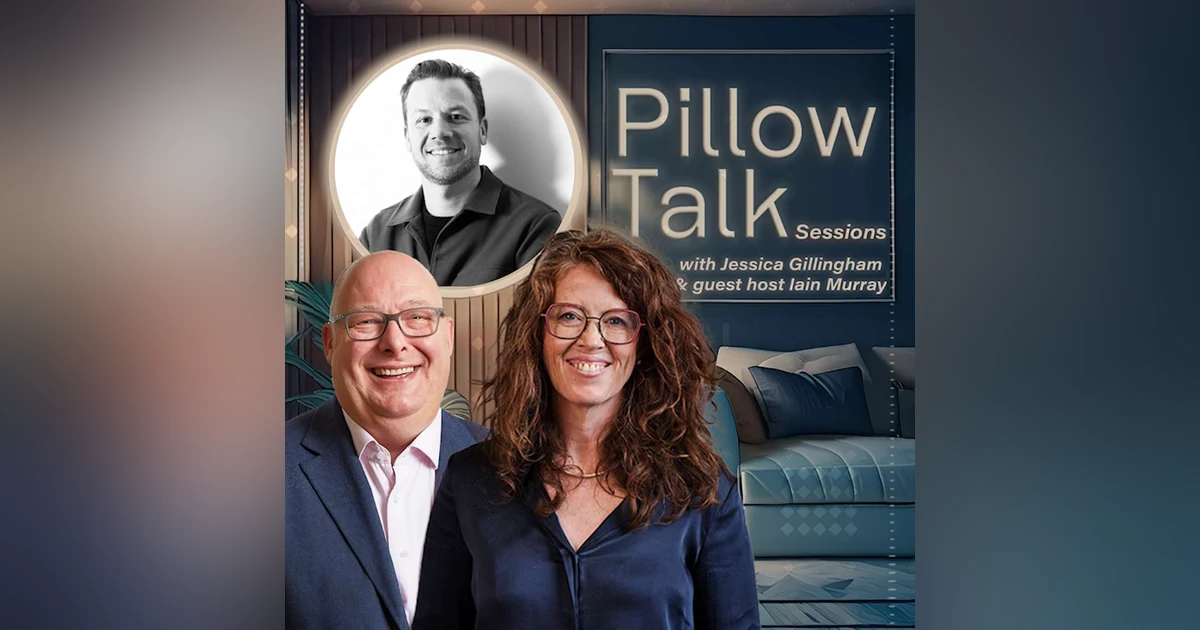
 Jessica Gillingham and special co-host Iain Murray, Head of Operational Living at Bidwells, sit down with Benjamin Hall, Founder of LOFT, for an insightful conversation on how design and sustainability are shaping the future of multifamily and co-living spaces.
🎧 In this episode, we dive into:
🔹 The power of design in fostering resident retention and satisfaction.
♻️ Sustainability in multifamily interiors, featuring the circular economy approach.
📈 The rise of flexible living spaces that blend work, leisure, and community.
✨ Striking the perfect balance between luxury, sustainability, and budget.
If you’re passionate about creating vibrant, sustainable living environments, this is a must-listen! 🎧
Meet the host of Pillow Talk Sessions
Jessica Gillingham is the Founder and CEO of Abode Worldwide, a strategic public relations agency dedicated to elevating the profile of transformative technology solutions in global hospitality, lodging, and rental living. An established industry thought leader, Jessica is a frequent conference speaker and author of Tech-Enabled Hospitality, a new book exploring the innovations shaping the sector.
Welcome back to another episode of the Pillow Talk Sessions. My name is Jessica Gillingham, and today, instead of Christian, we have a very special co-host with us today. We have Ian Murray, who heads up Operational Living at Bidwells. Ian's an expert in the build-to-rent and operational living sectors, and I'm really excited to have him join me in this discussion today.
SPEAKER_03Thanks, Jessica. It's uh a really exciting and great pleasure for me to join you today as a co-host. Generally, I've uh been uh on the other side uh when I've been doing podcasts, so this is uh this is something I'm really relishing and looking forward to. Thank you for having me.
SPEAKER_00Great, it's always fun to ask the questions I always find rather than having to answer them. But so thank you so much for coming. And today we've got Ben Hall, who is the founder and CEO of Loft. And Ben is really innovative in what he's been doing for the last 21 years across interior and furnishing and across the living sectors. So we're gonna have a really interesting discussion around his thoughts about the sectors and then also how furnishing has an impact on things like retention and sustainability and flexible living. Ben, welcome to Pillow Talk Sessions. It's a real pleasure to have you on the podcast.
SPEAKER_03Pleasure to be here. Thanks. Hi Ben. Um so I I I am I'm really pleased that uh Ben is my inaugural guest uh in the first Pillow Talk podcast that I I am uh notionally described as the host in. Uh given that I've done a number of podcasts in the past, it's uh it's quite interesting to be on the um uh the Jeremy Paxman side. So uh uh prepare yourself for a hard time, Ben. Um Ben and I have uh I would say orbited each other for probably the best part of a decade in that we've um we've occupied the same space in the operational living and built around co-living for you know well over 10 years now, and actually really only got to know each other quite well in the last sort of year. It's been almost a little bit of we should have done this earlier type scenario. It was you know, this year's class conference in Manchester, which I have to say Loft did an awesome job of of bannering and being part of. Um, we we really kind of got to know each other quite a bit more, and uh the uh Mustang Sally moment in the uh karaoke bar in the middle of the conference will definitely stick in my mind for some time. So, Ben, um I'm gonna let you you know talk about you know what you've done in the past and and and why you're why you're uh you're on this podcast. But for those that don't know me, I'm Ian Murray, I'm head of operational living at Bidwells. I've been in the operational living space for about 12 years. Uh I've been in and around all of the kind of cool living, built-to-rend, single-family housing projects for quite some time. Uh, and you know, as I said, this is the first pillow talk uh hosting session I'm doing, and Ben couldn't be a better guess. Ben, do you want to just run through who you are?
SPEAKER_02Yeah, my name's Benjamin Hall. I'm the founder and owner of loft.co.uk. We are an interior design and furniture supplier to the residential property sector. I started the business in 2003 with a £15,000 student loan with the intention to try and improve student accommodation in Manchester specifically after spending six months in America studying and essentially living in a five-star hotel. It was better than my mum and dad's house. Um, came back to the UK, graduated university, and started a small business, just me as the first employee, and then now it's grown to a nationwide operation. We do bits and bobs in Europe as well. Um, over 100 employees, close to 20 million quids worth of revenue, and it's a story that we've and a journey that we've been on over the last 21 years. Um catching the buy to let wave in the early 2000s, and then enduring the financial crisis, and then catching the the student wave which came off the back of that and PBSA, uh, and then about 10 years ago, um, being well positioned to sort of catch the build-to-rent wave, and then recently the more um the single-family housing wave that we're now seeing, and co-living as well, which is becoming more and more prominent. So, yeah, I've been doing it 21 years, and we've we've definitely seen a lot of different trends and a lot of different investor type attitudes and appetite. Uh, but we're all we've always been the premise of the business, has always been about sort of improving the experience for the end user because where I went to in university, I was paying 25 quid a week and it it it wasn't safe. Um, and it was it was damp and there was no double glazing and the furniture was terrible, it was actually a health hazard. And I always thought there's got to be room in in to be able to improve this. I think I was the last of the sort of young ones student generation.
SPEAKER_03Oh, I don't know. I think maybe maybe the the current uh cohort could do with a bit of young ones, you know, living definitely uh it's character building here, let's put it that way. Yeah, that was for sure. Anyway, the um I think it's uh I I love an entrepreneurial good news story because I mean, you know, I I applaud anybody who has the wherewithal to kind of start the business on their own and then make a success of it. And I and Loft are a successful business in this market and recognized as a leader, so well done. Um, if that doesn't sound too patronizing to be told that from one of your friends and peers. Um so we're gonna kind of kick off just by talking about um how uh what you do from the furniture and interior design side uh affects the experience and and and retention of residents. I mean, let's we'll just call them residents for the purpose of this this uh uh discussion. But we're really we're looking at about people who are living in their homes, whether their homes are a co-living or a student home or a build-to-rent home or a single family home. You know, we in the industry we like to sort of consider people living in homes that we are just creating and looking after. And furniture plays a massive part of it because it's generally all furnished, you know, most of it is some of some of the single family housing stuff that it might not be so much, but certainly PBS equal living and BTR is predominantly furnished. So what have you seen in the last uh ten years when this market's really kind of matured uh and how what you do has influenced the experience and retention of residents?
SPEAKER_02Well, I think ten years ago we were still using the word tenant, and we were still using the word unit and and or perhaps property. We weren't using the word home and we weren't using the word resident, and I think that's probably a very good way of sort of summarising the change in attitude towards the customer who is the renter. The person that is paying the rent should be considered a customer and they should be treated accordingly. And I think you know that was definitely a positive influence from America when multifamily or built to rent first came over here. But a lot of the stuff that we were doing for that we have been doing for built-a-rent, we were we were doing in the PBSA sector 10 years before Built to Rent, you know, came about. So I think actually the beginning of sort of considering tenants as residents and taking a real serious sort of note about their interiors came in that buy-to-let wave in the early 2000s where so much stock was coming onto the market that the interior design and the furnishings made just a huge difference because there was almost too much stock coming on the market at that time, and the the investors and the operators had to differentiate their property. So they they started to come to us because we were offering a much more modern interior design solution, and we were also offering installation and we were also offering accessories and all of these things that traditional retailers you know weren't geared up to do. Loft had sort of built a business to deliver, assemble, install furniture packages for investors, and it had never really been done before in the early 2000s, and then bringing us all the way up to today, where you know, uh interior design and the tendering process and the PQQ and and your track record all it plays a huge part as to whether you're going to be trusted by these corporate institutions to furnish one of their prized assets and their social and amenity spaces, which are becoming more and more and more and more hotel-esque with every year that goes by.
SPEAKER_03I think we'll we'll come on to some of the detail about the technical sides of it, things like ESG in a bit. But from a feeling perspective, I mean one of the things I sort of see when I'm in and around a lot of the developments that I'm involved in or I've been involved in is that you know people are renting an experience, they rent a place that is, you know, probably in reality beyond their capability of buying from a straightforward for sale perspective. And to a certain extent, I mean they're getting you know almost like the mature model of fit out that you know, you know, when I was growing up, I was buying bits and pieces of furniture at various quality levels as I went through, and really only kind of now do I kind of look around my house and think, oh, I've got all the things I really want. Whereas you can go to a built-to-rent or a you know, a development, and you can pretty much move into an apartment that's you know very smart looking, and the furniture looks really great, and it's got that kind of sumptuous, quite interior designed feel about it. That makes people feel quite special. Is that the experience that you think people get?
SPEAKER_02I think that that renting is definitely a lifestyle choice in the UK. I think it's gonna, you know, it's getting more and more difficult to live in premium locations uh from a ownership perspective. But also, you know, there's a lot of over the last 20 years, there's been a lot of horror stories with people buying property at the wrong time in the macroeconomic cycle and being left in negative equity. And people talk to one another, and you know, in built-a-rent specifically, you know, you you can give a month's notice and you can move out. So if you're living within your means, you can move up a level, and if you're living, you know, beyond, you know, within outside of your means, you can move down a level. And and and that flexibility and the locations of where this built-to-rent stock's being built, it plays into the hands of modern living. Um, buying a house and be being tied into a mortgage and stuff like that is actually quite restrictive. So uh the investors and the operators have realized that if we provide functional furniture that is comfortable and enables people to um entertain and uh work from home and sort of and get a good night's sleep, then you know the key to the successful operating is retention. So we're often asked just to make sure that we're designing spaces where you can work, rest, and play all at the same time, which suits a uh a city living lifestyle. And obviously, like I lived, I've lived in the city centre of Manchester or the city centre of London all of my life. I often have conversations with the developers and the interior designers about whether we actually need a dining set in in the living area. Do we actually need a media unit in the living area? I don't have a television at home. I've never eaten dinner at my dining table with my girlfriend in central London. I live in zone one. We've never done that in eight years where we've lived. So there's lots of different ways of furnishing property and the items that are included that lend themselves more to city centre living than they would do if you lived in in suburbia or in the countryside.
SPEAKER_00Ben, firstly, I'm curious to know where you do eat dinner with your girlfriend.
SPEAKER_02I just we just eat out constantly and or we eat on the move. So we might be stood up in the kitchen eating a bowl of porridge or something in the morning, but I'm definitely not sat down at a dining table like.
SPEAKER_00You're not getting the candles out and the napkins out and doing all of that then.
SPEAKER_02It's just just if you're in and if you're I mean, I'm not you know being arrogant or whatever, but if you live in zone one in London and you can walk within a 15-minute walk of your house, you can have any cuisine from any corner of the globe, and it's quick and it's easy, and it's it's you know, it's not that expensive in comparison to going and cooking. Plus, the kitchen in our property is really small, so it's it's not really designed for you to be, you know, cooking every night. But you know, other places where my friends live, you know, outside of London or up in Manchester, you know, outside in the suburbs, they've got big kitchens and they love cooking, and that it's just a different way of living. So I feel like sometimes, I mean, sometimes we get asked to provide furniture just because we think that's what ticks a box on the inventory. But actually, if you look at it, um, the residents might not choose to have a big dining table with four chairs clogging up the living area, they might want another sofa or they might want an occasional chair. You know, it's the the the flexibility, I think, and the amount of choice that you can provide. And this is this is where we do well with developers and operators because we provide this partnership opportunity of flexibility. So if you've got apartment 16 and they don't want the dining set and they want a dining, uh they want an occasional chair or an extra sofa, we'll we'll switch it out and we'll we'll work with operators on a long-term basis on the replenishment side and on you know replacement goods, depending on what they want. We're quite flexible like that.
SPEAKER_03The it one of my absolute pet hates when I go into an apartment, um not withstanding the bedrooms, but concentrating on the living and dining spaces, is what I call 6040s, which is 60% kitchen dining and 40% living. And I'm like, that's the wrong way around. You should definitely have 60% living and 40%. And quite often the crossover point is that dining table, that floating dining table, it becomes an issue with lighting because the lighting is generally fixed above it. So, you know, where do you put it? And interestingly, several developments I've been involved in uh recently in the last 22 years, high bars or breakfast bars within apartments as and taking out the dining completely has actually been seen as a premium. People actually like that as a choice rather than a dining table.
SPEAKER_02People don't have the time to sit down, cook, and then sit down and eat, but it's it takes you three hours.
SPEAKER_03They can go downstairs as well. They can, I mean, in a lot of these developments, there's um there's private dining spaces that you can hire. So if you've got a a group of eight or ten of you, you can go to the private dining spaces. Anyway, we'll come on to some of those other spaces in a little bit. Just you were talking about replenishment there, and um I mean the one thing about uh any kind of operational living asset is that if you're leasing, you kind of need it to look pristine every single time a lease comes up. So actually how something looks and feels is quite important, um, and you know, it needs to look as if it's not tired, as it were. So, you know, the replenishment comes be could be quite a bit thing, a big thing. You know, the life of furniture becomes quite an important piece. And given the context of you know, environmental, social and governance, you know, uh, you know, criteria that most investors are really, really interested in. What's the what's the major shift that you've seen? I've seen a massive shift in the last uh three or four years in the in the how people's focus has been on this. What's it meant for you in terms of that turnaround and end of life and sustainability piece?
SPEAKER_02Well, we now it's expected that you are providing furniture that is uh recyclable at the end of its life, as opposed to just offering a recycling solution for furniture that's being removed and replaced. So just going back to the beginning, my father had a secondhand furniture and antiques business in the 70s and the 80s in Manchester and 90s. And the idea for our business in the beginning was I was going to go in and remove the old furniture, put new furniture in, and he was going to sell the old furniture in his shop. And so the essence of our company from the very beginning has been a removal and replacement and replenishment business. And that's how we became into contact with a lot of the student accommodation providers because nobody wanted to do that sort of that dirty work, if you like. But since then, you know, we have now invested in state-of-the-art recycling facilities in our Manchester and London depots, where as a company we're at 0% landfill right now. So all of our packaging, all of our, all of the wood, all of the metal, all of the plastic, all is 100% recycled, all of the mattresses 100% recycled, and all of our um furniture that comes out that can be donated goes to social impact housing and those that need it the most. Because I mean, the the numbers for those that are living in furniture poverty in this country will will just blow your mind. Um, you know, bearing in mind that built to rent is 2% of the private rented sector, 97% of it is private rented, uh, and 50% of that is social housing. And social housing landlords don't have to put carpets in, they don't have to put appliances in, they don't have to put furniture in. You know, they say that around 40% of children in social housing don't might not even have a bed. But I I can I can talk about that for a long time. I think what we've seen as a shift, Ian, directly is the measurement of carbon emissions per product. And then how do we measure the impact of our replenishment solution with regards to if that was a landfilled or B recycled or C donated. So, unless you're geared up to help those that are operating and managing the living sector with a recycling solution, it's going to be very, very difficult to work with those guys because they have to show the circular economy with the goods that they're providing. And we've done a lot now with um FSC frames, you know, every you know, we've got factories that have got their own forests where you can track the wood going all the way through, foam, fabrics that are made from recycled sea waste. And these these are they're not yet specified by the operator, but we often explain the benefits of using um recycled materials and then products that are designed to be recycled so the arms can come off and you can put a new arm on rather than replacing a full sofa. Coffee tables and dining tables with removable tops so you can change the colour from a white marble to a black marble to a walnut to an oak, but the frame itself um stays rigid. Uh we've also designed a sofa that is a hundred percent metal frame, which then the sofa, a hundred percent of the sofa can then be recycled. And and this is all this is all stuff that we feel pretty passionate about. Like, you know, we we understand um that furniture creates uh a carbon footprint, but we've we've got to be you know quite honest and open about the fact that 45% of all greenhouse gases in the world are created by construction, not furniture.
SPEAKER_03No, and and I think I think that's a fair accusation because I mean I spend a lot of time on the residue that the development side, and one of the things I talked to clients earlier about is you know, a huge percentage of your carbon is contained within the concrete frame or whatever it is that you're building. So, you know, some some less focus on elements uh that have a more a less of an impact might be better directed into some of the bigger pieces. However, notwithstanding that, I think investors are driving this this approach. People are, you know, you know, institutional investors in particular have to demonstrate that they've you know put you through your paces as far as ESG is concerned.
SPEAKER_02You know, it's a it's a big it's a big chunk of um it's a big opportunity to show um a reduction in carbon emissions by having a furniture company that is consciously aware of if you if you buy it in a traditional way, it emits this amount of carbon. But if you buy it this way and you ship it this way or you have it delivered this way, then you can reduce your carbon. So as a company, we can help construction companies, developers, investors to hit their ESG targets. I think long term, you know, we're now offering digital asset tagging on furniture to help manage the asset within the property, and then you can sort of forward forecast the lifespan of the furniture. I mean, this is all brand new, and then you know, that furniture then might need changing through wear and tear between years five and eight, or the trends might change depending on what the budget looks like, and then just being able to offer the operator the level of that level of reporting, you know, 10 years ago, 15 years ago, this would just be completely unheard of. So it is maturing rapidly. It's it's quite good fun to be honest.
SPEAKER_00Ben, before we move on to another topic, I just want to go back to the sustainability. And are you finding that all all the asset classes that you work in, so the student, the co-living, and the build-to-rent, are equally have it as a as a priority, the sustainability and ESG, or is it, or is it some, or are you kind of having to sort of influence a bit more maybe on PBSA?
SPEAKER_02We we've certainly found that recently, in recent tenders for replenishment, ESG has been at the forefront of the PBSA tenders, which it hasn't been over the last sort of 10 years, really. It's mostly been about price and durability, whereas in the Build-to-rent sector, it there was a much bigger emphasis on ESG and ESG initiatives. What are we doing in the local community? How are we positively impacting the local area if we're furnishing a block of apartments in that area, you know, by employing local people, stuff like that? PBSA seems to be catching on in a similar respect now because it's it's institutional cash. So they've got to start measuring this stuff. And also, you know, with development not stacking up at the moment as well as it has done in the past, the retrofit model is something that we're heavily involved in because of this replenishment solution that we offer. And in that space, they really want to know, you know, how what what is the impact on the environment and what is the impact on the local community. So we've been, you know, active and leading in that space since before we were asked to do so. So we're we're in quite a good position there because we don't we we do have lots of data on it.
SPEAKER_00And thank you, Ben. And you started this conversation saying that in 21 years you've seen a lot of trends, you know, in in in and one, and you've talked about um that it's more we're we're looking at residents as customers, and we're looking at the whole offering in a kind of more service-oriented hospitality almost kind of prism in a way of looking at looking at the environment in a much more different way than it might have been before when we were looking at units rather than homes and and and that. And on this podcast, we've had quite a few guests that have been talking about flexible living. So offering that flexibility between long, mid, short stays, as well as having a mix of kind of co-live with co-working, that sort of thing. Where does where does the furniture and and that environment fit into a flexible living model and making it work? Like, is it more complicated, do you find?
SPEAKER_02I think it I think it is more complicated, but if if there is enough of a partnership between the developer operator and the furniture supplier, you know, I can see a day when you go on holiday for a couple of weeks, or I go to China for a few weeks sourcing Asia, and I say to the guys downstairs in facilities management, hey guys, I've got the mid-century pack in my apartment at the moment, but when I get home in two or three weeks' time, I'd really like to have the industrial pack. So your apartment can then be redecorated and refurnished with a different look and feel, which then you know freshens things up and keeps it, you know, more interesting for you if that's something that you'd like. And I can actually see a day, probably in the higher end developments, where the furniture is chosen with flexibility in mind and with various different themes that you can then choose from. Um, in in the student sector, you know, um, being able to design your room to your own sort of um requirements is something that we're working on at the moment with um Martina over at a Designer at Heart. We actually launched it at the class conference where it's it's called Nest Block, where we've got uh a modular system that you can change within the room yourself depending on what your requirements are. And that that's based upon um the research that the guys over at the property marketing strategists have done, where they've actually asked the kids at university, what is it that you want? Obviously, what I've said previously about you know changing the theme wouldn't be applicable to student, but you know, allowing them modularity and flexibility without big wardrobes, without kitchens clogging up the space, without these huge desks that people put in when nobody works at their desk anymore, everyone's on a laptop sitting on their bed. And it's like really understanding the way that human beings are living right now and and and then tailoring the interiors to the way we live rather than an identicate sort of FF and E schedule.
SPEAKER_03Yeah, that's um that picks up a kind of a mantra that I think I expressed on my podcast with Jessica a few weeks ago, which is and it's a mantra I've had for years now, which are two expressions. One is build four good walls, and effectively that is recognizing that there will be change within those four good walls, but your walls just need to be in the right place and in the right the right construction. And then the second one is the 18-hour space, so a space that has the use of typology over a full day, so it may be a casual breakfasting space in the morning, it will be a work-from-home space during the day and into the afternoon, and then in the evening it can become a social space, and furniture can play a massive part in that. I I always give the example of a high bar. A high bar is quite a common, you know, you can sit there in the morning and have your breakfast, you can work all day on your laptop during the day, and then at night you can sit and stand as a as a high bar, it can be as a social space, and I I I see the elimination there of the intervention of management, which is cost, but the furniture itself and the interior design actually addresses the use typology during the day.
SPEAKER_02Is that is that a trend that you see? Interior designers are just not brought into the conversation early enough. We we are constantly working post-architect's drawings, and the architect's drawings are not designing the spaces for living necessarily. You know, the ME's always in the wrong place, the kitchen island's always too big, as you've just pointed out. You know, a lot of stuff in the UK is is has got the stamp of built-orent on it, but it was a built-to-sell development that got that got sold, you know, and and and a built-to-rent operator, you know, or one person owned the block, or one investor owned the block. So it was it was branded as built-to-rent, but it's never really truly been designed as built-to-rent. And I think student accommodation and co-living is a little bit different, but there's not that many built-to-rent schemes in the UK that have been actually designed by an interior designer for living at planning stages, at those early concept stages. And and I we always try and get in as early as we possibly can. Locations, just the way that the doors open, where the radiators are. It's you know, you're still seeing brand new schemes today where the radiators are in the wrong places, you know.
SPEAKER_03Yeah, these the these are these are things that you know I I certainly and and our business pays a lot of attention to. And you know, I think we're now seeing you know the evolution of built-orent, particularly where I would call it built-to-rent 3.0. So you know, it's gone through iterations where we're now seeing it being designed and built for renting. But those so let's just take a resident lounge space, for instance. I mean, I see and interestingly, I've probably shifted a little bit in my thinking. And uh when I was at um uh in Manchester, there was the how is it UHouse built to uh built to rent development? So previously I was talking about sort of 18-hour spaces being a kind of a co-working and a lounge homogenous mass together. But there they've separated them out, they've very definitely got a living space and they've very definitely got a co-working space. I mean, where do you see it? Do you see the marriage between the two, or do you see the separation being the kind of way?
SPEAKER_02For me, I think there needs to be a separation, but you need to be able to operate however you see fit within that space, and then it needs to be designed for that purpose. So if these rooms so it so in the morning it could be a yoga class, in the middle of in the middle of the day, it could be a lunch space, and in the evening it could be a space for a dance class or or or some sort of social event. And I think that furniture now um is can you know the look and feel of it, it isn't necessarily you you you work here, you rest here, you play here. It's multifunctional and it can be stacked up, it can be folded away. There's lots of things that you can do with it that will open the space up or or bring the space together. And you know, lots of people asking me, how would you furnish a social space today? And it's a little bit like Emperor's New Clothes, you know, it's it's actually less is most definitely more, and the more the more flexible that that furniture can be, and that you know, chairs that can stack eight high suddenly, but eight chairs laid out on uh you know alongside a table, it it takes up a completely different amount of space. And and we've got to give the residents more choice as to how they use the spaces. We don't actually know on any given day how they might want to use it, but as long as we're providing the ingredients for them to be able to use it in a space that they see fit, then I think that's very sensible because you know a lot of these social and amenity spaces that we see around the country just look like bad airport lounges where you know and people you know you don't want to have a situation where people feel like they have to dress up to go downstairs to the social space. You know, you want to you people if if you are really going to try and create a community within a residential development, everybody needs to feel comfortable to go downstairs in their slippers and uh you know and and meet with the people that are living in the block as opposed as opposed to you know it a quite a formal space which says co-working on the wall, you know, in in orange letters or whatever. It's just we are we are still a little bit um out of touch, I think, with how people actually use space.
SPEAKER_00Um, Ben, you you mentioned that you you're also active in Europe, and I know that you have experience of the US as well. What big differences are you seeing, if any, between the US, Europe and the UK? Like who's sort of who would you consider being sort of further ahead who does really understand the residents as well and and are doing things really well?
SPEAKER_02So so in the States they they've clearly got the operational aspect of the living sector absolutely boxed off, but they they don't necessarily have um people-first or human-centric design going on. They are very, very focused on how much they can get out of each piece of furniture. They want 10-year guarantees, they want it. It's very much like student accommodation was 15 years ago. It's very industrial, uh very institutional, and not very homely, but operationally they they've got the scale and they've got the space. I think in the UK it's a small island, isn't it? So we have much less space than Europe or America. But in the co-living sector and in the community living sector and in the interior design space, um Germany, Holland, these kind of places, there are places in Berlin and places in Amsterdam where you actually see spaces that are truly designed for the way that people live and truly designed for human interaction. So you might not, you know, the traditional cluster bedrooms that you see in the UK, you have a series of cluster bedrooms, but then not on every on every floor. There might not be a kitchen, but there's some form of social space on each floor that enables the residents, they all have access to each floor, and each floor has a different sort of um social and amenity space where they can get together depending on what it is that they want to do. So on the third floor, it might be co-working and it's all is set out like an office, and on the fourth floor, there's a big communal kitchen where they can all cook spaghetti bolognese together, and on the top floor, there's like a like a nightclub area, which is you know for for late-night socializing or whatever. And and some of the stuff that I've seen in Europe um is is somewhere where I'd want to live myself and somewhere where I could see myself getting involved in human interaction, whereas in the UK it still feels very by to let and in America it feels very institutional. Though that that's how I would summarise it.
SPEAKER_03Yeah, I would I would observe that the American market is extremely mature. I mean, it really does know how to do service like no other. I think one of the things they do extremely well. I still have been into units uh or apartments and thought, oh my goodness, the quality of some of the build and the finishes in here is is really poor. It's you know, it's I think actually, you know, generally the the finish and the quality of projects here is is higher. I think that well it's it's probably more to do with the less mature market, and most of the market is probably still mid to upper market as opposed to the vanilla across the board. So that's objective.
SPEAKER_02Here feels more much more residential than America. In America, it's like it's it's it feels very institutional. You can tell it's being done for profit. You can, it's not necessarily a human-centric design. It it everything feels uh it's like the student furniture we were providing 10-15 years ago, which really surprised me when I started going over there because I thought I was going to see, you know, the next level. But then you go, you know, you go further east and you go into like China and you go to Japan and you go to Hong Kong and these sort of places, and you go to co-living uh spaces there and you go to residential apartment blocks there, and it's a completely different level again, you know, like in terms of the quality and the level of customer service, you know, the customer really truly is king um in in Asia, and in the West now it feels like the customer is an inconvenience, you know. You you try and get some sort of interaction from the person that's supposed to be serving you. It's almost like, how dare you ask me any questions?
SPEAKER_03It's it's uh I I hope some of our uh operators in the space would maybe challenge that. I think that's uh there is a lot of movement towards. Can I shift a little bit and just talk about single family housing? Because it's kind of it's the hot end of the market, and I would say between co-living and single family housing, those are the two bookend hot ends of the market. Build to rent's slightly slower at the moment. Tell us what's the differences in single family housing? Where how does that differentiate for you? Because I mean, not all of it is furnished for starters, so you know.
SPEAKER_02Yeah, it's a it's about giving again, it's that you know, those guys are very keen on giving the the resident and the end user choice. So, you know, we've done some quite fun stuff with um packaged living and all sort, where we've got like a digital ordering platform where where the resident comes in and views the show apartment, they can pick the sofa or they can pick the bed if they like that, and we can have it delivered for them before they move in. I think it's um I can understand why you know single family housing is accelerating so much. It's it's much more um commercially uh feasible than it is to pull a high rise out of a out of a city centre these days. You know, it's it makes it make sense and it and it's a big requirement for people to do it.
SPEAKER_03Well, also I think people stay longer, so there's there's an element, you know. So if somebody takes a furniture pack off you, they're probably likely to have it longer than they would have done in a multifamily or a co-living development, you know.
SPEAKER_02I think the big difference, the fundamental difference is that the operators don't want to own the furniture, they would rather the residents own the furniture, and then if and then it hopefully that will make them stay longer because they won't want to take everything with them. But we're still we still are. I mean, obviously, all of those properties do require furniture because people require furniture to live. So um we do a lot with the guys over at Place First, and they have a slightly different attitude, and they are furnishing their stuff, and they've been a they've been a leader in in single family since before single family was called single family, and you know, they've been they've been quite active for a long time. So we've got lots of partnerships in that space, and um for us also, it's it's it's very quick for us to furnish those properties. So it's also commercially good for us.
SPEAKER_03Well, commercially for single family housing has a lot of senses from a cash flow perspective for the developer as well. Because I mean, if you're waiting for 250 apartments to be finished and furnished and leased up, uh, and all of you you do is turn out horizontally, and then you could have one at a time. You don't have to wait till all 250 are done, you know. So that's right.
SPEAKER_02So that's just from just from a product perspective though, and an interior design perspective, actually, what we're seeing now is is it's becoming really it's becoming blended across all of those sectors. So that the the product itself, from student to co-living to build to rent to single-family housing, and even even later living, it it's a very, very, very similar look and feel that people are expecting, which is probably the most interesting part of all of it because you know, 10 even just as recently as 10 years ago or before COVID, we were still very much putting student furniture in student blocks and more resie stuff in in build-to-rents. So uh now it's it people have this dream of this Soho House interior that they want to live in. That's the aspirational sort of point, and um, we just try and get it as close to that as we can.
SPEAKER_03I think calling it the living sector is actually more of a proper descriptor these days, you know. Agreed.
SPEAKER_00Yeah, agreed. Just on that, Ben, so so if everyone's basically, you're saying, kind of has the same taste, you know. There is a there is a look and feel that that we all want. It's the differentiator for you then in the quality of the materials that are used.
SPEAKER_02Absolutely, and the budget that we get given, you know, and and it you know, furniture is fabric, isn't it? So it's and and and interiors is fabric, you know, whether it's the flooring or whether it's the carpet or whether it's the curtains or it, whether it's the the covering of the of the headboard or the covering of the sofa or the covering of the chair. Um the the fabric is everything, and often, you know, fabrics, particularly in student accommodation, that need to be crib five, for some bizarre reason they need to be crib five. I've never really understood that. You can't smoke indoors anymore. I don't believe that it's as high risk as potentially it might be seen. And that then limits you to what kind of fabrics that you can actually use and the look and feel. I think that's a big difference between contract and domestic. Um, the look, the look and feel is it that the fashion and the aspirational lifestyle choice is it seems to be the same across from all the way from student up to sort of later living, and that that's that's a big age difference as well. That everybody seems to want to have this kind of a blend of mid-century and industrial and bohemian sort of um soft, comfortable cushions and comfy and warm, basically. We live in a cold country, don't we?
SPEAKER_03Well, I was going to challenge the man that holds uh BA honours in psychology. The one bit that I would perhaps challenge you on that there is that colour can make a massive difference to the way that somebody feels. You know, I I think you know, if we were picking on an operator who does use colour very, very well, I think it's moda. Moda do a great job of having those kind of deep, sumptuous, almost kind of velvety feeling colours. We'll not talk about whether the quality's up or down in that, we'll just say that the colour does make a big difference to how you feel.
SPEAKER_02Yeah, I think the modus quality, I mean, we get asked a lot, we we're looking at the moda spec. I think you know that the risk that you run when when you're putting in very colourful furniture is you run the risk of some people liking it and some people not liking it. I think that that's the difference. But we, you know, we love the modus stuff and the Casabai Moda stuff looks cool, and we know the people involved in that. It's um it's definitely definitely moved the market forward. And from my perspective, you know, just going back to why we're actually in this business as a as a family, it is we're all just trying to raise the quality of the private rented sector. So when somebody like Moda comes out with a premium product, I'm just hoping that that pulls up, you know, some of the private rented sector as well.
SPEAKER_03Well, I think I think it does. Um, I mean, I've been working with Moda for the best part of 12 years now, and you know, I've seen how I mean they set their stall out very early and they've delivered on that all the way through. They've been very consistent in that regard. The rest of the market does refer to Moda and does talk about Moda a lot. Um, and I do think that the quality across the market is more consistent with a Moda product than it might have been without them, so I give them credit for that. Uh I mean, I you know, I've got quite a positive outlook of the with the direction of travel in this sort of living sector. You know, I do feel that PBSA, co-living, you know, build-to-rent, single-family housing, and later living are all upping their game. They're all designed for living, they're all thinking about customer service. And I do honestly think that furniture plays a massive part in not just the quality and the feel and the look, but also how people experience something and what they kind of walk away from thinking, oh, you know, and also pride. You know, I think people, you know, when you're growing up in that and you're a certain age, between the sort of 25 and 38-year-old cohort that we predominantly see within that sort of marketplace, and you're in a very sort of formative part of your life where you're trying to form your peer relationships, you're trying to form personal relationships, and you're trying to project yourself as being, you know, a confident and you know, self-sufficient person. And I think the way where you live speaks about you, you know, so furniture supports that.
SPEAKER_02It does, it does, and that's that's why it is so important, you know, to have the right quality mattress to make sure that sleep quality is improved and that you've got blackout blinds so people can sleep, and you've got soundproofing, adequate soundproofing, and then you do you do have the ability to work, rest and play within your home and it is safe. But I think like furniture, furniture is like branding, like furniture is like fashion. So Moda have got that brand because of their interior design and their furniture, you know, and there was there was a price that came with that. And I feel like because the the various different operating brands now are trying to create this brand identity for themselves in residential property, reflecting the brand value. Of an operator or an investor through interior design is what we enjoy doing the most. You know, that what is it that your brand stands for? You know, is it affordability and functionality and how do you want to reflect that? Or is it luxury and how do you want to reflect that? I think one thing that's important to point out is the rents are super high. So that these guys should be providing the best quality interiors that their budget will afford because that's what the residents deserve at the rents that are being paid. You know, the the rents are as high as they've ever ever been, um, particularly in Manchester, where you know there's not that much difference between Manchester and London right now. Obviously, in prime it's different, but I'm talking in built-to-rent, there's not that much difference.
SPEAKER_00But it's interesting that I think today, though, is it's you can you can live in a Moda building and afford to rent there in a way that you wouldn't be able to afford to buy, which includes the furniture. You know, you get that lifestyle that you can't afford to buy when you're 32 or whatever, but you can still experience it because you're renting it. You've got it on subscription in a way.
SPEAKER_02We've done some stuff for Granger, we've done some stuff for for for a lot of these guys that are all super conscious of their brand and the resident experience. And um, it's like you know, Moda did take it up a notch when they first came out, but I think that the you know a lot of the other guys, you know, in the space are are definitely uh competing.
SPEAKER_03Well, and and you will see, I mean, the market is already creating stratas of affordability. You know, there are there are affordable products and there are mid-market and then there are premium products, and depending on location and and quality and lifestyle and all this, but you you can graphically equalize. And you know, you mentioned earlier there's only two percent of the market is represented by the professional rented sector at the moment. Our job is to get the another 98% so that more and more people will enjoy this, and as we grow, the market will segment, you you know, you will have choice. Furniture, you know, quality of furniture, I think, because of ESG has you know, will have a basic foundational level of quality, and then as you say, fabrics and finishes will make a difference between what products are uh at the premium end as opposed to the affordable end, you know.
SPEAKER_02I I I hope that the impact of built-a-rent is the positive impact on the social housing space where the people that can't afford furniture don't get it, and then the people that, again, to your point, Jessica, that can't afford to buy in city centre of Manchester, but they can afford to rent, and the developer is or the operator is kind enough to provide them with a furnished product. Why are is that not being extended all the way through the private rented sector? Because it absolutely should be. Um, you know, there's some of the work that we're doing at the moment, like are on the social impact side. We're discovering, you know, that there are there are tens of thousands of kids, you know, in each major city that don't have a bed to sleep on. Uh, we're doing a lot of work with a charity called Zarak, and and you know, they're what they're finding in Rotherham and Birmingham and you know, and and Manchester and Bolton and all these sort of London, all these sort of places where all these um luxury high-rises are going up that we're all heavily involved in. I believe that you know it's also our duty to try and find a way of measuring our social value and our social impact. If we want to have an impact on the local community, let's donate furniture to social housing and enable kids to get a good night's sleep so they can pass school and get a job. You know, that this is a direct measurement in environment, it's really easy. You know, your environmental impact is really easy to measure now because we have those tools. But everybody's always talking about the S and how do we govern the S. There is a very, very simple way of doing that, and it's not life expectancy, it's whether these kids actually pass going to school and get into employment. It's I feel quite passionately about it because we're furnishing so many luxury apartments, and then at the at the other end of the marketplace, they don't even have to put carpets in. That there should be a law against this, in my view. I don't want to get on my soapbox or anything.
SPEAKER_03Yeah, well, we we probably could stray into a second podcast about that.
SPEAKER_02I don't know. I don't I I don't feel comfortable about it at times, you know.
SPEAKER_00It's it's um it's not as well I I tell you what, Ben, though, you're doing something about it. Oh, yeah, yeah. Which is awesome. So not only actively tactically doing something, you are speaking about it. So it's really, really good to see. And I think that you know, it's been really interesting hearing everything that you that you're saying and and what you're doing. To finish off, do you want to let us know what you've got planned for for the future for last?
SPEAKER_02Well, we've we've um we've been working quite uh heavily with our supply chain. Um we've um we've recently launched uh a collection that we're calling impactful interiors, which is everything that's within that collection um is as environmentally friendly as it can be, and it is also we have the ability to be able to recycle those goods at the end of their life. But we're actually being asked to do lots of stuff internationally now in places like Australia and the Middle East, where the the growth of the residential sector is sort of um mirroring what's happened here over the last 10 years. Um so hopefully we might be able to take our sort of purpose-driven brand global. Watch this space. We are we are speaking to some people with some crazy pipelines of um of residential homes. So let's um let's see.
SPEAKER_00That's brilliant. We will we will watch with bated breath and and good luck and congratulations. That's really exciting.
SPEAKER_02Yeah. I mean, like, like just like just those guys over there at the class foundation, Ian, and like everything that they stand for, though, you know, like just trying to sort of break down the barriers of social and financial exclusion into higher education, it it should be the premise for all of our work, you know, like in this in this living sector. Because we've just got to give everybody a chance to live. And and the barriers are getting higher and the and and and the restrictions are are becoming more intense for people that don't have the opportunities to live in PBSA or to rent in build to rent. And I think the responsibility of the sector is to sort of just be a bit more aware of that. Um that would be my conclusion.
SPEAKER_03Well, Ben, uh if if if we were going to conclude on a on a positive note, then you know, I think we're we're all get given a challenge there, and I think uh, you know, I I take um pride in watching you, you know, as a business, you know, tackle these things. And uh, you know, I think you you are a leader in the sector. The ARL uh gave you an award as an industry shaper, and I feel you deserved it. So uh it's been a pleasure.
SPEAKER_0221 years and we never got one award, and we just won four in a row. It's like it's like buses.
SPEAKER_03Well, you deserve it, mate. Um, thank you very much for your time today. It's been a pleasure having you on our podcast. And uh uh I'm sure Jessica and I are uh are are very pleased that uh you took the time out. Thank you.
SPEAKER_00Yep, thank you, Ben.
SPEAKER_03Cheers, guys.
SPEAKER_01And that wraps it up for us today. So thank you guys so much for joining us on this episode of Pillow Talk Sessions. To stay connected and catch every new episode, do us a favor and head over to PillotalkSessions.com to subscribe. And be sure to follow us on LinkedIn for more insights and interviews with leaders who are shaping the future of hospitality, multifamily living, and community driven spaces. Thanks again for tuning in, and we'll see you next time on Pillow Talk Sessions.


